
Interviews
DIIV : "On voulait retrouver le plaisir de faire partie d'un groupe"
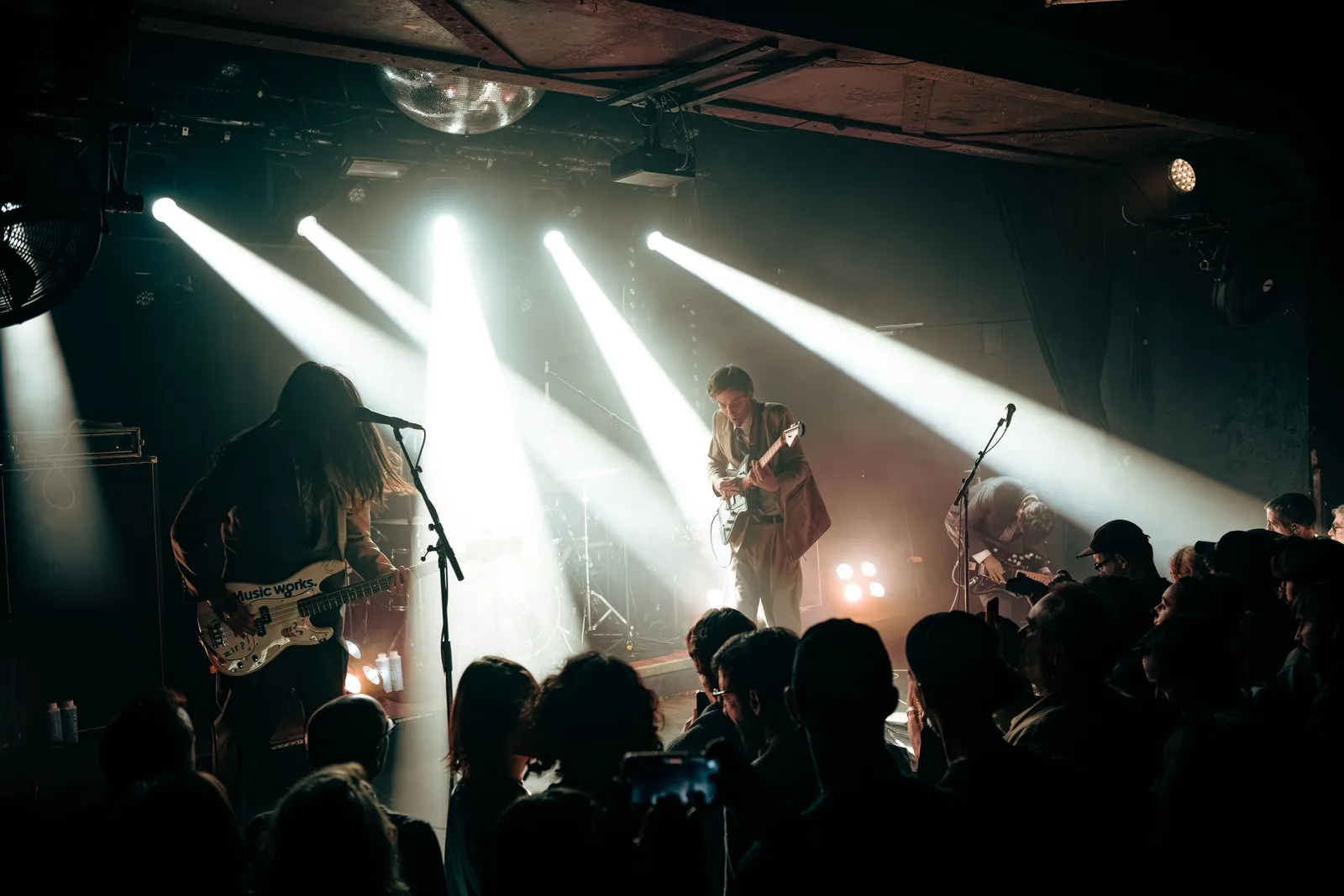
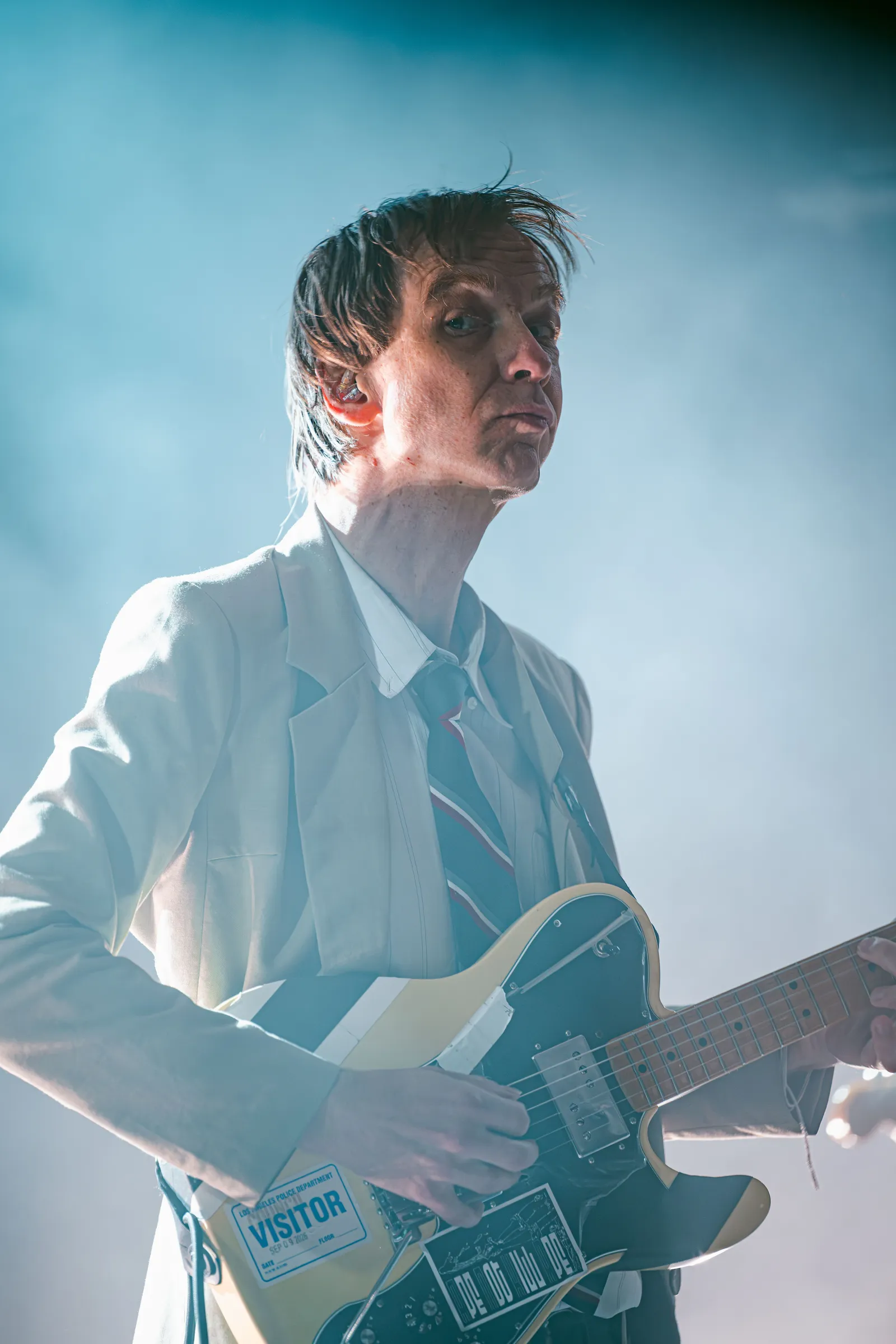
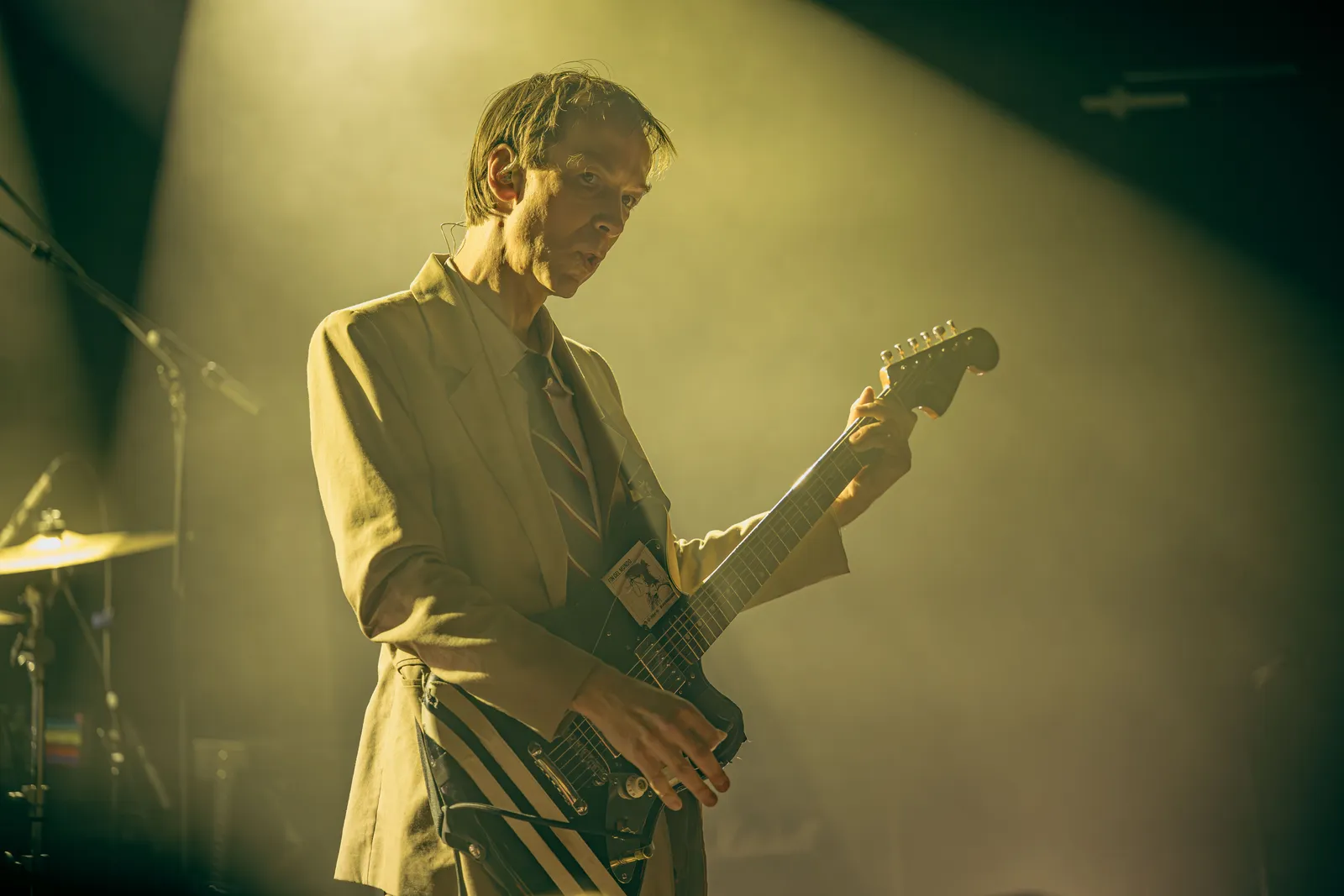
Au lendemain de leur prestation au Badaboum, nous avons pu rencontrer le groupe DIIV qui ne cesse de devenir emblématique sur la scène indie. La preuve ? Leur dernier album ZIRP!, qui dézingue le capitalisme américain, a été produit par le producteur de Charli XCX, A.G. Cook. On aura la chance de les revoir prochainement à Paris à l'Olympia le 1er juin 2027. Au programme de cette interview : milliardaire, socialiste, mode et polyamoureux.
ENGLISH VERSION BELOW
La Face B : Hello ! Tout d'abord, comment allez-vous ?
Colin Caulfield : Bien ! Tu es la première personne à nous poser la question. Non, je plaisante ! Quelqu'un nous a posé une question qu'on ne nous pose jamais, et Ben a fait une blague en disant que personne ne nous demandait jamais comment on allait.
La Face B : Vous avez une longue journée d'interviews (ndlr : le lendemain de leur concert au Badaboum). Vous avez quand même eu le temps de profiter de Paris ?
Andrew Bailey : Ça fait quelques jours qu'on est là et, le premier jour, on a eu toute la journée pour se balader. Je suis content qu'on ait pu le faire avant aujourd'hui, parce que sinon, je serais très frustré de passer toute la journée enfermée dans cette pièce en sachant que Paris est juste dehors.
La Face B : Comment avez-vous vécu le concert d'hier soir ? Et est-ce que vous remarquez des différences entre les publics français, japonais, australien ou d'autres pays ?
Colin Caulfield : Complètement. Je pense que plus un public est privilégié, et je ne parle pas forcément d'argent, mais plutôt du nombre de groupes qui passent dans sa ville, moins il a tendance à manifester un enthousiasme débordant.
Quand on va en Amérique du Sud ou dans certaines régions d'Asie, les gens sont tellement heureux, expressifs et incroyablement enthousiastes. Parfois, surtout quand tu joues à Londres ou à New York, les gens peuvent rester un peu les bras croisés. Mais Paris, c'est différent. Le public est toujours excellent ici. Je ne sais pas si c'est une particularité française, mais les gens sont toujours très enthousiastes pendant nos concerts.
La Face B : Votre prochain concert parisien aura lieu à l'Olympia, l'une des salles les plus prestigieuses de la capitale. Pourquoi avoir choisi cette salle ?
Ben Newman : On n'a pas énormément de contrôle sur les endroits où l'on joue. On peut donner notre avis, mais la plupart du temps, notre agent nous transmet simplement une liste de concerts et on dit oui.
Zachary Cole Smith : Je pense que ça dépend surtout du promoteur qui organise le concert. On entretient une relation de longue date avec celui qui s'occupe de nous. Je crois que Bird on the Wire est impliqué dans le concert à Paris, mais je n'en suis pas certain. Le promoteur choisit une salle qui lui semble correspondre à ce qu'on fait à ce moment-là.
Personnellement, on ne connaît pas grand-chose de l'Olympia, si ce n'est que c'est une salle ancienne et historique. Au final, il s'agit surtout d'estimer combien de billets on peut vendre, combien de personnes la salle peut accueillir, puis de trouver un équilibre entre les deux.
Colin Caulfield : On a eu la chance de voir notre public grandir régulièrement à Paris. Je crois qu'on a joué à guichets fermés à chacun de nos concerts ici ces sept dernières années.
On a joué à La Gaîté Lyrique, puis au Trianon, puis au Bataclan. À chaque fois, la salle était un peu plus grande. Donc on a la chance de pouvoir franchir une nouvelle étape en jouant dans une salle comme l'Olympia.

La Face B : Le concert à l'Olympia aura-t-il une setlist plus longue, avec davantage de morceaux de ZIRP! ?
Colin Caulfield : C'est possible. Je ne sais pas encore. D'ici là, on saura probablement jouer le reste des morceaux du nouvel album.
Zachary Cole Smith : C'est compliqué, parce que tu n'as pas envie de jouer tellement longtemps que les gens finissent par s'ennuyer ou se fatiguer, et repartent sans avoir envie de te revoir. On essaie de trouver une durée qui permette au concert de rester enthousiasmant. Mais on ajoutera peut-être quelques morceaux.
Colin Caulfield : C'est intéressant parce que j'ai vu des gens en parler sur Internet récemment. Le prix des billets devient tellement élevé. Je ne sais pas exactement combien coûtent les nôtres, mais je ne pense pas que ce soit délirant.
Il y a une nouvelle attente : quand les billets sont chers, surtout au-delà de cent dollars, les groupes devraient jouer plus longtemps. J'ai vu des gens se plaindre qu'un groupe ne joue qu'une heure et dix minutes, alors que c'est une durée assez normale pour un concert. Mais comme ils ont payé très cher, ils estiment que le spectacle devrait durer davantage.
La Face B : À propos de Frog in Boiling Water, vous avez déclaré que le groupe avait failli se séparer pendant sa création. Qu'avez-vous fait différemment pour ZIRP! ?
Colin Caulfield : Je pense qu'on a effectivement dit ça. Les relations étaient devenues très tendues.
Ben Newman : Je pense qu'on a travaillé plus vite, cette fois. Ce qui s'est passé avec Frog in Boiling Water, c'est que beaucoup de temps s'est écoulé. C'est vraiment difficile de gagner de l'argent quand tu enregistres un album, parce que tu ne peux pas partir en tournée en même temps. Le processus n'en finissait plus, ce qui a créé des difficultés financières. Tout le monde était stressé et en colère contre les autres.
Et puis, cet album commence à prendre une importance démesurée, comme s'il devait absolument être parfait. Cette fois, pour éviter ça, on s'est dit qu'on allait essayer d'avancer aussi vite que possible. Je pense qu'on y est plutôt bien parvenus. C'est une grande leçon qu'on a tirée de cette expérience.
La Face B : Frog in Boiling Water explorait le capitalisme. Sur ZIRP!, des chansons comme The Crash semblent aborder plus directement la société américaine. Qu'est-ce qui a inspiré cette évolution ?
Zachary Cole Smith : On compose toujours la musique en premier, et les paroles viennent généralement après. Elles sont inspirées par le son de la musique, mais on veut aussi qu'elles s'inscrivent dans le monde réel. Frog in Boiling Water était vraiment un album concept. Même sur le plan instrumental, les morceaux comportaient des thèmes qui s'entrecroisaient tout au long du disque, et l'ensemble était très cohérent.
Créer une narration globale, un concept, semblait donc important. Avec cet album, les morceaux étaient tellement différents les uns des autres, tellement contrastés, que ça nous amusait de faire des paroles tout aussi contrastées. On pouvait parler de questions sociales ou politiques d'une autre manière, tout en gardant un côté ludique.
La Face B : Des morceaux comme The Crash et Trillions ressemblent presque à des comptines sur le fait de devenir riche. Pensez-vous à quelqu'un en particulier en les écrivant ?
Zachary Cole Smith : Non. C'est un archétype tellement répandu : la classe des milliardaires. Une fois qu'ils possèdent des sommes d'argent énormes, il n'y a plus vraiment de différence matérielle dans leur quotidien. Ils accumulent simplement des richesses sans véritable raison. Ce vide au cœur du capitalisme nous semblait intéressant et amusant à explorer.
Colin Caulfield : L'une de mes interprétations de la chanson, c'est que le capitalisme aux États-Unis peut continuer à exister en partie grâce à ce mensonge selon lequel n'importe qui peut devenir milliardaire. Il y a des gens qui disent littéralement devant une caméra : « Moi, je veux pouvoir devenir milliardaire. » Et tu as juste envie de leur répondre : « Mais ça ne t'arrivera pas. »
Je pense que cette mentalité est particulièrement répandue chez certains jeunes hommes aux États-Unis, aujourd'hui. C'est pour ça que la phrase sur le fait de posséder un milliard de dollars avant ses vingt-quatre ans évoque immédiatement un type de personne bien précis. C'est cette aspiration illusoire à faire partie de la minuscule élite qui possède tout.
Zachary Cole Smith : C'est comme quelqu'un qui aurait subi un lavage de cerveau à cause de la mythologie du capitalisme. Il y a toute cette idée selon laquelle, si tu te débrouilles tout seul et que tu travailles suffisamment dur, ce sera toi qui finiras par prendre l'argent des autres.
La Face B : J'aimerais aussi parler de Us Against You. Le titre me fait penser aux États-Unis : « US » peut signifier « nous » ou désigner le pays. Est-ce volontaire ?
Zachary Cole Smith : J'aime bien ça ! « US Against You ». (Rires) C'est cool. C'est une bonne interprétation. Je pense que cette chanson repose surtout sur l'idée de construire un nouveau monde, d'une manière plus humaine, grâce à la communauté, parce que le capitalisme est profondément antihumain.
Quand l'effondrement se produit, tu imagines les flèches qui retombent au sol, puis tu te demandes ce qui se passe ensuite. Pour nous, c'est une idée porteuse de beaucoup d'espoir.
La Face B : Alors que les élections de mi-mandat américaines ont lieu aujourd'hui, gardez-vous de l'espoir concernant la situation politique aux États-Unis ?
Andrew Bailey : Non. Les élections de mi-mandat m'inspirent exactement le contraire de l'espoir. Elles donnent à la bourgeoisie libérale l'occasion de convaincre tout le monde qu'elle avait raison depuis le début. Il y a cette mentalité qui consiste à dire : « Si les choses s'étaient passées comme on le voulait, on serait tous tranquillement en train de bruncher. » Elle est très présente en ce moment, avec No Kings et toutes ces conneries.
Ce qui me donne davantage d'espoir, c'est ce qui pourrait se passer plus tard, quand les gens pourront regarder ces élections rétrospectivement et y voir la preuve que les libéraux racontent des conneries. Et ça se produit déjà, en temps réel.
Il y a actuellement davantage de socialistes, ou de personnes qui se revendiquent socialistes, au sein du Parti démocrate, et ils sont mis à l'écart par l'establishment démocrate. La prochaine étape logique, c'est que les gens disent : « Très bien. Si vous voulez simplement être un autre parti bourgeois qui représente les intérêts des entreprises, alors on va faire autre chose. »
Dans mon esprit, chaque événement politique nous rapproche un peu plus de ce moment. Mais je ne pense pas que ces élections apporteront quoi que ce soit de particulièrement positif, même si quelques démocrates gagnent. Au bout du compte, les mêmes intérêts sont représentés des deux côtés.
La Face B : Vos paroles peuvent être sombres, mais la musique de ZIRP! paraît souvent plus lumineuse et joueuse. Pourquoi l'humour et le plaisir étaient-ils si importants cette fois ?
Colin Caulfield : En partie parce que cet album était une réaction à l'enregistrement de Frog in Boiling Water, qui avait été très difficile pour nous sur le plan humain, comme Ben l'a expliqué. C'était aussi un disque très lourd. Il abordait des thèmes similaires, mais son atmosphère était littéralement pesante et poisseuse.
À cause de ça, on avait envie de faire quelque chose d'amusant. Travailler avec A. G. Cook a joué un rôle. C'était une formidable occasion de faire quelque chose de ludique, parce qu'une grande partie de sa musique l'est.
Ça nous semblait être une bonne occasion de repartir sur de nouvelles bases, de retrouver le plaisir de faire partie d'un groupe et de faire tout notre possible pour que le processus soit agréable plutôt que fastidieux.
La Face B : Comment avez-vous rencontré A. G. Cook ? Vos univers musicaux semblent assez différents.
Zachary Cole Smith : Je l'ai rencontré alors que j'allais voir le concert d'un ami. J'avais proposé à un autre ami de m'accompagner, et il m'avait répondu qu'il pouvait venir, mais qu'on devait d'abord passer à une fête d'anniversaire. On s'est donc arrêtés à cette soirée, et tout le monde était vraiment sympa. C'était un groupe de personnes très agréable.
A. G. était là. J'ai discuté un peu avec lui et j'ai beaucoup aimé sa personnalité et son énergie. Je l'ai trouvé très gentil et discret. Plus tard, quand on a eu l'idée de travailler avec lui musicalement, il me semblait beaucoup plus accessible que ce que j'aurais pu imaginer en voyant simplement son nom sur Internet. Alors on l'a contacté.
Colin Caulfield : J'ai vécu une expérience similaire lors d'une autre fête d'anniversaire. Il était là, et j'avais vraiment envie de lui parler, mais j'avais peur. Avec le recul, je n'avais aucune raison d'avoir peur. Il est tellement sympathique. Tout s'est fait très vite et très facilement. On a simplement lancé l'idée. C'est une bonne leçon : il suffit parfois de demander ce qu'on veut.
La Face B : Vouliez-vous qu'A. G. Cook vous aide à composer des chansons plus pop ?
Zachary Cole Smith : Non. Ce qui nous enthousiasmait davantage, c'était l'idée de travailler avec un producteur capable de prendre des décisions radicales. Il y a toute une mythologie autour de la création musicale, dans laquelle un producteur arrive et prend de grandes décisions qui transforment tout.
Sur pratiquement tous les albums qu'on a faits, on est entrés en studio avec un état d'esprit très contrôlant. On avait déjà une idée précise du son qu'on voulait obtenir et de la manière d'y parvenir. C'était amusant de travailler avec quelqu'un en qui on avait confiance, quelqu'un qui pouvait nous aider à sortir de notre fonctionnement habituel et à prendre des décisions radicales, si on en avait envie.
La Face B : Pouvez-vous donner un exemple de chanson sur laquelle A. G. Cook a profondément changé votre approche ou le résultat final ?
Colin Caulfield : On a écrit Trillions et Idiot in the Sky avec lui, donc il a évidemment eu une influence majeure sur ces morceaux.
Zachary Cole Smith : D'une certaine manière, il a influencé presque tout. Même le fait de commencer par la batterie a été important pour définir le son de l'album, parce que ça ancrait la musique dans l'idée d'un disque joué par un groupe.
Auparavant, les morceaux reposaient beaucoup sur des boucles, avec des arrangements peut-être plus complexes ou inhabituels. Commencer par la batterie a donné le ton : on allait faire un disque qu'un groupe pouvait réellement jouer.
Colin Caulfield : The Fountain est un autre bon exemple. La chanson ressemblait déjà beaucoup à sa version actuelle, mais il a pris une décision assez radicale concernant la guitare. Dès qu'il l'a fait, tout le monde dans la pièce a réagi : « Waouh, putain ! Trop bien ! » On avait l'impression qu'il faisait exactement ce qu'on attendait de lui, mais d'une manière totalement inattendue. Une seule décision a changé toute la chanson.
Il y a plusieurs moments comme ça sur le disque. Plutôt que de transformer complètement un morceau, il introduisait un élément fort, très coloré, qui changeait tout.
La Face B : Vous avez également repris Charli XCX hier soir. Est-ce que votre collaboration avec A. G. Cook a inspiré ce choix ? Pourquoi avoir choisi cette chanson ?
Zachary Cole Smith : Oui. Ce qui est intéressant, c'est qu'au moment où il travaillait sur notre disque avec nous, il travaillait aussi sur Music, Fashion, Film avec Charli XCX. Les échéances se chevauchaient, donc il était concentré sur les deux projets à peu près en même temps. Quand j'ai écouté le disque de Charli XCX, j'imaginais très bien la contribution d'A. G..
La chanson qu'on a reprise ne figurait pas sur l'album. C'était plutôt une face B ou un single sorti séparément. Elle parle de l'image de marque et du fait d'essayer d'écrire la chanson parfaite, mais de ne pas y parvenir. Je trouve que c'est une idée magnifique, qui rejoint beaucoup d'éléments de notre album.
C'est une chanson qui nous ressemble par certains aspects, mais qui aborde les choses depuis une perspective complètement différente. Je trouve ça vraiment amusant et fascinant.
La Face B : Après avoir entendu votre reprise en concert, j'ai écouté l'original et je me suis dit que ça pourrait presque être une chanson de DIIV.
Colin Caulfield : Oui, c'est aussi pour ça que ça nous semblait être quelque chose d'amusant et de facile à faire. Le morceau est puissant, et son groove est déjà là.
La Face B : J'ai remarqué que vous portiez tous des costumes pendant cette tournée. C'est nouveau pour DIIV ?
Ben Newman : Oui.
La Face B : Puisque vous êtes à Paris et que vous avez adopté un nouveau look, je vous propose un petit jeu. Quelle chanson de DIIV choisiriez-vous pour un défilé de la Fashion Week de Paris ?
Colin Caulfield : Bonne question.
Zachary Cole Smith : Je pense que ce serait Trillions. On défilerait sur Trillions.
Colin Caulfield : Mais ce n'est pas un peu trop rapide pour un défilé ? On pourrait le ralentir. En faire une version chopped and screwed ! Doused pourrait aussi avoir ce tempo un peu chaloupé, avec de l'allure.
Zachary Cole Smith : Oui, autant toutes les utiliser.
La Face B : Les Parisiens ont la réputation d'être infidèles en amour. Alors, si vous pouviez « tromper » DIIV et rejoindre un autre groupe, lequel choisiriez-vous ?
Zachary Cole Smith : On vient de donner un concert à Los Angeles avec A. G. Cook, et on a joué l'un de ses morceaux. C'était vraiment amusant. Je partirais bien en tournée dans son groupe d'accompagnement.
Colin Caulfield : Oui, mais ce ne serait qu'une demi-infidélité. Ce serait plutôt une relation polyamoureuse, ou quelque chose comme ça ! Ben, tu dois bien avoir une réponse en tant que batteur. J'ai l'impression que c'est plus facile pour les batteurs.
Ben Newman : Il y a cette tournée Beat, où ils jouent des morceaux de King Crimson, mais sans tous les membres d'origine. Ce serait génial, même si ce serait une énorme pression de devoir jouer ces morceaux. Ce serait vraiment amusant, mais il faudrait beaucoup répéter. Moi, il faudrait que je répète énormément. Je ne suis pas Bill Bruford !.
La Face B : Pour finir, les Parisiens ont aussi la réputation d'être snobs. Quelle est la chanson la plus snob de DIIV ?
Ben Newman : Skin Game. C'est notre chef-d'œuvre de metal technique.
Colin Caulfield : Mais est-ce qu'elle est vraiment snob ?
Ben Newman : Je ne sais pas ce que ça veut dire.
Colin Caulfield : Peut-être la chanson qui serait trop intelligente pour notre public ? Toutes ! Personne ne comprend rien, mec. Putain ! En fait, peut-être (Fuck). La chanson (Fuck).
La Face B : Merci beaucoup d'avoir pris le temps de répondre à mes questions. Je sais que vous avez eu une longue journée !
ENGLISH VERSION
La Face B: Hello DIIV ! First of all, how are you all doing?
Colin Caulfield: Good! You're the first person who's asked. I'm just kidding. Someone asked us a question that nobody ever asks, and Ben made a joke about how nobody ever asks us how we're doing.
La Face B: It's a long day of interviews for you. Have you had any time to enjoy Paris?
Andrew Bailey: We've been here for a couple of days, and on the first day we had the whole day to walk around. I'm glad we did that before today, because otherwise I'd be very frustrated sitting in this room all day, knowing Paris is right outside.
La Face B: Have you had the chance to try some good restaurants in Paris?
Andrew Bailey: I'm not a big restaurant guy. I'm sure the others will do that. Maybe I'll go somewhere with Ben.
La Face B: How was last night's show for you? And do you notice differences between audiences in France, Japan, Australia and other countries?
Colin Caulfield: Definitely. I think the more privileged an audience is—and I don't necessarily mean financially, but in terms of how often bands visit their city—the less wildly enthusiastic they tend to be. When we go to South America or parts of Asia, people are just so happy, animated and incredibly enthusiastic.
Sometimes, especially when you play in London or New York, people can stand there with their arms crossed a little. But Paris is actually different. The crowd is always really good here. I don't know if that's a French thing, but people are always very excited about the show.
La Face B: Your next Paris show will be at the Olympia, one of the city's most prestigious venues. Why did you choose that particular venue?
Ben Newman: We don't have a huge amount of control over where we play. We can give our input, but a lot of the time our agent just gives us a list of shows we're going to play, and we say yes.
Zachary Cole Smith: I think it comes down more to the individual promoter working on the show. We have a long relationship with the promoter. I think Bird on the Wire is involved in the Paris show, although I'm not sure. The promoter chooses a venue they think will fit what we're doing at that particular time.
Personally, we don't know much about the Olympia, except that it's an old, historic venue.Ultimately, it usually comes down to how many tickets they think we can sell, how many people the room can hold, and finding a balance between those two things.
Colin Caulfield: We've been lucky enough to have a consistently growing fan base in Paris. I think we've sold out every show we've played here over the last seven years.We played La Gaîté Lyrique, then Le Trianon, then Le Bataclan. Each time, the venue got a little bigger.So we're fortunate enough to be able to take a bigger step and play somewhere like the Olympia.
La Face B: Will the Olympia show have a longer setlist, with more songs from the new album?
Colin Caulfield: Potentially. I don't know yet. We'll probably know how to play the rest of the new album by then.
Zachary Cole Smith: It's difficult because you don't want to play for so long that people get bored or tired and leave not wanting to see you again. We try to play for an amount of time that keeps things exciting. But maybe we can add a couple of songs.
Colin Caulfield: It's interesting because I've seen people talking about this online recently.Ticket prices are getting so expensive. I don't know exactly how expensive our tickets are, but I don't think they're crazy.
There's a new expectation that bands should play longer when tickets cost more, especially when they're over a hundred dollars. I've seen people get upset when a band plays for an hour and ten minutes, which is a pretty normal length for a show. But because they've paid so much money, they feel the concert should be longer.

La Face B: With five albums now, choosing a setlist must be increasingly difficult. You have to balance older songs, including those from Oshin, with newer material. Speaking of Frog in Boiling Water, you've said the band almost broke up while making it. What did you do differently when recording the new album ZIRP !?
Colin Caulfield: I think we probably did say that. Things became very strained.
Ben Newman: I think we moved faster this time. What happened with Frog in Boiling Water was that a lot of time went by. It's really hard to make money when you're making an album because you can't tour at the same time.The whole process just kept going and going, which created financial strain. Everybody got stressed out and angry with each other.
Then the record starts to feel incredibly important, like it has to be absolutely perfect.This time, to avoid that, we decided to try to go as fast as possible. I think we were pretty successful. That was a big lesson we learned.
La Face B: Frog in Boiling Water explored capitalism. On the new album, songs such as The Crash seem to address American society more directly. What inspired this shift?
Zachary Cole Smith: We always make the music first, and the lyrics generally come afterwards. They're inspired by the sound of the music, but we also want them to exist in the real world.
Frog in Boiling Water was such a concept album. Even instrumentally, the songs had themes that intertwined throughout the record, and everything felt very cohesive. Creating an overarching narrative or concept therefore felt important.
With this album, the songs were so different from one another, and so contrasting, that it felt fun to make the lyrics extremely contrasting too.We could talk about social or political issues in a different way and keep it fun.
La Face B: Songs like The Crash and Trillions almost sound like children's songs about getting rich. Were you thinking of anyone in particular when writing them?
Zachary Cole Smith: No. It's such an archetype: the billionaire class. There isn't really that much material difference for them once they have enormous amounts of money. It's just hoarding wealth for no real reason. That emptiness at the heart of capitalism felt interesting and fun to explore.
Colin Caulfield: One of my interpretations of the song is that capitalism in the United States is partly allowed to exist because of this lie that anyone can become a billionaire. There are people who will literally say on camera, "Well, I want to be able to become a billionaire." And it's like: you're just not going to. I think that attitude is especially prevalent among certain young men in the US right now.
That's why the line about having a billion dollars by the time you're twenty-four really conjures up a particular type of person. It's this deluded aspiration to become one of the elite few who have everything.
Zachary Cole Smith: It's like someone who's been brainwashed by the mythology of capitalism. There's this whole idea that if you pull yourself up by your bootstraps, you'll be the one taking everybody else's money.
La Face B: I'd also like to talk about Us Against You. The title makes me think of the United States: “US” could mean “us” or the country itself. Was that intentional?
Zachary Cole Smith: I like that! "US Against You." (Laughs) That's cool. That's a good interpretation. I think the song is really based around the idea of building a new world in a more human way, through community, because capitalism is so anti-human.
As the crash happens, you imagine the arrows hitting the ground, and then you wonder what happens next. I think that's a very hopeful idea for us.
La Face B: With the American midterm elections taking place today, do you feel any hope about the political situation in the United States?
Andrew Bailey: No. The midterms make me feel the opposite of hope. They're an opportunity for the liberal bourgeois class to convince everybody that they were right all along. There's this mentality of, "If things had gone our way, we'd all be having brunch right now." It's very strong at the moment, with No Kings and all that bullshit.
I'm more hopeful about what might happen further down the line, when people can look back on these midterms as evidence that liberals are full of shit. And that's already happening in real time.
There are more socialists, or self-described socialists, in the Democratic Party right now, and they're being ostracised by the Democratic establishment. The next logical step is for people to say, "Fine. If you're just going to be another bourgeois party representing the business class, then we're going to do something different."
In my mind, every political event brings us one step closer to that. But I don't think anything particularly good will come from these elections, even if a few Democrats win. Ultimately, the same interests are being represented on both sides.
La Face B: Your lyrics can be dark, but the music on the new album often feels brighter and more playful. Why were fun and humour so important this time?
Colin Caulfield: Partly because this album was a response to making Frog in Boiling Water, which was really difficult for us on a personal level, as Ben explained. It was also a very heavy record. It deals with similar concepts, but the atmosphere is literally heavy and sludgy.
Because of that, we wanted to make something fun. Working with A. G. Cook was part of it. That represented a big opportunity to do something playful because so much of his music is playful. It felt like a good opportunity to reset, find the joy in being a band again, and try as hard as we could to make the process enjoyable instead of tedious.
La Face B: How did you meet A. G. Cook? Your musical worlds seem quite different.
Zachary Cole Smith: I met him when I was going to see a friend's show. I'd invited another friend to come with me, and he said he could come, but we had to stop at a birthday party on the way. So we stopped at the party, and everybody was really nice. It was a lovely group of people.
A. G. was there, and I talked to him for a little while. I really liked him and his energy. He seemed so kind and low-key. Later, when we had the idea of working with him musically, he seemed much more approachable as a person than I might have assumed just from seeing his name online. So we simply reached out to him.
Colin Caulfield: I had a similar experience at a different birthday party. He was there, and I really wanted to talk to him, but I was scared. Looking back, there was nothing to be scared of. He's so friendly. It all happened very quickly and easily. We just put the idea out there.
It's a good lesson in simply asking for what you want.
La Face B: Did you want A. G. Cook to help you make more pop-oriented songs?
Zachary Cole Smith: No. It was more about the excitement of working with a producer who might make radical decisions. There's this mythology around how music gets made, where a producer comes in and makes these big, transformative choices. On pretty much every album we've made, we've gone into the studio with a very controlling mindset. We already had an idea of how everything should sound and how to achieve it.
It was fun to work with someone we trusted, someone who could help us break out of our established dynamic and make radical decisions, if we wanted to.
La Face B: Can you give me an example of a song where A. G. Cook significantly changed your approach or the final result?
Colin Caulfield: We wrote Trillions and Idiot in the Sky with him, so he obviously had a major influence on those.
Zachary Cole Smith: In a way, he influenced pretty much everything. Even the approach of starting with the drums was important in defining the sound of the album because it grounded the music in the idea of being a band.
Previously, the songs had been very loop-based, with arrangements that were perhaps more complicated or unusual. Starting with the drums set the tone for making a record that a band could actually play.
Colin Caulfield: The Fountain is another good example. The song already sounded pretty similar to how it does now, but he made one big, dramatic decision involving the guitar.
As soon as he did it, everyone in the room was like, "Whoa, shit! Cool!" It felt like he was doing exactly what we wanted him to do, but in a completely unexpected way. One decision changed the whole song. There are several moments like that on the record. Rather than completely transforming a song, he'd introduce one big, colourful element that changed everything.
La Face B: You also covered Charli XCX last night. Did working with A. G. Cook inspire that choice? Why did you choose her song?
Zachary Cole Smith: Yeah. It's cool that, while he was making our record with us, he was also working on music, fashion and film projects with Charli XCX. The deadlines overlapped, so he was focused on both projects at around the same time.
When I heard the Charli XCX record, I could really imagine A. G. being part of it. The song we covered didn't make it onto the record. It was more of a B-side or standalone single. I think that's such a beautiful idea, and it connects with a lot of elements on our album.
It feels like a kindred-spirit song, but coming from a completely different perspective, which I find really fun and fascinating.
La Face B: After hearing your cover live, I listened to the original and realised it could almost be a DIIV song.
Colin Caulfield: Yeah, that was part of why it seemed like such a fun and easy thing to do. It rocks, and the groove of the song is already there.
La Face B: I've noticed you're all wearing suits on this tour. Is that a new approach for DIIV?
Ben Newman: Yes.
La Face B: Since you're in Paris and you've adopted a new look, let's play a little game. Which DIIV song would you choose for a Paris Fashion Week runway show?
Colin Caulfield: Good question.
Zachary Cole Smith: I think Trillions is the one. We'd walk down the runway to Trillions.
Colin Caulfield: But isn't it too fast for a runway? We could slow it down. A chopped-and-screwed version!
Doused could have that kind of swaggering tempo too.
Zachary Cole Smith: Yeah, just use them all.
La Face B: Which DIIV song would be the perfect soundtrack for a Parisian morning, with coffee, a baguette and a pastry? You can choose from your entire catalogue.
Colin Caulfield: Our entire catalogue? Okay!
La Face B: Parisians have a reputation for being unfaithful in relationships. So, if you could “cheat on” DIIV and join another band, which one would you choose?
Zachary Cole Smith: We just played a show in Los Angeles with A. G. Cook, and we performed one of his songs. That was really fun. I'd go on tour as part of his backing band.
Colin Caulfield: Yeah, but that would only be half cheating. It would be more like a polyamorous relationship or something!
Ben, you must have an answer as a drummer. I feel like it's easier for drummers to do that.
Ben Newman: They're doing that Beat tour, playing King Crimson music, but not with all the original members. That would be cool, although it would be a lot of pressure to play those songs. It would be really fun, but you'd have to practise. I'd have to practise a lot. I'm no Bill Bruford! I'm taking a break.
La Face B: Finally, Parisians also have a reputation for being snobs. What's the snobbiest DIIV song?
Ben Newman: Skin Game. It's our technical-metal masterpiece.
Colin Caulfield: Is it snobby, though?
Ben Newman: I don't know what that means.
Colin Caulfield: Maybe the song that's too smart for our audience? All of them! Nobody gets it, man. Fuck! Actually, maybe Fuck. The song Fuck.
La Face B: Thank you very much for taking the time to answer my questions. I know you've had a long day!