
Interviews
Ulrika Spacek : "Même si notre processus est réfléchi, on adore laisser les heureux accidents sonores guider notre écriture."
Deux petites heures avant leur concert à La Maroquinerie, nous avons retrouvé Joe Stone, Rhys Edwards et Callum Brown d’Ulrika Spacek. On est venus disséquer ensemble la genèse d'EXPO, leur dernier album-laboratoire où le chaos se façonne avec soin. Retour sur une plongée dans les coulisses d’une création exigeante avec un groupe rare sur les scènes françaises.
Entretien en français et en anglais
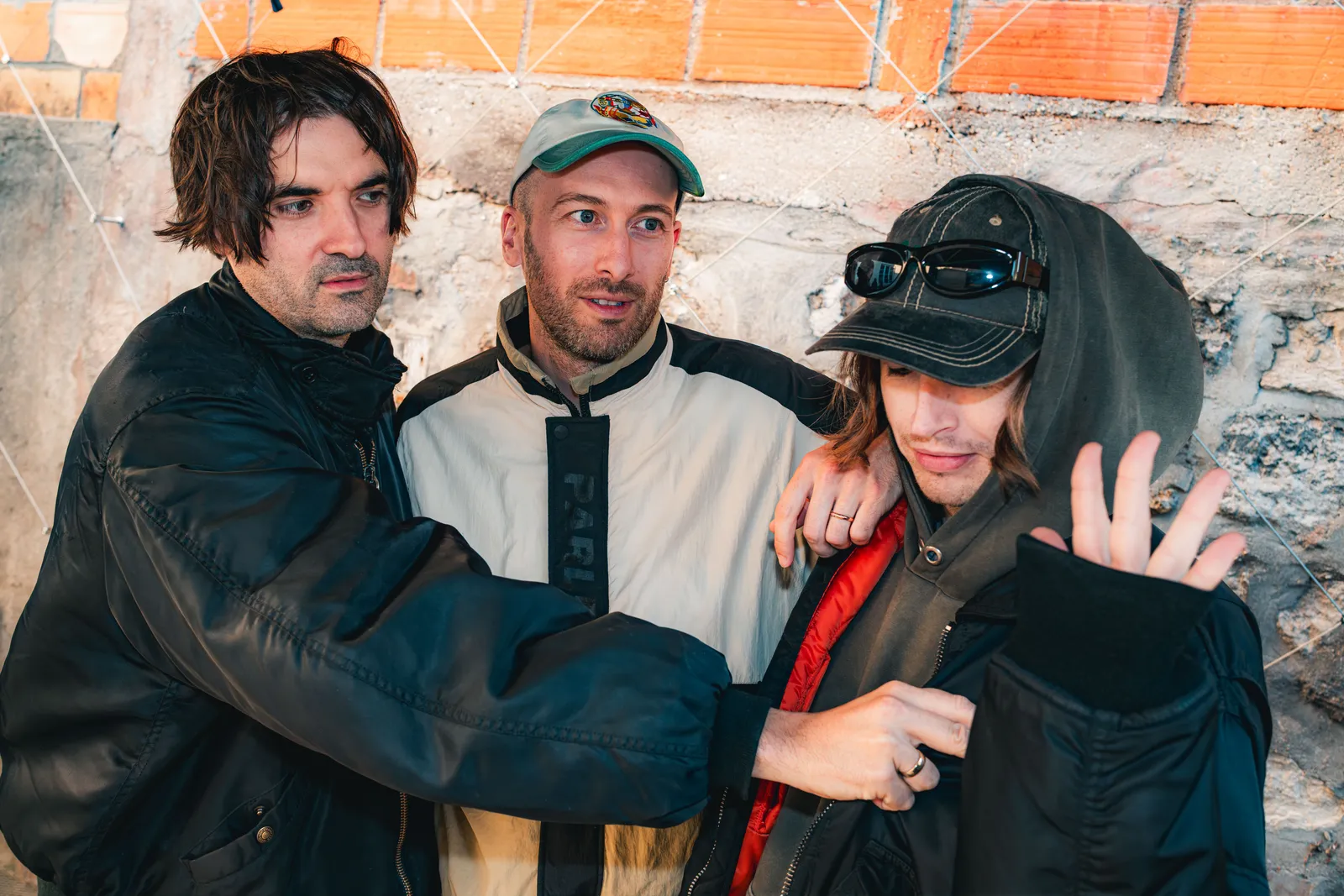
La Face B : Salut les gars, comment allez-vous ?
Joseph ‘Joe’ Stone : On va vraiment très bien. Ça fait plus d'une semaine qu'on a commencé la tournée maintenant et on prend le rythme des concerts. On a dépassé le stress initial des répétitions des nouveaux morceaux, de l'installation du stand de merchandising et des réglages techniques. Maintenant, on est dans un super rythme.
LFB : L'album s'appelle EXPO. Je ne sais pas si vous le saviez, mais en français c'est une abréviation pour exposition (exhibition en anglais). Cela m'a aussi fait penser à l'exposition au sens de se dévoiler (exposure). Qu'est-ce qui est montré à dessein et qu'est-ce qui reste hors de notre portée en tant qu'auditeur ? Comment avez-vous pensé le titre de l'album ?
Rhys Edwards : Pour être honnête, on ne savait pas qu'en français 'expo' désignait une exposition d'art ! Pour nous en anglais, une expo évoque plutôt ces salons professionnels où les marques installent des tables dans un hall d'exposition pour présenter leurs nouvelles idées et produits. On aimait le concept du monde qui s'expose lui-même, et on s'imaginait comme une simple table parmi tant d'autres dans une grande pièce remplie d'idées.
Pour répondre à ta question sur l'exposition de soi : on a été très confiants et ouverts sur ce disque. Chacun a trouvé sa place, le chant a été remonté dans le mixage et les paroles étaient beaucoup plus claires. On s'est exposés ouvertement, et on a même sorti une version remixée de l'album où on a invité d'autres artistes à plonger dans nos fichiers de projet bruts et à les transformer comme ils le souhaitaient.
Joseph ‘Joe’ Stone : Cela contraste nettement avec nos travaux précédents. Par le passé, on fonctionnait dans une bulle autonome : on créait tous nos visuels scéniques nous-mêmes et on organisait nos premiers concerts locaux en sélectionnant les artistes qui y exposaient leurs œuvres. On avait l'impression de tout faire seuls. Avec cet album, c'était beaucoup plus comme ouvrir une boutique ou un atelier ouvert, en tournant notre regard vers l'extérieur.
LFB : L'album s'ouvre sur Intro, un morceau de 41 secondes assez déstabilisante remplie de sirènes de police et d'échantillons sonores décousus, avant d'enchaîner sur Picto, un morceau de cinq minutes qui oscille entre tension intense et pulsations électroniques. Pourquoi avoir choisi une ouverture aussi troublante pour l'auditeur ?
Rhys Edwards : À l'origine, cette intro était beaucoup plus longue et faisait partie intégrante de Picto, ce qui en faisait un morceau très étendu. C'était l'une des premières pièces sur lesquelles on a travaillé pour le disque : les voix parlées provenaient d'un documentaire sur la solitude et les enregistrements d'ambiance avaient été capturés à Brighton, en Angleterre. On n'avait jamais inclus d'introduction dédiée sur un album auparavant. Elle semblait parfaite pour poser une ambiance sombre et nocturne. Au final, on l'a séparée pour qu'elle puisse exister d'elle-même sur les plateformes de streaming tout en installant les textures contrastées de l'album.
LFB : Musicalement, sur votre album, vous avez fait quelque chose d'expérimental et en même temps de très clinique. Est-ce une façon de refléter la froideur des lieux d'exposition, comme les galeries contemporaines aux murs d'un blanc pur ?
Rhys Edwards : On a toujours penché pour une approche clinique. Tout au long de notre carrière, on a évité de noyer le son sous la réverbération. On branche souvent les guitares directement dans la table de mixage pour supprimer l'air intermédiaire, parce qu'une vraie intimité naît du fait de ne pas se cacher derrière des effets artificiels. Nos textures émergent naturellement lorsque les instruments s'entrelacent et s'harmonisent. Ton analogie avec la galerie aux murs blancs correspond très bien à notre esthétique.
LFB : Comment avez-vous travaillé la tension entre sophistication formelle et désordre intérieur ? Notamment sur Square Root of None…
Joseph ‘Joe’ Stone : Eh bien, c'était un vrai défi d'essayer de donner du sens au chaos qui découle du découpage et de l'assemblage des échantillons sonores. Et ce morceau en particulier, c'est cinq cerveaux qui travaillent sur quelque chose avec énormément d'éléments à apporter. Il s'agit donc de faire le tri dans le bruit. C'est donner du sens à quelque chose et construire une chanson à partir d'une structure. C'était un exemple où on s'est permis de jeter énormément d'idées, presque au point où le mixage est devenu très difficile parce qu'on avait mis tellement de couches. Sur un disque, c'est l'exemple parfait où on s'est autorisés à être... quel est le mot, pas luxueux, mais... quel est le mot ?
Rhys Edwards : Indulgents.
Joseph ‘Joe’ Stone : Indulgents envers nous-mêmes, oui. On s'est permis de poser beaucoup d'idées. On n'a pas toujours utilisé toutes les couches. Alors que d'autres chansons sont peut-être plus épurées et plus disciplinées. On a souvent une certaine discipline dans le groupe. Evidemment on a la basse et la batterie, mais on essaie de ne pas dépasser trois couches entrelacées à la fois parce qu'en concert on est trois à jouer ces parties. Cette petite limitation est bonne parfois, car si tu te permets de toujours poser trop de couches, ça n'améliore pas toujours le morceau. Si tu dois jouer ces parties et rester concentré... Et la raison pour laquelle cette chanson était très difficile à mixer à la fin, c'est parce qu'on avait trop de couches.
LFB : Alors que le début de l'album est marqué par la tension, This Time I’m Present apporte un vrai sentiment de clarté et une chaleur réconfortante. Avez-vous ressenti le besoin d'inclure ce moment de répit au milieu de l'album ?
Joseph ‘Joe’ Stone : Oui, je pense que c'est toujours bien quand tu écoutes une pièce musicale, un ensemble d'œuvres, que ça t'emmène en voyage. Tu as besoin d'une petite pause dans l'intensité, et si tu fais redescendre la pression, ça veut dire que tu peux la faire remonter ensuite. C'est comme ajouter de la dynamique du début à la fin. Et on aime l'idée qu'un album soit un voyage. Tu commences au début et tu penses ton cheminement jusqu'à la fin. On a aussi toujours pensé à la façon dont le vinyle a deux faces, et au processus d'écoute de la face A comme un tout autonome, puis tu le retournes et tu commences un nouveau voyage, un nouveau chapitre.
LFB : Le morceau Showroom Poetry se distingue par ses éléments lo-fi d'inspiration japonaise et ses collages électroniques subtils qui réintroduisent une légère tension. Qu'est-ce qui vous a inspiré cette atmosphère unique ?
Joseph ‘Joe’ Stone : Ce morceau a été écrit différemment des autres. Plutôt que d'assembler des fichiers à distance, on l'a composé ensemble en direct en studio à partir de rien. Le jouer ensemble a donné à l'arrangement une texture plus épurée et plus chaleureuse, montrant une vraie cohésion de groupe avec une touche de nostalgie.
Rhys Edwards : La chanson a un côté très nostalgique, oui.
LFB : Weights & Measures crée un monde psychédélique qui évoque l'ambiance d'une bande originale de James Bond. Avez-vous abordé ce morceau comme s'il s'agissait de la musique d'un film imaginaire ?
Joseph ‘Joe’ Stone : Je ne pense pas que ce soit parti de là. La référence à James Bond, c'est un peu une blague interne dans le groupe aussi. On en a bien rigolé. Et c'est comme ça que le morceau a commencé à l'origine. Mais savoir si c'était censé être une musique de film, je ne sais pas. Je ne pense pas que c'était dans nos têtes. C'était plutôt un bon échantillon sonore et on s'inspirait du trip-hop et du son de cette batterie. C'était très inspirant pour nous, puis le morceau est parti dans une autre direction.
LFB : Si vous deviez composer la musique d'un vrai film, quel genre de cinéma vous plairait ?
Rhys Edwards : On adorerait composer pour un petit film d'art et d'essai indépendant, peut-être en noir et blanc, ou un thriller dramatique ou un film d'horreur !
LFB : En parlant de dramatique… Après l'accident de votre studio, diriez-vous que cet album est né de doutes ou de certitudes ?
Rhys Edwards : De confiance et de certitude. Oui, absolument. C'était une très bonne période de création musicale pour nous. On était très confiants et aussi très sûrs de nos capacités à nous enregistrer nous-mêmes. On a un studio à Londres et un autre à Stockholm où on peut travailler et où on a la chance d'avoir de bons micros et de bons préamplis. On était donc sûrs que lorsqu'on enregistrait une nouvelle idée, on n'aurait pas besoin de la réenregistrer parce qu'elle ne sonnait pas assez bien. Et de manière générale, on venait de faire une tournée américaine où on avait joué devant beaucoup de monde et c'était très stimulant de faire un nouveau disque à un bon rythme. La première année, on a travaillé très vite, puis la seconde a été plus lente pour le mixage et l'édition.
LFB : Le processus complet de création a donc pris deux ans ?
Rhys Edwards : Oui, un an pour l'écriture et l'enregistrement, et un an pour le mixage et l'édition. C'est un bon rythme pour nous. Callum Brown, notre batteur ici présent, a joué un rôle crucial pour lancer cet élan initial en enregistrant entre 18 et 25 boucles de batterie isolées au préalable. Importer ces rythmes dans nos logiciels nous a permis de construire rapidement des idées de chansons. Contrairement à nos deux premiers albums écrits à la guitare sur des boîtes à rythmes basiques, ce disque a été porté dès le départ par la rythmique et les percussions.
Callum Brown : J'ai abordé la section rythmique en superposant des rythmes électroniques programmés et des boîtes à rythmes avec de la batterie acoustique jouée en direct par-dessus. Ce mélange a donné à l'album une palette sonore distincte dès le départ.
Rhys Edwards : Appliquer une forte saturation sur les kits de batterie faisait ressortir des harmoniques qui produisaient des notes de musique précises. Ces harmoniques dictaient souvent la tonalité dans laquelle on allait composer les parties de guitare. Même si notre processus est réfléchi, on adore laisser les heureux accidents sonores guider notre écriture.
LFB : Si EXPO était une vraie exposition, qu'attendez-vous des visiteurs : une idée, un doute, un sentiment, un inconfort ou tout à la fois ?
Rhys Edwards : Je suppose tout à la fois. Je pense que ce serait comme un bombardement et quelque chose qui suscite de l'anxiété. On a eu une mauvaise critique qui disait que l'album était 'trop lourd à écouter, qu'il y avait trop de choses et que ça rendait anxieux', et je ne pouvais pas vraiment être d'accord ou pas d'accord, c'était leur ressenti. Ce serait donc une exposition très intense où tu ressors avec l'impression que ton bombardement numérique quotidien a été poussé au maximum. Mais avec l'espoir de proposer quelque chose de plus significatif que le contenu superficiel qu'on trouve souvent dans les expositions contemporaines.
Callum Brown : Je pense aussi que ce serait moins immédiat. Ce serait quelque chose avec lequel tu devrais repartir, avec quoi tu devrais vivre pendant quelques jours ou quelques semaines pour assimiler ce que tu as vécu ou observé. Quelque chose que tu laisses mûrir... et qui en révèle davantage ensuite.
LFB : Rhys, ta voix est souvent chuchotée. Qu'est-ce qui permet cette fragilité qu'un état frontal ne te permet pas ?
Rhys Edwards : J'enregistre le chant avec beaucoup de saturation et de distorsion, ce qui fait ressortir chaque respiration et chaque nuance subtile sans avoir besoin de chanter fort. Je n'aime pas le son de ma voix quand je chante fort ; le chuchotement crée une connexion intime et directe avec l'auditeur. J'ai toujours admiré Chino Moreno de Deftones pour sa façon d'utiliser la distorsion afin de transmettre une émotion intense tout en conservant cette proximité vocale. J'ai toujours trouvé cela très intime pour l'auditeur. C'est juste ma façon de présenter mes pensées et mes sentiments au plus près du cerveau.
LFB : Le groupe est comparé au math rock voire à l'art-rock. Ces étiquettes sont-elles pertinentes ou même importantes pour vous ?
Joseph ‘Joe’ Stone : Je trouve que c'est une question difficile quand on nous demande quel genre on fait. Au fil des ans, on nous a étiquetés 'psych rock', ce avec quoi je ne suis pas forcément d'accord. On a joué dans plein de festivals psychédéliques et parfois on était le groupe le plus pop du plateau. Math rock, art rock... oui, je peux me retrouver là-dedans.
Je trouve cela difficile de mettre les groupes dans des cases et c'est un peu réducteur. On ne nous avait jamais qualifiés de math rock avant cet album d'ailleurs. C'est amusant de voir les journalistes employer de nouveaux termes, ça montre que le groupe évolue. Mais on est assez anguleux, et l'art rock ou le post-punk peuvent l'être aussi. On a aussi des éléments de shoegaze, même si on n'est pas un groupe de shoegaze.
LFB : L'expérimentation était le but principal, quelles étaient vos conditions ? Comment considérez-vous l'IA dans votre création ?
Joseph ‘Joe’ Stone : Bonne question. Les conditions... On a toujours aimé ces idées hypnotiques où l'on se perd dans la répétition de la musique ou les éléments qui s'entrelacent. On travaille souvent sur trois couches. Auparavant c'était trois guitares, aujourd'hui ce sont des guitares, des synthés ou des arpèges. Au début, on devait pouvoir tout rejouer en concert, mais maintenant qu'on a des échantillonneurs sur scène, on peut monter à quatre ou cinq couches. On croit beaucoup aux limitations : on cherche toujours à enlever des éléments plutôt qu'à en ajouter, ce qui peut être douloureux mais est une bonne chose.
Concernant l'IA, on en est très méfiants. Il y a une bonne et une mauvaise façon de l'utiliser. On l'a utilisée comme un outil, un plug-in très élaboré. On voulait savoir à quoi ressemblerait une voix féminine sur un passage : on a utilisé l'IA pour créer une version féminine de la voix de Rhys. C'est resté comme un élément temporaire, mais cet artefact numérique collait bien avec l'album. On aime l'utiliser dans son état actuel d'imperfection, un peu comme l'usage des appareils photo numériques des années 90 pour leurs pixels et leur distorsion.
LFB : Vous l'avez utilisée pour la voix féminine plutôt que de chercher la bonne chanteuse ?
Joseph ‘Joe’ Stone : Oui. Ça donnait un côté spectral, et comme c'était la voix de Rhys, il y avait quelque chose de familier qu'on n'aurait pas pu créer autrement. Ce n'était pas un simple changement de hauteur, ça a créé quelque chose d'un peu plus fantomatique.
LFB : En creusant si loin l'expérimentation, quand vous êtes-vous dits que l'album avait trouvé sa forme finale ?
Joseph ‘Joe’ Stone : Parfois on va un peu trop loin et il faut faire marche arrière. Les limites viennent souvent des contraintes concrètes : la fin du budget, les déplacements entre Londres et Stockholm. Avoir une limite de temps est une bonne chose. C'est aussi quand on se sent vidés à la fin, qu'on a exprimé tout ce qu'on avait à dire pour chaque idée et que chacun a apporté sa pierre à l'édifice. Les derniers ajouts se font jusqu'au mixage et au mastering.
LFB : Et pour conclure, que recommandez-vous en musique, littérature, cinéma ou autre ?
Rhys Edwards : J'ai toujours un trou de mémoire sur cette question ! Je dirais le film finno-russe Compartiment No.6. C'est le meilleur film que j'ai vu ces dernières années.
Joseph ‘Joe’ Stone : Un des derniers livres que j'ai lus est À l'est d'Éden de John Steinbeck. C'est magnifiquement écrit sur le Dust Bowl américain et ça résonne fortement avec la sécheresse qu'on a connue cet été.
Callum Brown : Aussi le livre de Nicholas Carr, Le Grand Leurre sur la façon dont Internet transforme notre cerveau, très pertinent aujourd'hui. Et Les Soprano ?
Rhys Edwards : Exactement ! Que tous ceux qui n'ont jamais regardé Les Soprano regardent Les Soprano !
ENGLISH VERSION BELOW
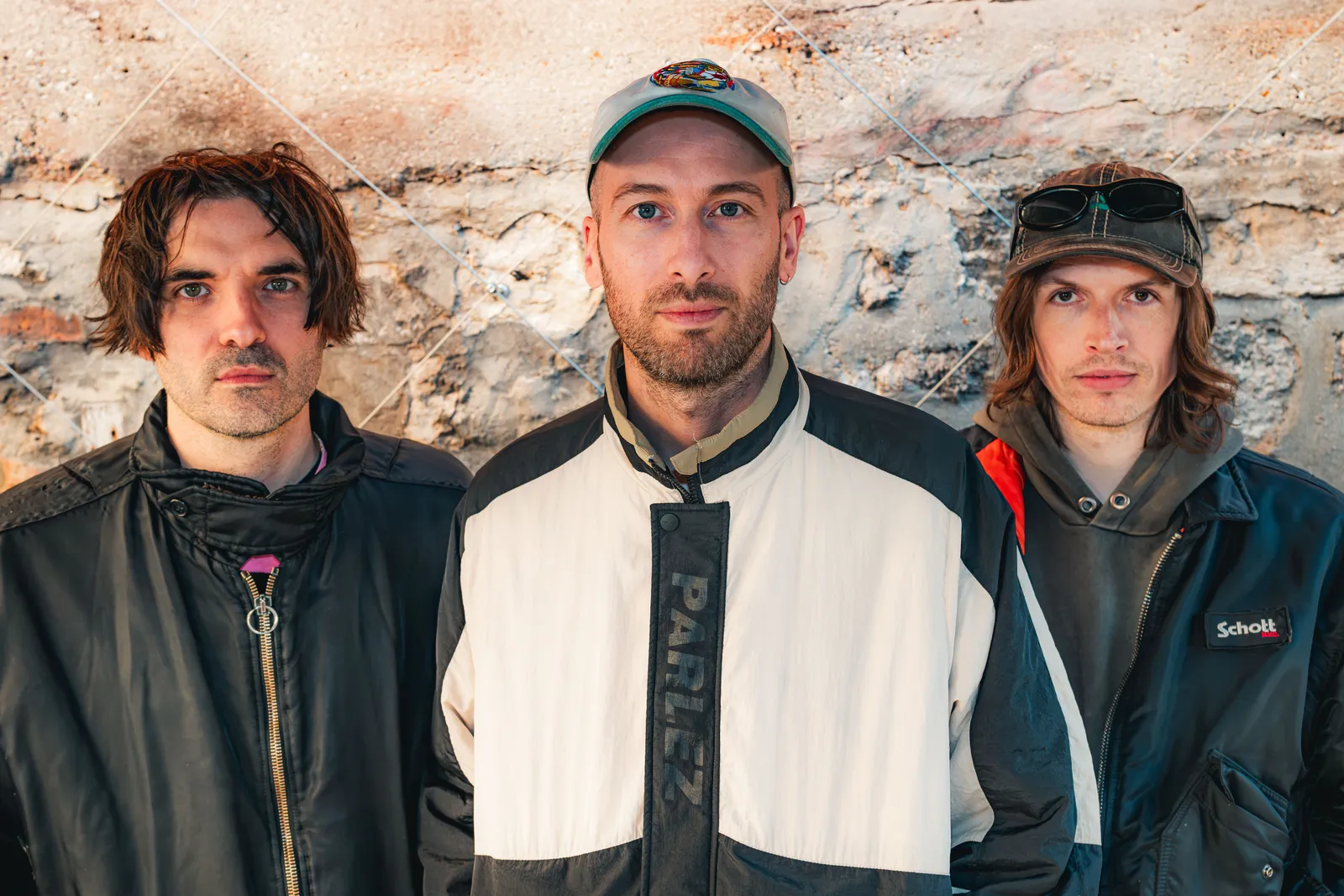
La Face B : Hello guys, how are you ?
Joseph ‘Joe’ Stone : We're doing really well. We're over a week into the tour now and we're settling into the flow of the gigs. We've gotten past the initial stress of rehearsing new material, setting up the merch table, and ironing out technical details. Now we're in a great groove.
LFB : The album is called EXPO, I don’t know if you knew it but in French it’s an abbreviation for exposition which means exhibition. It also made me think of exposure, what is shown in purpose and what’s out of our sight as listener ? How did you think the title of the album ?
Rhys Edwards : To be honest, we didn't realize that in French 'expo' meant an art exhibition! To us in English, an expo evokes industry trade shows where brands set up tables in a convention hall to present their new ideas and products. We liked the concept of the world exhibiting itself, and we imagined ourselves as just one table among many in a large room full of ideas.
To answer your question about exposure : we were very confident and open on this record. Everyone found their space, the vocals were pushed higher in the mix, and the lyrics were much clearer. We exhibited ourselves openly, and we even released a remix version of the album where we invited other artists to look into our raw project files and transform them however they liked.
Joseph ‘Joe’ Stone : It contrasts significantly with our previous work. In the past, we operated inside a self-contained bubble: we created all our stage visuals ourselves and curated our early local shows, picking the artists who exhibited their work. We felt like we were doing everything on our own. With this album, it felt much more like setting up a shop or an open workshop, turning our focus outward.
LFB : The album opens with the 41-second, nerve-wracking Intro filled with police sirens and disjointed samples, before flowing into Picto, a five-minute track that oscillates between intense tension and electronic beats. Why did you choose such an unsettling opening for the listener ?
Rhys Edwards : Originally, that intro was much longer and part of Picto, making it an extended track. It was one of the first pieces we worked on for the record: the spoken voices came from a documentary about loneliness, and the ambient field recordings were captured in Brighton, England. We had never included a dedicated intro on an album before. It felt right for setting a dark, nighttime mood. In the end, we separated it so it could stand on its own across streaming platforms while setting up the album's contrasting textures.
LFB : Musically on your album, you did something experimental and at the meantime very clinical, is this a way to reflect the coldness of the exhibition places, like contemporary galleries with pure white walls ?
Rhys Edwards : We've always leaned toward a clinical approach. Throughout our career, we've avoided drowning the sound in reverb. We often plug guitars directly into the mixing desk to remove the air in between, because true intimacy comes from not hiding behind artificial effects. Our textures arise naturally as instruments intertwine and harmonize. Your analogy of a white-walled gallery fits our aesthetic very well.
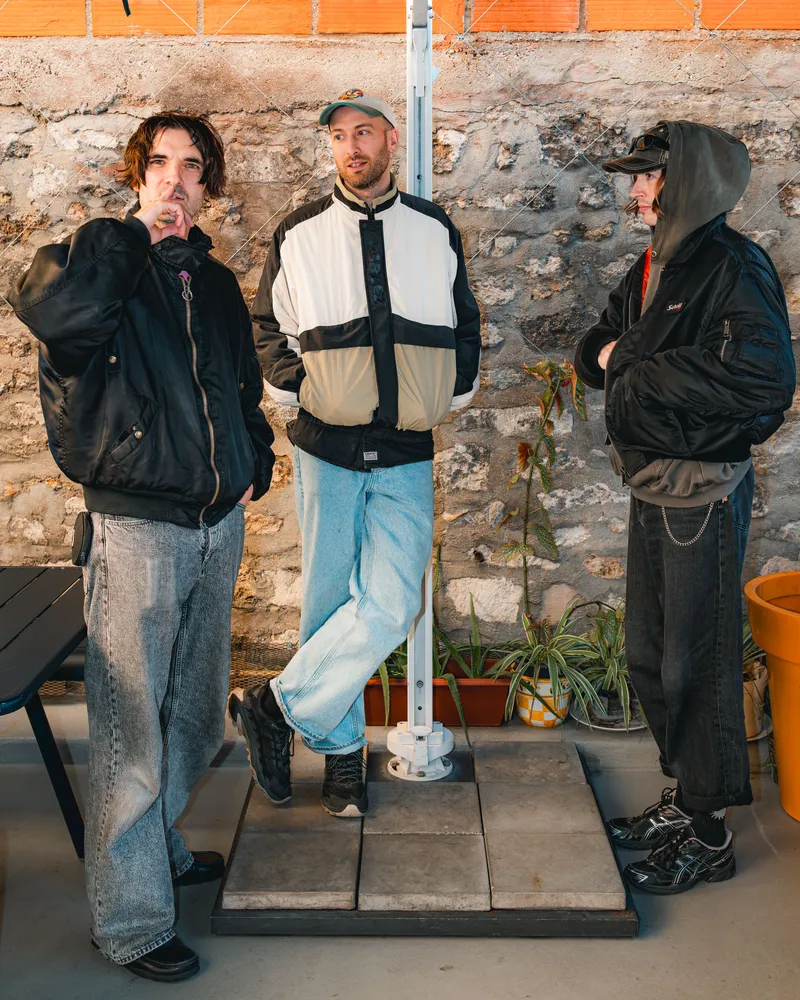
LFB : How did you work the tension between formal sophistication and inner disorder ? Especially on Square root of none…
Joseph ‘Joe’ Stone : Well, that was quite challenging is trying to make sense of some of the chaos that comes from picking apart the samples and mashing them together. And that song particularly, that is five brains working on something with a lot of stuff to contribute. So, it is picking through the noise. It's making sense of something and it's building a song out of a structure really. So um yeah, but that was one example where we allowed ourselves to throw many many ideas almost to the point where it was very hard to mix because we put so many layers. So we often on a record... that's a perfect example, that song where we allowed ourselves to be... what's the word, not luxurious, but like... what is the word?
Rhys Edwards : Indulgent.
Joseph ‘Joe’ Stone : Indulgent, yeah. We allowed ourselves just to put many ideas down. We didn't always use every layer. Um whereas other songs are maybe more sparse and more disciplined. We often have a little bit of a discipline in the band, but we try not to have... more than, we have obviously bass and drums, but we try not to have more than three interweaving layers at once because obviously in a live setting there's three of us doing those parts. So that little limitation is good sometimes because if you allow yourself just to always put so many layers down, it doesn't always make it better. If you have to play the layers and stay focused... and the reason why that song was very hard to mix in the end is because we did have too many layers on them.
LFB : While the beginning of the album is marked by tension, This Time I’m Present brings a real sense of clarity and a feeling of comforting warmth. Did you feel the need to include this moment of respite in the middle of the album ?
Joseph ‘Joe’ Stone : Yeah, I think that's always good for when you're listening to a piece of music, a collection of works, is that it takes you on a journey I suppose. And yeah, you do need a little break from the intensity and if you bring something down kind of that means you can bring something back up again. So, it's like adding the dynamic from start to finish. And we do like the idea that an album is a journey. You start from the beginning, you work your way through to the end. And we've always thought about how the vinyl has two sides to it and the process of listening to side A as almost it could be a standalone side, you know, and then you turn it over and you start a new journey, a new chapter. So we've always had that in mind kind of side A and side B and played around that slightly.
LFB : The track Showroom Poetry stands out for its Japanese-inspired lo-fi elements and subtle electronic collages that reintroduce a subtle tension. What inspired you to create this unique atmosphere ?
Joseph ‘Joe’ Stone : That track was written differently from the rest. Rather than assembling file transfers remotely, we composed it live together in the studio from scratch. Playing it together gave the arrangement a sparser, warmer texture, showcasing a natural band cohesion with a touch of nostalgia.
Rhys Edwards : It's very nostalgic sounding, the song.
LFB : Weights & Measures creates a psychedelic world that evokes the feel of a James Bond soundtrack. Did you approach this track as if it were the music for an imaginary movie ?
Joseph ‘Joe’ Stone : I don't think it started out like that. This is Joe speaking again. Um the James Bond bit that you mentioned, that's kind of a bit of an inner joke in the band, too. We did laugh about that. And that's how originally the song started with that. But whether it was meant to be a film soundtrack, I don't know. I don't think that was in our minds. Um it was more it was a nice sample and we were quite inspired by sort of like trip hop and stuff anyway and have it with the sound of those drums and stuff. It was just quite inspiring to us and then it goes in a different direction and then we moved it in the end.
LFB : If you were to score a real film, what kind of cinema would appeal to you?
Rhys Edwards : We'd love to score a small independent art film, perhaps in black-and-white, or a dramatic thriller or horror movie !
LFB : Speaking of dramatic… After the accident of your studio, will you say this album was born from doubts or certainty ?
Rhys Edwards : Confidence and certainty. Yeah, yeah. This was a good time of making music for us. We were pretty confident and also quite confident in our abilities to record ourselves as well. So, there's a studio space in London, there's a studio space in Stockholm where we can work from where we're lucky enough that you know there is good microphones and good preamps. So we were confident that we could get when you make a new idea when you record it that you don't need to re-record it because it didn't sound good enough. And generally we had done an American tour where we had played to lots of people and we felt like it was very fun to make a new record and make it at quite a speed. So the first year we worked very fast and then the second year was quite slow in mixing and editing.
LFB : So the complete creation process took two years ?
Rhys Edwards : Yes, one year for writing and recording, and one year for mixing and editing. That's a solid pace for us. Callum Brown, our drummer, played a crucial role in establishing that early momentum by recording 18 to 25 standalone drum loops in advance. Importing those beats into our software allowed us to build song ideas rapidly. Unlike our first two albums, which were written on guitars over basic drum machines, this record was driven from the ground up by rhythm and percussion.
Callum Brown : I approached the rhythm section by layering programmed electronic beats and drum machines with live acoustic drum performances. That blend gave the album a distinct sonic palette right from the start.
Rhys Edwards : Applying heavy saturation to the drum kits excited overtones that produced distinct musical pitches. Those harmonics often dictated the key in which we wrote the guitar parts. While our process is deliberate, we love letting raw sonic happy accidents guide our songwriting.
LFB : If EXPO was a real exhibition what would you expect from visitors : an idea, a doubt, a feeling or even a discomfort or all at once ?
Rhys Edwards : I guess all at once. I think it would be like a bombardment and a kind of anxiety inducing. I mean, I think we had one bad review of the album and I couldn't really disagree with it in that it was like, 'Oh, this was just too much to listen to. Like, I had to turn it off. It was too many things going on. It made them feel anxious'. So, I guess it would be, yeah, a pretty intense exhibition where when you come out of it, you feel like your already normal experience of digital bombardment has been turned up to the max. But hopefully something that is more meaningful than swiping slop that you often find in contemporary exhibitions.
Callum Brown : I think it also would be maybe less immediate. It would be something that you would need to take away with you and sit with for a couple of days or a couple of weeks and process what you've experienced or witnessed or whatever. Something that you stew on for a while... and then it reveals more.
LFB : Rhys, your voice is often whispered, what allows this fragility that a frontal state doesn’t ?
Rhys Edwards : I record vocals with heavy saturation and distortion, which brings out every breath and subtle nuance without needing to project loudly. I dislike how my voice sounds when I sing loudly; whispering creates an intimate, direct connection with the listener. I've always admired Chino Moreno of Deftones for how he uses distortion to convey intense emotion while maintaining that vocal closeness. And I've always found that to be very intimate for the listener. And I couldn't give you any direct examples, but I think maybe I do... I like all types of singers to be honest, so I can't say that. But I think maybe it's just the way I like to present my thoughts and feelings that's closest to the brain, yeah.
LFB : The band is compared to math rock or even art-rock, are these labels relevant or even important for you ?
Joseph ‘Joe’ Stone : I find it a tough question when people ask what genre we are. Over the years we've been labeled as psych rock, which I don't necessarily agree with. We've played a lot of psych festivals and sometimes we're like the lightest, poppiest band there. Math rock, art rock... yeah, I can get on board with that. I suppose it's... I find it difficult to pigeonhole bands generally and it's slightly reductive. I think we never got called math rock until this album as well. So sometimes when journalists use new things, it's quite fun to see because it shows that the band is changing as well. I don't think we've ever just had one genre that everyone calls us either. No. But I think we are quite angular if you say the word. And I think art rock is quite angular. I mean post-punk can be angular. Math rock can be angular. I mean there's some really bad math rock as well. But yeah, I think it's slightly too reductive for us. And some shoegaze sometimes, I think there's elements in there, but we're not a shoegaze band, you know. I think in our history we've all liked shoegaze so I think it works its way in there, similarly with other genres. So I don't know, I don't think about it too much.
LFB : Experimentation was the main goal, what were your conditions ? How do you consider AI in your creation ?
Joseph ‘Joe’ Stone : Good question. Conditions... We've always liked these kind of trippy ideas basically where you get lost in the repetitiveness of some music or things that intertwine. So I think often we've had three layers going. Previous albums would be three guitars and gradually it's becoming one or two guitars plus synths or some arpeggio, something like that. So I think that kind of permeates through a lot of the music. Another condition... back in the earlier stages we had to be strict because what we recorded we needed to play live. But now there's quite a few samplers on stage so it has enabled us to maybe push the three limit to four or five because we are able to have some layers playing on a machine that we activate. We do believe in limitations... despite Square Root being everything thrown at it, usually that's just not the way we work and we are quite disciplined with ourselves and we're always looking at what to take away rather than what to add sometimes, which can be painful but it's probably a good thing.
Obviously we're very wary of AI. I think there's a bad way of using it and a good way of using it. I think we've used it in the sense of a tool, like a very elaborate plugin almost. I think the way it came into the album was we just wanted to know what it sounded like to have a female vocal for one part. So we used some AI to create Rhys' voice as a female version of it, and it stayed in there as a placeholder until somewhere down the line we thought we'll get someone to record that. But it worked with the album to have this kind of digital artifact in the sound. So, using that tool in its current state where it's not perfect... that's how we like to use it. A little bit like there's quite a trend at the moment to use digital cameras from the '90s because it's not perfect high quality video, so you see the pixels, you see the distortion and the imperfections. And that's how we've used AI in this album because we like that sort of uneasy sound.
LFB : You used it for female voice preferring finding sort of right singer in this case?
Joseph ‘Joe’ Stone : Yes. It sounded kind of ghostly and because it was Rhys' voice, there was something that was familiar there that couldn't have been created with his own voice and the current plugins we had. It wasn't a simple pitch change. It just created something that was a bit more ghostly and I'm not sure we'd be able to redo it now because technology has moved on since then.
LFB : As you dig really deep in experimentation, when did you say yourself the album found its final form ?
Joseph ‘Joe’ Stone : that's another thing that sometimes we perhaps go slightly too far and then have to rein it back in again. We have recording sessions when... because Rhys lives in Stockholm, we flew over a few times and got as much done as possible. We have other sessions in London. We create loads of stuff. And then by this point your limit is that you can't have any more recording sessions because either the money's run out or we need to get moving or we can't fly over anymore or we don't have time to go to Stockholm. So having a time limit for us is good. And sometimes we just think, 'We need to stop now because we need to move on'. I think also when you feel almost depleted in a way at the end, like you've got stuff out of your system for each idea or the record in its entirety... when you feel like you've got everything you needed to say out of your system and everyone individually has thrown in their two cents, then I think that's when it can get down to the mixing point. And new things appear as you're getting towards the end of mixing. Sometimes you think, 'Wow, this part of the song is missing some kind of frequency or something, there's power that was there before and it's lost'. So we'll do something now. So it's not like it's ever really finished until it goes to mastering. That could just be a simple keyboard pad or something that needs to come in for one section. So yeah, it goes right to the end, the bitter end.
LFB : And to wrap up, what do you recommend in music, literature, movies or whatever ?
Rhys Edwards : This is always where my mind goes blank. Yeah... I think it's a Finnish-Russian film called Compartment No.6. It's a couple of years old now, but that was the best film I saw that year. I think if I had to guess, it was 2024. And I can't wait to watch that film again. That was the last time I saw a film where I was like, 'Oh, I really enjoyed it, it was so good'.
Joseph ‘Joe’ Stone : I'll just say one of the last books I read was East of Eden, which has been made into a TV show recently, but the book is really beautifully written about the American Dust Bowl and people traveling out to the coast because they need to, and it really resonates with what we had this summer in terms of drought and lack of food. So I thought that's quite poignant and a really brilliant book.
Callum Brown : Also a book by Nicholas Carr called The Shallows, which essentially is about how the internet has changed the way our brains work, also quite poignant in today's climate and with the themes of the record. Any Sopranos ?
Rhys Edwards : Well, exactly ! Anyone who's not watched The Sopranos... I've watched it three times in my life, and just anyone who's never watched The Sopranos, watch The Sopranos !