
Interviews
Noah Hill dévoile son premier projet solo « Ok ok Now »
On connaissait Noah Hill comme l'un des membres du groupe australien Parcels. Le 4 septembre dernier, celui qui se décrit comme un « soft sad boy » sortait son premier album solo « Ok ok now ». Une plongée dans les archives d'une relation passée, où il se livre avec beaucoup de vulnérabilité. Il est presque 12h à Paris quand nous rencontrons le chanteur, qui nous en dit plus sur la construction de cet album profondément intime.
ENGLISH VERSION BELOW
La Face B : Comment tu décrirais ta musique à quelqu'un qui ne la connaît pas encore ?
Noah Hill : Je la décris souvent comme de la musique indie et douce de garçon triste. Je pense que c'est hyper vulnérable, et j'essaie d'être aussi authentique que possible. De permettre aux gens d'être émus en étant extrêmement transparent.
La Face B : Et si tu ne pouvais pas parler de la musique, tu te décrirais comment ?
Noah Hill : Plutôt bruyant. Étonnamment bruyant. J’ai beaucoup d'énergie, je suis très intense. Ma musique et moi au quotidien, on est parfois en contradiction. Je cours dans tous les sens frénétiquement, et la musique est comme un ancrage. Une sorte de réalité douce à l'intérieur de tout ça. C'est une façon pour moi de rester stable, de m'accrocher à quelque chose.
La Face B : Tu pensais sortir un album solo depuis un moment. Qu'est-ce qui t'a donné envie de te lancer maintenant ?
Noah Hill : C'est surtout le timing de la rupture qui a tout déclenché. Je venais de rompre avec cette personne, j'avais plus de temps, plus d'inspiration. Il ne se passait rien d'autre dans ma vie. J'avais la musique, j'avais le groupe, mais il n'y avait plus de relation. J'étais en tournée, sans stabilité, sans vraiment de maison. J'étais vraiment comme un garçon perdu. Et je me suis dit, c'est le moment, il n'y a pas de meilleur moment que celui-là pour faire ce que je voulais faire.
Et le groupe était dans un moment où les choses changeaient. On avait fini d’enregistrer, on était en tournée. Il n'y avait pas vraiment de travail créatif à faire. Ça m'a permis de me consacrer à 100% à ma propre créativité.
La Face B : C'est intéressant. J'aurais pensé qu'être en tournée prendrait tellement de temps et d'énergie que tu ne peux rien faire d’autre. Mais ça te donnait finalement du temps pour créer de ton côté.
Noah Hill : Pour être honnête, traditionnellement non. Tout le monde est différent. Le groupe et moi, on n'a jamais pu écrire en tournée. On n'était vraiment pas créatifs sur la route. C'était toujours deux périodes distinctes : soit tu pars en tournée et tu fais ça, soit tu prends une pause et tu crées à ce moment-là. Mais comme c'était mon projet solo, il y avait deux voies parallèles. J'avais déjà écrit les chansons, donc c’était plus une question de réserver des studios, d'aller dans des endroits, de faire des voyages seul et de finir les choses. J'ai vraiment compartimenté le groupe et mon propre projet pendant cette année-là. Je partais en tournée avec le groupe, il y avait deux semaines de pause, et j'allais directement en studio finir des trucs. Être créatif en tournée, c'était quelque chose de nouveau pour moi. Et je ne le recommande pas. J’étais comme un fou pendant un an. J'ai pratiquement travaillé sans interruption pendant onze mois. Et je le fais encore en ce moment, mais j'attends vraiment une pause avec impatience.
La Face B : Oui, donc là tu as besoin de dormir.
Noah Hill : Absolument !
La Face B : Le premier titre que tu as sorti c’est It’s All in My Head. Pourquoi avoir choisi ce morceau en premier ?
Noah Hill : J’ai sorti It’s All in My Head en premier parce que ça me semblait être le plus immédiat et le plus direct. En le montrant aux gens, c’était celui qui se comprenait le plus facilement. Quand tu lances un nouveau projet, tu veux que la musique soit compréhensible immédiatement. Mais dans ma tête, Bye Baby était le premier en termes de concept du disque. Il posait ce dont parle l’album. Il y a beaucoup de sentiment, abordé très directement dans la musique. Il résume bien la direction stylistique que j’essayais de prendre : la guitare acoustique douce avec des voix très pop. Quand tu sors des singles au début, tu essaies toujours d’équilibrer plusieurs choses, mais surtout de résumer le disque autant que possible. Que ce soit son sentiment, son sens ou sa musicalité.
La Face B : En écoutant l’album, j’ai trouvé que sur certains morceaux comme It’s All in My Head ou Once in a Lifetime, on a vraiment envie de chanter avec toi, c’est assez accrocheur. C’est étonnant pour un album de rupture. Est-ce une façon de transposer musicalement les émotions contradictoires d’une rupture ?
Noah Hill : Je pense que c’est juste ma façon d’écrire de la musique. J’adore la pop, j’adore les mélodies accrocheuses. J’aime les choses qui te font ressentir des émotions de façon directe. C’est quelque chose que j’aime faire et je pense que quoi que j’écrive, ça sera toujours un peu comme ça. Il y aura toujours cet instinct pop. J’ai essayé d’écrire de la musique qui soit moins comme ça, d’être plus subtil dans ce que je fais. Parfois je trouve que ma musique est très sincère et très directe. Mais je pense que c’est juste naturel avec une rupture ou des chansons d’amour, c’est ce qui sort.
La Face B : Il y a aussi ces fragments de vie au milieu des morceaux qui rendent l’ensemble très intime. D’où t’est venue l’idée de les ajouter ?
Noah Hill : L’album ressemble de toute façon à un message vocal personnel. Et il a vraiment été fait comme un message direct à une seule personne. C’était ça l’idée en le faisant. J’écrivais des chansons comme si je parlais à mon ex directement, comme s’il n’y avait personne d’autre dans la pièce. Donc quand j’ai assemblé le disque, je le tâtais et je réalisais qu’il y avait toutes ces chansons, mais le disque n’avait pas encore d’identité. Et puis j’ai relu de vieilles conversations qu’on avait eues, des vieux WhatsApp. J’ai trouvé ces petits fragments, qui résumaient notre relation de beaucoup de façons. Je construisais l’univers de l’album, je regardais de vieilles photos, je me rappelais de ce que cette période était. Ces fragments transforment tout l’album en un message vocal, en quelque chose de super personnel. Quelque chose que tu n’as pas vraiment le droit d’écouter, comme si tu étais dans une conversation où tu n’étais pas censé être et que tu apercevais la vie de quelqu’un d’autre de façon si intime que tu te demandes « est-ce que c’est autorisé ? » Je pense que je l’ai fait pour toutes ces raisons.
La Face B : En écoutant l’album, j’ai vraiment ressenti ça. C’est très intime. Comment tu vis le fait de partager ça avec le monde ?
Noah Hill : Je suis habitué à tout montrer d’une certaine façon. Ça fait partie du travail de musicien. Tu t’habitues à lire ton journal intime à tout le monde. Chaque album, c’est juste partager ses sentiments intimes. C’est le boulot d’une certaine manière. Mais je n’avais pas anticipé ce que ce serait, là c’est le niveau supérieur de la vulnérabilité et de la transparence. Je n’avais pas vraiment réalisé à quel point ça allait être intense jusqu’à ce que le disque soit vraiment sorti. Quand il est sorti je me suis dit : « oh mon dieu, ça fait vraiment beaucoup. » Il y avait ce sentiment que j’était peut-être allé trop loin, que c’était peut-être trop. Je pense que quand je joue les concerts parfois je me dis « wow, je mets vraiment trop de choses là-dehors. » Je me sens un peu gêné. En ce moment je me dis que je pourrais en faire moins.
La Face B : L’album progresse et les morceaux semblent devenir plus mélancoliques, notamment avec Sympathise et Love You Now. J’ai eu l’impression que même les audios suivaient cette courbe. On a des rires sur Oranges et puis un piano très sombre sur Dengha Place. Comment cette progression s’est construite ?
Noah Hill : C’est une réflexion intéressante, je n’avais pas pensé au fait que les messages vocaux devenaient plus sombres. Il y a un léger fil narratif dans l’histoire, les messages vocaux commencent avec elle qui dit qu’elle aime mon look. C’est quelque chose de positif, c’est le début du voyage. C’est comme le début de notre relation, et il y a le pendant et la fin. Puis, une sorte de vraie réconciliation à la fin où tu recommences à te sentir confiant, à avancer. Les messages vocaux essaient de suivre cette histoire. Peut-être que oui, naturellement ils sont tombés dans des sentiments de plus en plus sombres parce que la relation était de plus en plus brisée.
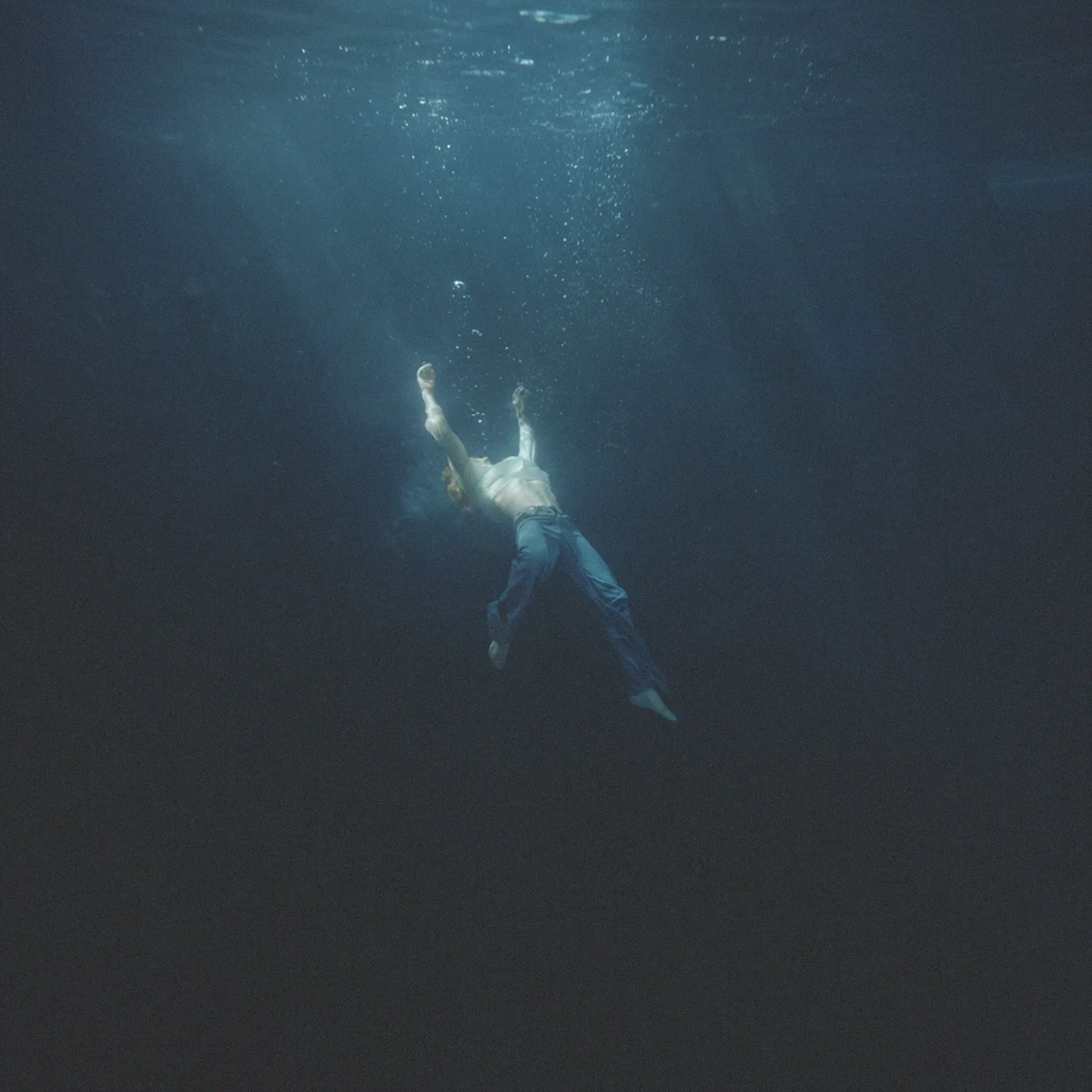
La Face B : La pochette de l’album vient du clip de Heaven et dans cette chanson tu répètes beaucoup « I’m sorry I hid it under the water.» Tu peux nous en dire plus ?
Noah Hill : Quand tu es dans une relation, parfois tu as ce sentiment persistant que quelque chose n’est pas 100% aligné, et tu ne sais pas trop comment l’aborder. C’est difficile d’être 100% honnête avec toi-même ou avec l’autre personne parce que c’est une vérité tellement difficile à reconnaître. Ou peut-être que tu l’évites. Ou tu espères que ça change, peut-être que tu ne te fais pas confiance. Tu te dis « ça va s’arranger, je vais changer ou comment je me sens par rapport à cette personne ou cette chose va changer », donc tu enterres un peu cette voix dans ta tête. Mais ce sentiment devient de plus en plus lourd jusqu’à ce que tu aies l’impression d’avoir l’océan au-dessus de toi et d’être entrain de couler. C’est tout le sujet de cette chanson. Et pour la pochette de l’album, l’océan avait une grande importance dans notre relation, mais on coulait. C’était juste moi qui me noie dans le poids d’aimer quelqu’un, mais que ça ne marche pas vraiment.
La Face B : Dans It’s All in My Head tu répètes « it’s been a rough year. » Est-ce que faire cet album t’a aidé à aller mieux ?
Noah Hill : Ouais, je pense que ça m’a fait du bien honnêtement. C’est quelque chose que je voulais faire depuis longtemps, et ça fait vraiment l’effet d’un poids en moins. J’avais cette envie de faire un album et quand tu fais quelque chose que tu désirais, c’est vraiment un soulagement. Il y a aussi de la fierté et de la joie là-dedans. Mais c’était aussi un long chemin et beaucoup de travail. Donc je suis dans une sorte de zone étrange. J’étais tellement passionné pendant deux ans et puis c’est sorti et tu te dis juste « wow, qu’est-ce que je viens de faire ? Où j’en suis ? Comment est-ce que j’interagis avec ça ? C’est bien ? À quoi je pensais ? » Jusqu’à ce que tu puisses prendre une pause et recommencer, ou prendre du recul et faire quelque chose de nouveau. Donc je pense que ça a été globalement une chose très positive pour moi dans ma vie.
La Face B : Est-ce qu’il y a un morceau sur l’album dont tu es le plus fier ?
Noah Hill : Je sais pas, peut-être It’s All in My Head parce que c’était le plus difficile à faire. C’est une chanson simple, mais elle m’a pris beaucoup de temps. Ça ressemblait à une vraie bataille de la composer. La chanson parle d’être dans sa tête, de trop réfléchir, de l’anxiété et de toutes les choses qui t’empêchent de faire de la bonne musique et de prendre de bonnes décisions dans la vie. C’était une sorte de boucle de rétroaction ironique, ça te met dans ta tête et tu te dis de ne pas être dans ta tête mais tu l’es quand même de toute façon. Donc c’était une vraie lutte, mais je savais que la chanson était bonne. J’ai travaillé dur et je l’ai polie jusqu’à ce que ça marche. Je suis fier du chemin.
Je préfère les chansons où c’est vraiment facile et que tu te dis « je suis tellement fier de ça, c’était juste de la pure créativité et du flow, ça m’a pris dix minutes et c’est la meilleure chanson que j’ai écrite. » Mais le travail c’est bien aussi, parfois c’est agréable.
La Face B : C’est une période chargée pour toi en ce moment, et un moment important avec ce premier album solo. Dans dix ans, comment tu aimerais te souvenir de cette période ?
Noah Hill : J’essaie d’être aussi présent que possible. Très souvent tu ne l’es pas, et tu entres dans ce processus de travail où tu ne profites pas de ce qui devrait être une période vraiment agréable. Et peut-être un an plus tard, tu regardes en arrière et tu te dis « j’ai vraiment fait du très bon travail là, je suis vraiment fier de tout ça, c’était vraiment une période cool. » Donc j’essaie d’être présent et d’en profiter dans le moment.
J’espère juste que dans dix ans, quand je regarderai en arrière, je me trouverai vrai et authentique, aligné avec mes intentions. Et aussi que je trouverai que j’ai été une bonne personne. Parce que c’est facile de spiraler sur les choses. Même le concert ce soir, je veux l’aborder avec joie, inspiration et passion plutôt que d’être trop critique envers moi-même. Je veux regarder en arrière et me dire « je m’aimais pendant cette période, je peux rendre ça agréable pour moi dans ma propre tête. »
La Face B : Une question que j’adore poser c’est : est-ce que tu aurais une recommandation culturelle à partager en ce moment ?
Noah Hill : Côté musique, je recommande vraiment d’écouter Tennyson Noble qui m’accompagne en première partie sur cette tournée. C’est un ami d’enfance et c’est le musicien, compositeur et être humain le plus incroyable. Et personne ne le connaît, c’est fou. C’est un peu révoltant le nombre de bons musiciens qui existent et qui ne sont tout simplement pas connus, pas partagés, personne ne les repère. Ça me laisse souvent perplexe. Il y a tellement de meilleurs musiciens que moi que personne ne connaît. Je me sens coupable de ça.
Je lis aussi un livre, The Courage to Be Disliked. C’est Anatole, du groupe, qui me l’a offert. On fait de la thérapie de groupe en ce moment et on essaie tous de travailler sur notre communication, donc on a tous eu ce livre, c’est assez drôle. J’écoute aussi beaucoup This is Lorelail, il est cool. Et Alex Amen vient de sortir un super disque que j’aime vraiment. Et le podcast sur Fela Kuti est incroyable. Ça permet de réaliser à quel point Fela Kuti a été influent.
La Face B : Merci pour ton temps et tes réponses. J’ai hâte d’écouter tes recommandations.
Noah Hill : Merci, à bientôt !
ENGLISH VERSION
La Face B : How would you describe your music to someone who doesn't know it yet ?
Noah Hill : I've been describing it as soft sad boy indie music. I think it's super vulnerable, and trying to be as authentic as possible. And allow all the people to be emotional by being extremely transparent.
La Face B : And how would you describe yourself if you couldn't talk about music?
Noah Hill : Sort of loud. Surprisingly loud. And sort of high energy, highly strung. Music and myself on a day to day are sometimes at odds with each other. I'm like running around frantically and then the music is trying to be a stable anchor or like a soft realness inside of that. It's a way for me to stay stable, hold on to something.
La Face B : You have been thinking about releasing a solo album for quite some time. What made you decide to go for it now?
Noah Hill : It was the timing of the breakup more than anything. I had just broken up with this person, and I had more time, more inspiration. Nothing else was going on in my life. I had music, I had the band, but there was no relationship. I was on tour, not stable, I didn't have a home really. I was really like a lost boy. And I just thought, this is it, there's no better time than this to make the thing I wanted to make.
Also the band was in a place where things were shifting. We finished the record and we were just touring it, there wasn't any creative work really to be done there. It just allowed me to go 100% into my own creativity after that.
La Face B : That's interesting. I would have thought that being on tour would take so much time and energy you can’t do anything else. But it actually gave you time to be creative on your own ?
Noah Hill : To be honest, traditionally no. Everybody's different. For me and for the band, we were never really being creative or writing on tour. It was always two different times : you go on tour and you do that, or you take a break and be creative then. Because it was my own solo stuff, there were two different lanes. I had written the songs, so it was more about booking studios, getting into places, doing trips on my own and finishing things.
I really compartmentalized the band and my own project during that year. I'd go on tour for the band and there would be two weeks off and I'd go straight to the studio and finish the stuff. It was actually a new thing for me, being creative on tour. And I wouldn't recommend it. I was like a mad man for a year. I pretty much worked straight for eleven months. I’m still doing it actually, but I'm looking forward to a break.
La Face B : Okay, so you need some sleep.
Noah Hill : For sure !
La Face B : Some songs were written years ago while others are more recent. You’re really sharing archives of your past relationship. The first track you released was It’s all my in my head. Why did you choose to release that song first ?
Noah Hill : I released It’s all my head first because it just seemed to me to be the most immediate and the most direct. And showing it to people, it was the one that was even more easily understood. When you’re starting a new project, you just want the music to be understandable immediately.
But then Bye baby was the first one in my head of the concept of the record. It layed out a lot of what the record is about. And it has a lot of sentiment, very directly talked about in the music. It just sums up the stylistic thing of what i was trying to go for , along with the guitar and the really pop vocals. Take a pop aesthetic but with soft accoustic guitar.
When you’re putting out singles and songs at first you’re always tring to balance out a few things but mostly you’re trying to sum up a record as much as it’s possible, its sentiment or its meaning or its sound.
La Face B : When I listened to the album, I thought that some tracks like It’s All in My Head or Once in a Lifetime, make you really want to sing along, and it’s quite catchy. It’s surprising for a breakup album. Is that a way to convey the conflicting emotions of the breakup ?
Noah Hill : I think it’s just my need or way of writing music. I just love pop music, I love catchy melodies, I like things that make you feel things in a more direct way. This is something that I like to do and I think no matter what I write it’s always gonna be a bit like that. There is always gonna be this pop instinct. I’ve been trying to think about writing music that’s less like that and trying to be more subtle in what I do. Sometimes I find my music is very earnest and very direct. It’s just a natural thing I think with a breakup or love songs or whatever, that’s just what comes out.
La Face B : There are also these snippets of life in the middle of the tracks that feel very intimate. Where did you get the idea to add them ?
Noah Hill : The album feels like a personal voice note anyway. And it was made really as a direct message to a single person. That was the feeling of making it. I was writing songs as if I’m talking to my ex partner in a very direct way, as if there’s no one else in the room. So when I came to putting the record together, I was feeling it out and realizing there were all of these songs. The record didn’t innately say that but it didn’t have an identity yet.
And then I just flipped through old conversations me and her had had, past WhatsApp chats. Finding these little nuggets of gold that really summed up our relationship in lots of ways. I was building the world so I was going through old photos and reminding myself what the time was like, and those ones made me realize that it makes the whole album like a voice note in a way. Like something super personal. And something you shouldn’t really be even allowed to listen to. It seems like you’re in this forbidden chat, you’re getting a glimpse into someone else’s life that’s so intimate that you wonder “is this allowed ?” I think I just did this for all of these reasons.
La face B : Listening to the album, I really felt that. It’s very intimate. How do you feel about sharing that to the world ?
Noah Hill : I’m so used to showing everything. Because that’s a part of what you do sometimes as a musician. You get comfortable just reading out your diary to everybody. Every album cycle is just sharing your intimate feelings. That’s the job in a way. But I didn’t anticipate this. I was like, this is the next level of vulnerability and transparency. But I didn’t truly connect with how intense it was gonna be until the record was actually out. And then I was like “oh my god, this is actually a lot.” There was this feeling that maybe I went too far, maybe it’s too much. I think when I’m playing the shows sometimes I’m like “wow, I’m really putting too much out there.” I feel a bit cringe or something. I could do less, that’s what I’m feeling now.
La Face B : The album progresses and the tracks seem to become more melancholic, especially with Sympathise and Love You Now. I felt like even the audio clips followed the arc : we have some laughter on Oranges and then a very dark piano on Dengha Place. How did this progression come about ?
Noah Hill : It’s an interesting reflection, I haven’t thought about the voice notes getting darker. There is a definite slight narrative to the story. The voice notes start off with her talking about how she likes how I look. It’s a positive thing and it’s the start of the journey. It’s trying to be like it’s the start of our relationship, there’s the during of the relationship, the end of the relationship, and then sort of a real merging at the end where I start to feel positive again about me in myself, and moving on and things like that. The voice notes are trying to track that story I guess. Maybe yes, naturally they fell into darker and darker feelings because the relationship was just more and more broken.
La Face B : The album cover is from the music video Heaven and in this song you repeat a lot “I’m sorry I hid it under the water.” Can you tell us more about that ?
Noah Hill : When you’re in a relationship sometimes, you get this niggling feeling inside of you that something is not 100% right and you don’t know how much to address it. It’s hard to be 100% honest with yourself or with the other person because it’s such a difficult truth to acknowledge. Or maybe you’re avoidant of it. Or you’re hoping that it changes, maybe you don’t trust yourself with that feeling. You’re just like “ah it’ll get better, I’ll change or how I feel about this person or this thing will change”. So you just bury it a bit. And then that feeling starts to get heavier and heavier until you feel like you’ve got the ocean on top of you and you’re sinking. That’s what that song is all about.
And then the album cover genuinely, there was a lot to do with the ocean in our relationship, but we were sinking. It was just me drowning in the weight of loving somebody so much but it not working really.
La Face B : In It’s All in My Head you repeat “it’s been a rough year.” Has making this album helped you feel better ?
Noah Hill : Yeah, I think it’s done great things to me to be honest. It’s something I wanted to do for a long time and that does feel like there’s a weight off. I had this craving to do this and when you do something you’ve been craving for a long time you’re like “wow”. It’s actually such a relief, and there’s pride and joy in that as well.
But also it’s been a long journey and a lot of work. So I’m in a bit of a weird zone. I was so passionate for two years and then it’s out and you’re just like “wow, what did I just do? Where am I at? How is it interacting with this? Is it good? What was I thinking?” Until you can take a break and start again or get some reflection and make something new. So I think it’s been overall a very positive thing for me in my life. I’ll say that.
La Face B : Is there a track on the album you’re most proud of ?
Noah Hill : I don’t know, maybe It’s All in My Head because it was the hardest one to do. That song was so difficult. For some reason it’s so simple but it took the longest. It felt like a total battle. Also because the song is about being inside of your head and overthinking and anxiety and all the things that stop you from making good music and making good choices in life. It was sort of an ironic feedback loop. It gets you inside of your head and you’re telling yourself not to be in your head but inherently you are anyway. So that was a real struggle but I knew that the song was good and I worked hard and polished it until it was working. I’m proud of the journey.
I mean, I prefer songs when it’s just really easy and then you’re like “I’m so proud of that, that was just pure creativity and flow and it took me ten minutes and it’s the best song I’ve written.” But the work is great too. Sometimes the work is enjoyable.
La Face B : It’s quite a busy time for you right now, and an important moment with this first solo album. Ten years from now, how would you like to remember this period ?
Noah Hill : I’m trying to be as present as possible. Very often you’re not, and you go into this process of working and you’re not enjoying what should be a really enjoyable time. And maybe a year later you look back like “I really did some really great work there, I’m really proud of all that, what a cool time that was.” So I’m trying to be present and to enjoy it in the moment.
I just hope that in ten years I look back and feel like I was true and authentic to myself and caught on the path of what my intentions were. And also that I was a good person through it. Because it’s easy to spiral on things. Even the show tonight, I want to come at this stuff with joy, inspiration and passion rather than get too critical of myself. I wanna look back and be like “I loved myself during this period because I made it enjoyable for myself in my own head.”
La Face B : A question I love to ask is : do you have any cultural recommendation you’d like to share right now ?
Noah Hill : Music wise, I would really recommend listening to Tennyson Noble, who is supporting me on this run. He’s a friend from growing up and he’s the most amazing musician, songwriter and person. And no one knows him, it’s crazy. It’s sort of fucked how many good musicians are out there and they’re just not being known, shared, no one picks them up. I’ve been baffled by that a lot in life. There are so many better musicians than me that no one knows about. I feel guilty about it.
I’m also reading a book,The Courage to Be Disliked. Anatole, from the band, got it for me. We’re doing band therapy at the moment and we’re all trying to work on our communication, so all five of us got the book, which is pretty funny.
I’ve also been listening to a lot of This is Lorelai, he’s cool. Alex Amen just put out a great record that I really like. And the Fela Kuti podcast is amazing. You realize how influential Fela Kuti was.
La Face B : Thank you for your time and answers. I look forward to listening to your recommendations.
Noah Hill : Thank you, see ya !