Interviews
Water From Your Eyes : "un album avec une perspective plus positive sur l'humanité."
English Version Below
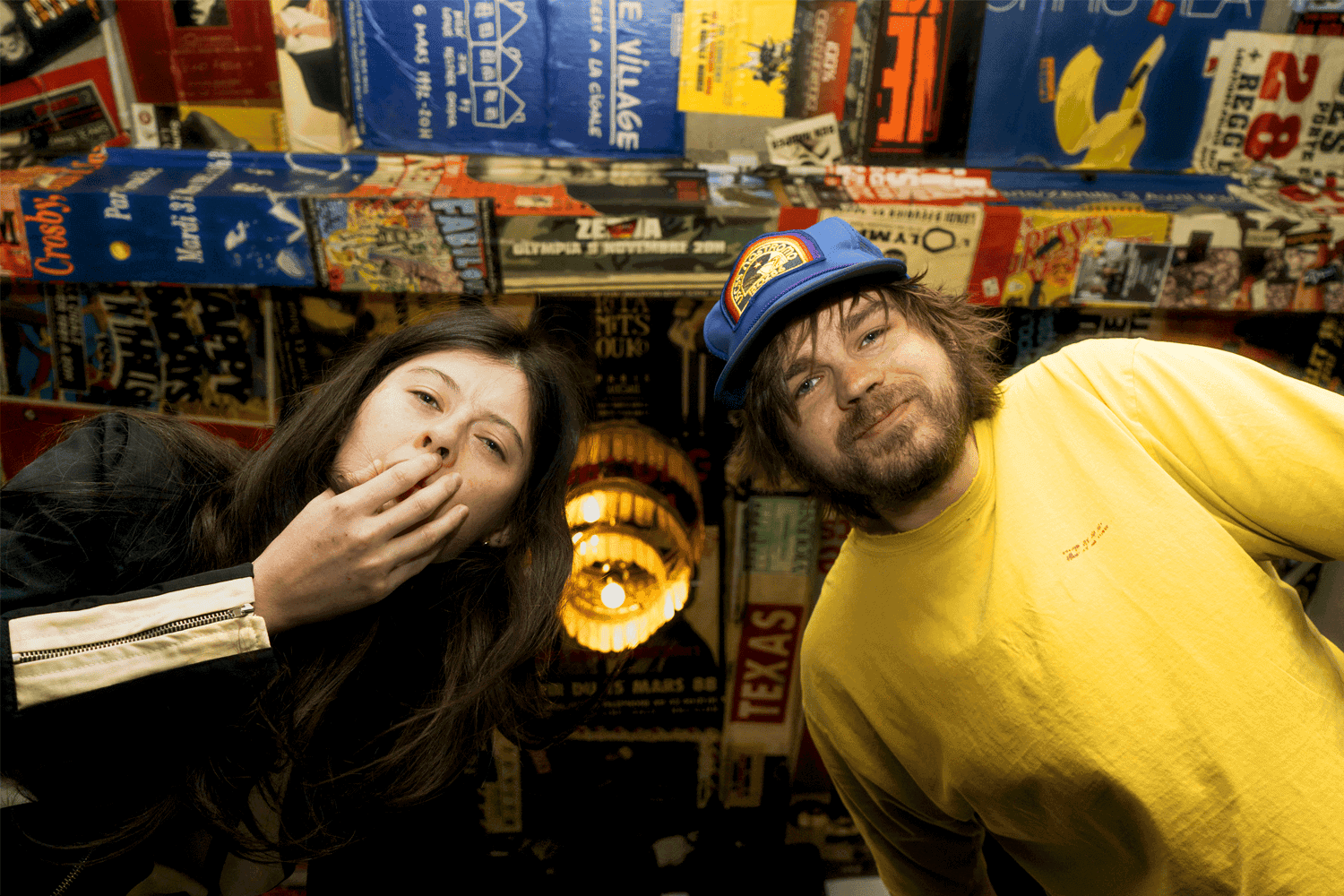
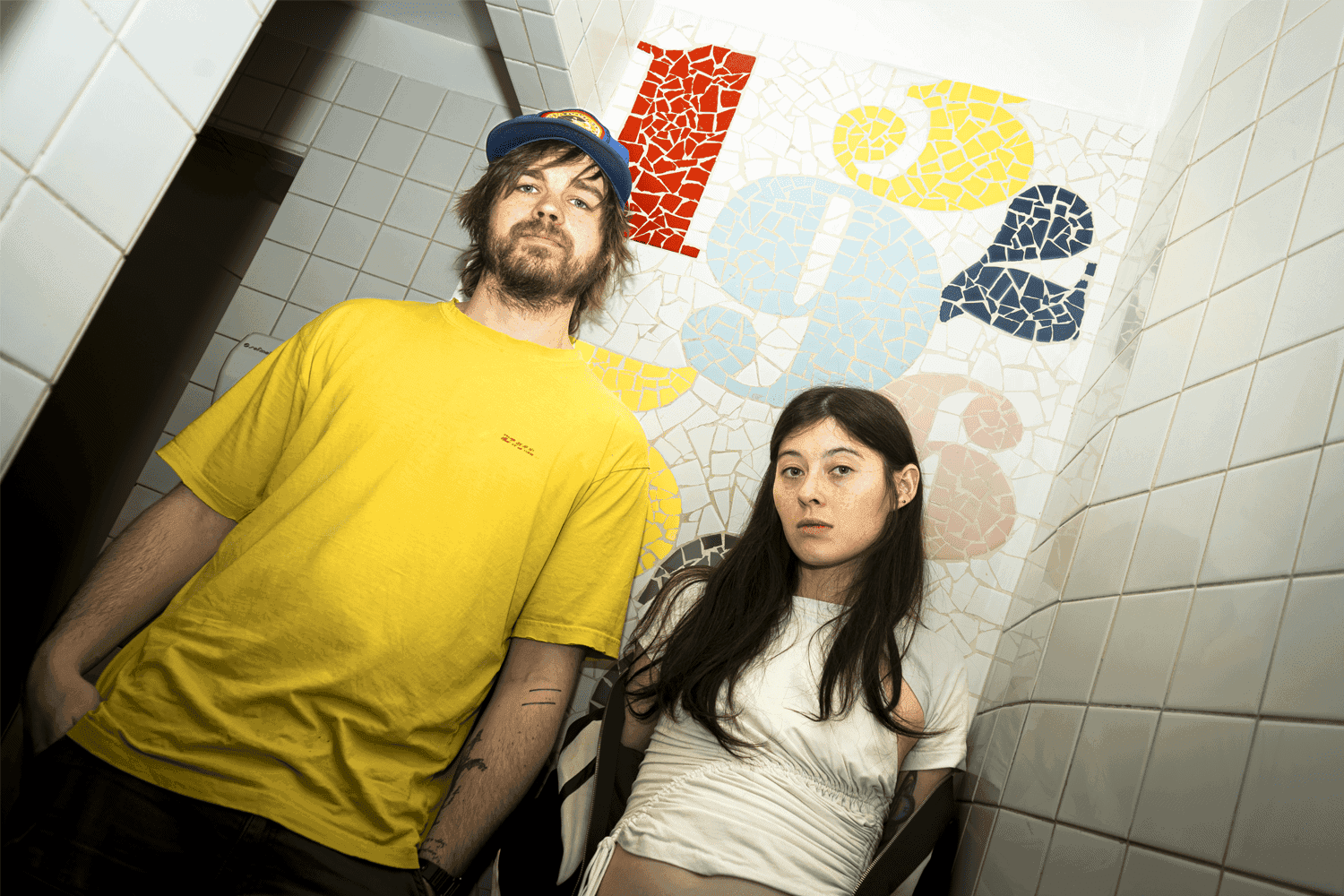
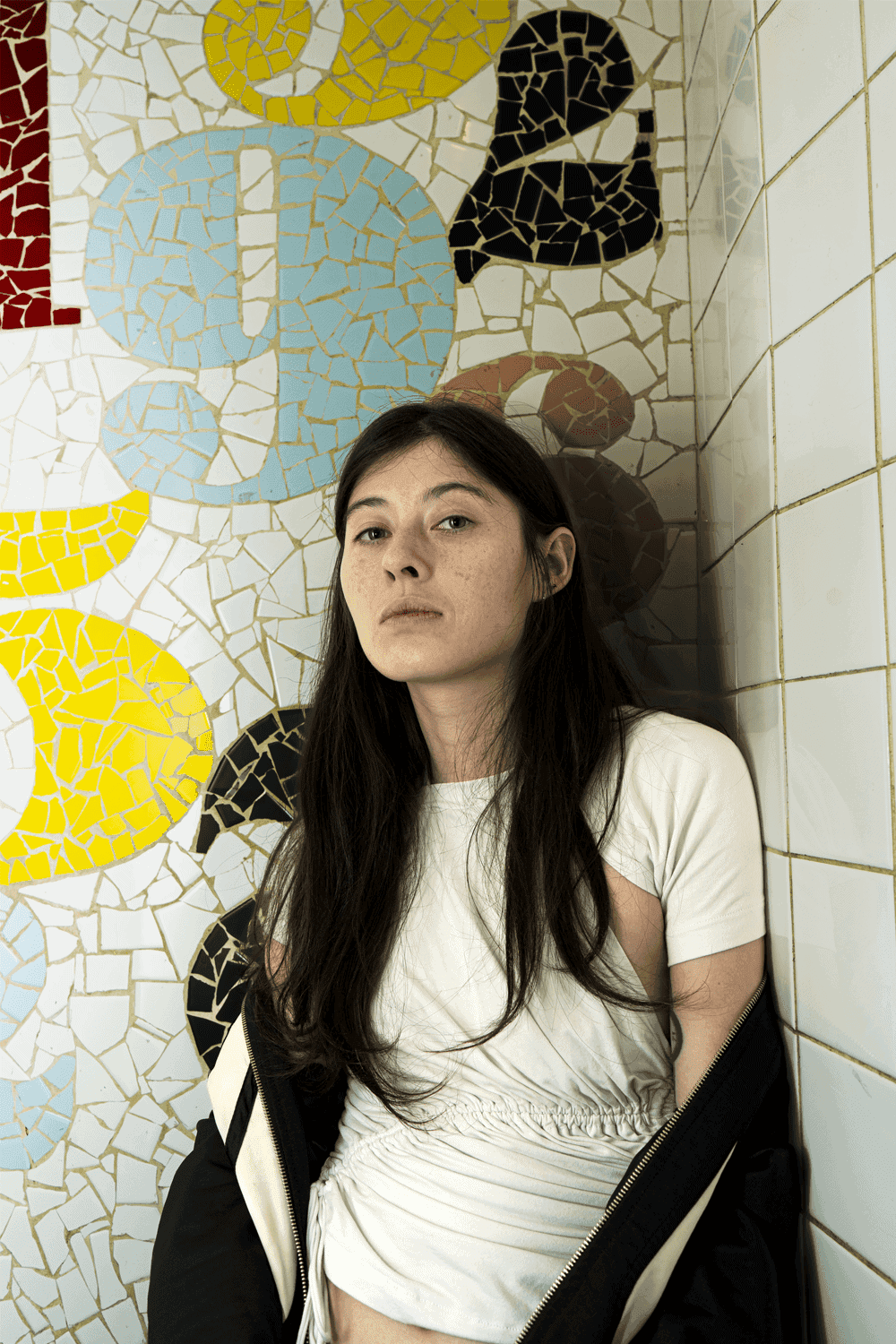
Rachel Brown et Nate Amos sont sûrement à l'origine d'un des meilleurs albums de l'année, It's a Beautiful Place, mélangeant rock, pop et musique électronique sur un projet qui ne sonne comme rien d'autre. La Face B est allé à la rencontre du duo en marge de leur concert parisien à La Boule Noire pour parler de plein de trucs et même d'anarchisme. Oui oui.
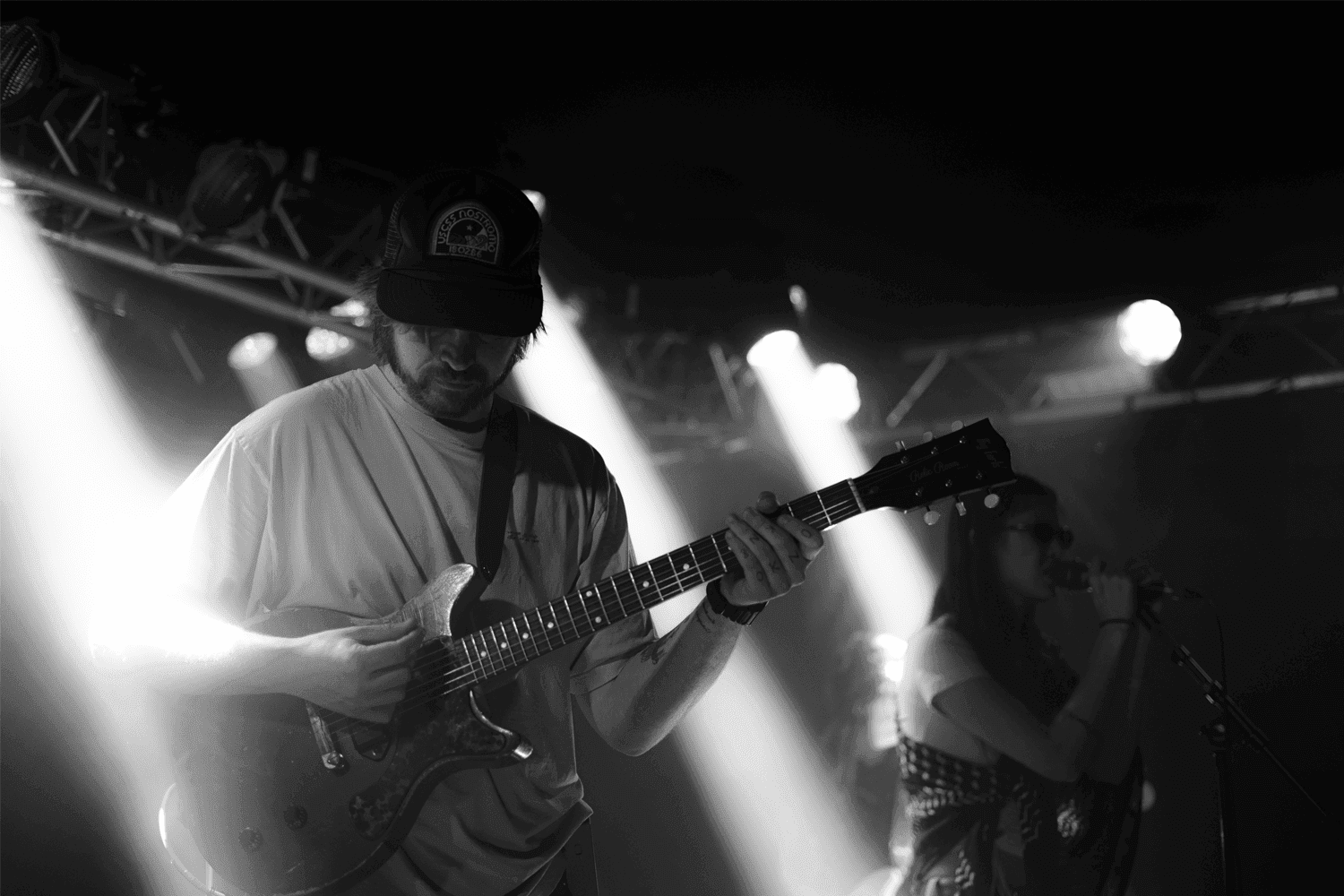
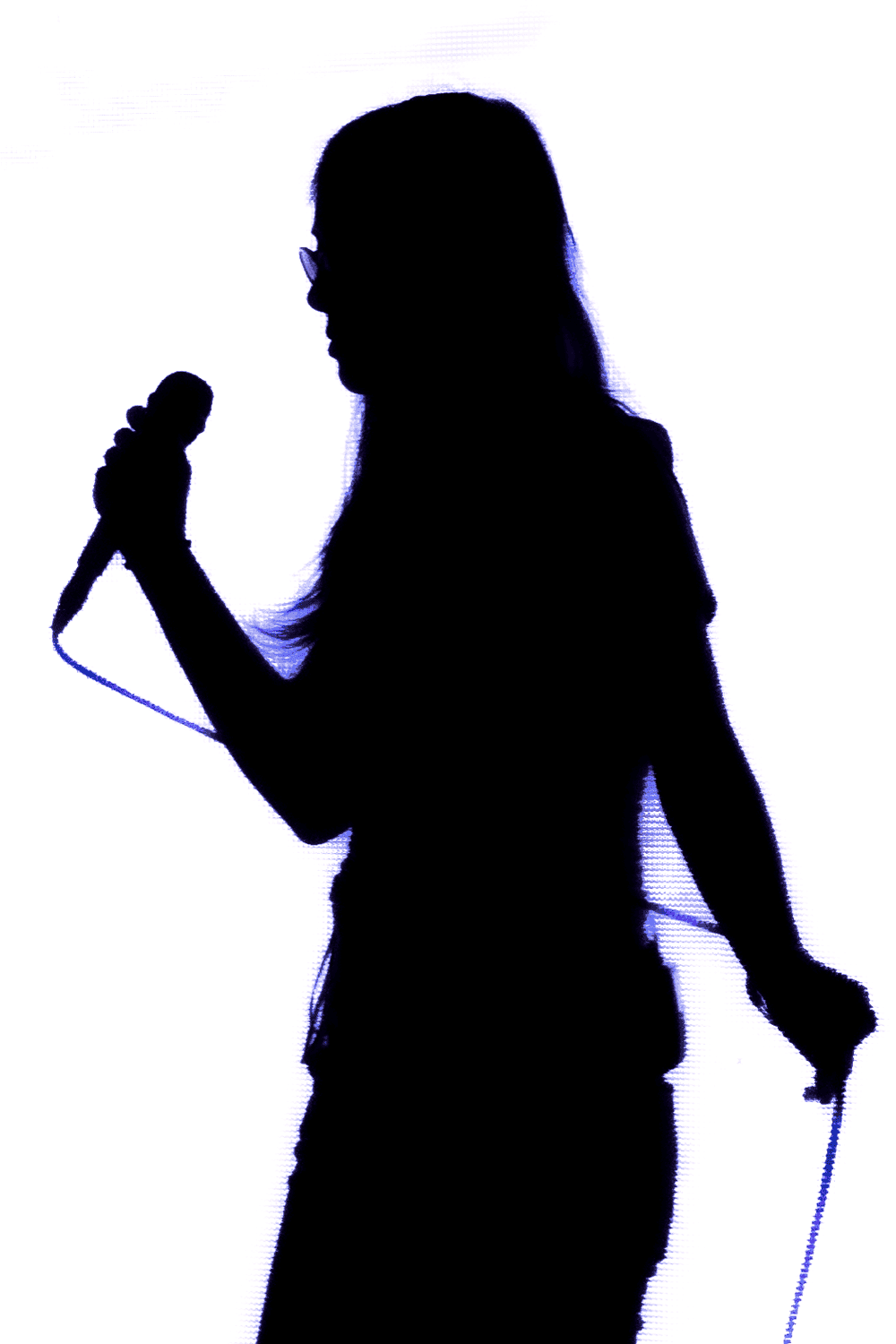
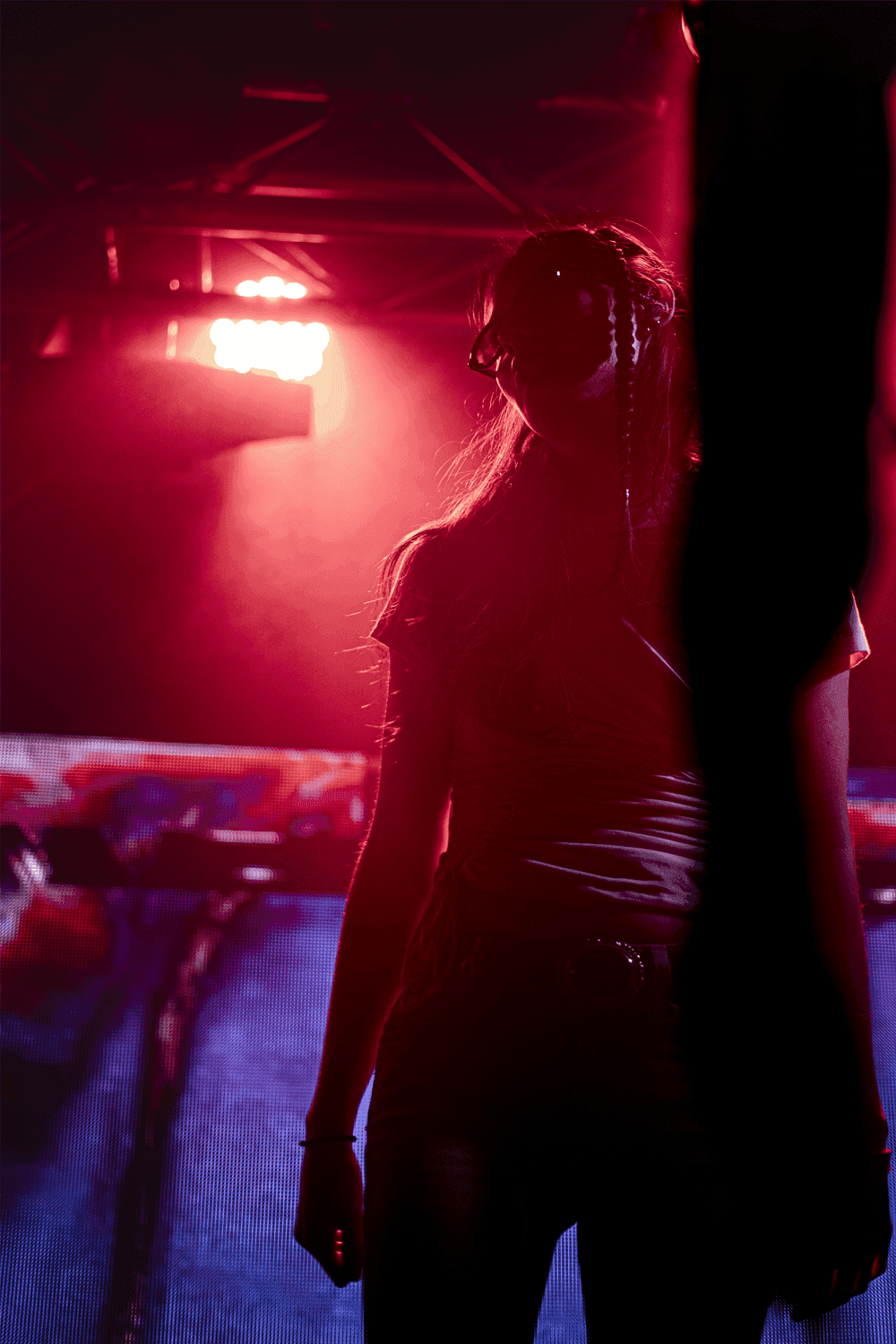
Photos par Raphaël Baumann - @efferve100ce
La Face B : Comment ça va ? Comment se passe la tournée ?
Nate Amos : Ça va. Ça va bien.
Rachel Brown : Long.
Nate Amos : C’est long. Nous sommes presque à la fin maintenant, ce qui est fou.
Rachel Brown : Oui. Quatre spectacles de plus.
Nate Amos : Oui. Plus que cinq.
La Face B : Vous savez quoi ? Aujourd'hui, c'est l'anniversaire de ma grand-mère.
Nate Amos : Oh, joyeux anniversaire.
La Face B : Oui, elle a 83 ans. Et en venant ici, je me demandais comment je pourrais décrire Water From Your Eyes à ma grand-mère. Alors, je vais vous poser cette question. Comment décririez-vous votre musique à une femme de 83 ans ?
Nate Amos : Bruyante.
Rachel Brown : Oui. Bruyante. Peut-être futuriste.
Nate Amos : Oui.
Rachel Brown : Je ne suis pas sûre que ça vous plaise...
Nate Amos : Oui, il y a, euh, peut-être de la guitare futuriste.
Rachel Brown : Oui. Mais pas vraiment. Je ne dirais pas que c'est nécessairement pour les grands-mères... Je ne pense pas que ma grand-mère ait déjà écouté.
Nate Amos : Il y a quelques chansons grands-mères friendly...
Rachel Brown : Oui.
Nate Amos : Mais je dirais que dans l'ensemble, Water From Your Eyes c'est de la musique de jeunes.
La Face B : De la musique pour les jeunes. Oui. Water From Your Eyes existe depuis 2016. Cela fait donc presque 10 ans maintenant.
Nate Amos : Oh, merde. Jesus Christ.
La Face B : Comment réfléchissez-vous à ces 10 ans ? Je veux dire, les hauts, les bas, et peut-être qu'on peut parler d'abord de l'ère pré-Matador.
Rachel Brown : La première année, c'était un projet à distance et ce n'était pas quelque chose que nous... Le but n'était pas de signer avec une maison de disques. Je ne sais pas vraiment. On voulait juste faire des concerts DIY et punk et tout ça. [WFYE] n'était pas un groupe qui intéressait les gens au départ.
Nate Amos : Oui.
Rachel Brown : Alors, on a testé des choses, pour voir où ça irait. C'était différent parce que même si nous avons atterri dans une sorte de scène DIY et que certaines personnes écoutaient, c'était toujours un truc très niche. C'est bizarre. D'une certaine manière, on se prenait très au sérieux et d'une autre manière, vraiment pas. Je me souviens qu'après avoir sorti un EP, quelqu'un au Royaume-Uni était tombé dessus et avait écrit quelques lignes pour un petit blog musical. On s’est dit « whoa ». C'était la première fois que quelqu'un écrivait sur quelque chose que l'un de nous avait fait et nous nous sommes dit : « nous devrions continuer à faire ça ». Mais c'est drôle parce qu'il n'y avait pas d'objectif. C'était plus : « oh, nous devons juste continuer à jouer dans des sous-sols ».
Nate Amos : Et genre, peut-être qu'un jour on pourra faire une tournée.
Rachel Brown : Oui.
La Face B : Comment voyez-vous l’évolution depuis cette époque ? Votre musique s'est répandue dans le monde entier. J'ai vu la liste des meilleurs albums de 2025 de Pitchfork. Vous êtes genre 14e sur cette liste.
Nate Amos : Nous sommes 17e. Je viens de la regarder. On est juste derrière LUX de Rosalía. C'est un peu fou qu’il ne soit pas dans le top cinq, mais peu importe.
Rachel Brown : On est si haut dans leur liste d'albums ?
Nate Amos : Oui, nous sommes dans le top 20.
Rachel Brown : C'est fou. Je ne le savais même pas.
Nate Amos : Oui...
Rachel Brown : (rires) C'est comme le meme de Cynthia Erivo de Wicked où elle dit : « Je ne savais pas que ça se passait ».
Nate Amos : (rires) Oui !
La Face B : Et l'année prochaine, vous serez en tournée avec Hayley Williams [chanteuse et membre fondatrice du groupe pop-punk Paramore]... Ce qui est énorme. Comment vous a-t-elle contactés ?
Rachel Brown : Hum, donc Nate et elle étaient en contact pour faire un...
Nate Amos : Oui, le premier contact que nous avons eu... Elle était intéressée par This is Lorelei, mon autre projet, et ensuite Rachel l'a interviewée.
Rachel Brown : Elle voulait être interviewée ! J'étais en festival, je fais des interviews parfois pour Stereogum et elle voulait être interviewée même si elle ne jouait pas. Et donc, nous avons passé du temps ensemble et il a commencé à y avoir un très gros orage. On a dû changer d'endroit pour nous abriter et nous nous sommes vraiment bien entendu·es. Nous avons commencé à parler et c'était... Je me disais « c'est ma meilleure amie ! ». Ça pouvait durer éternellement. Puis elle est venue à nos spectacles et, oui, elle nous a demandé de faire ses premières parties. Elle est tellement géniale. Je l'aime. Tellement. Elle est si gentille.
La Face B : J'ai trouvé que It's A Beautiful Place était un disque plutôt optimiste.
Rachel Brown : Oh, Dieu merci.
La Face B : Comparé au reste de...
Nate Amos : Everyone's Crushed, oui.
Rachel Brown : C'était le but.
Nate Amos : Oui, on a réussi ! (Rires)
La Face B : Mais il y a des moments plutôt cyniques sur l'album. Il y a beaucoup d’autodérision. Que pouvez-vous me dire sur ce nom, « It's a Beautiful Place » ? La chanson éponyme comporte un solo de guitare que j'aime beaucoup. Quand je l'ai écouté pour la première fois, j'ai rigolé. C'est à la fois beau et lâche...
Nate Amos : Cette chanson a été nommée après que nous ayons nommé l'album. À l'origine, nous avions appelé le morceau d’ambient au milieu « It's A Beautiful Place ».
Rachel Brown : Ça n'a pas duré longtemps. Non, tu as dû séparer les chansons, Nate.
Nate Amos : Oh, c'est vrai ! Alors, à l'origine, le solo de guitare n'était que le début de « Blood on the Dollar », mais ensuite nous avons dû le séparer…
Rachel Brown : Oui.
Nate Amos : ...en deux pistes différentes. Et c'est à ce moment-là qu'il a eu besoin d'un nom. Oui, à l'origine, l'album était au format 7 pistes.
Rachel Brown : Oui.
Nate Amos : L'intro et « Life Signs » étaient la même piste, « It's a Beautiful Place », « Blood on the Dollar » et l'outro étaient aussi tous une seule piste. Mais je pense toujours que la piste ambient avait un nom différent ?
Rachel Brown : Eh bien, brièvement. Pendant environ 10 minutes, alors qu'on élaborait la chanson.
La Face B : Et est-ce quelque chose que vous avez théorisé, le fait d'être à la fois humoristique et assez sérieux concernant la musique ?
Nate Amos : Je me réveille tous les jours et décide d'être drôle.
Rachel Brown : C'est un choix.
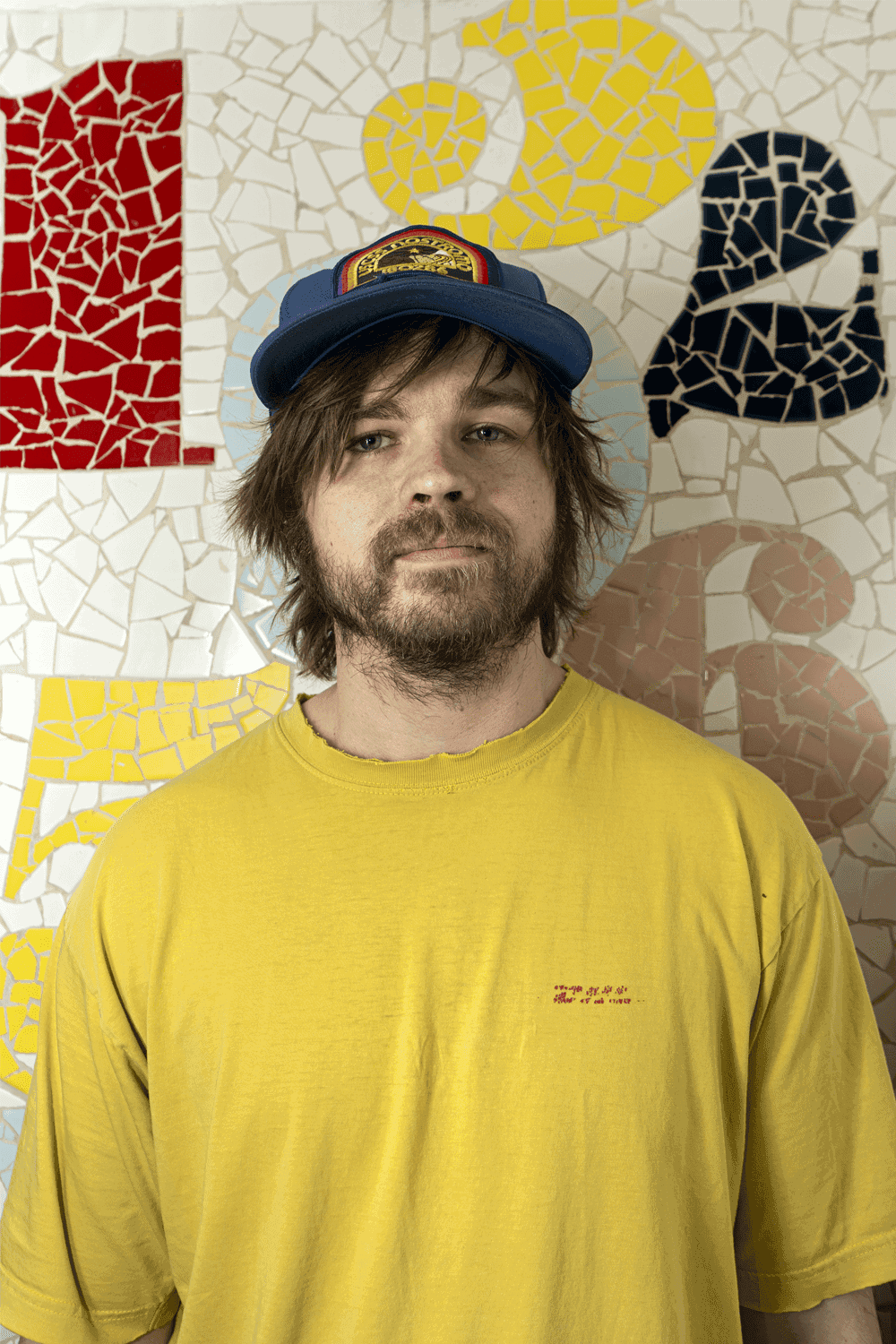
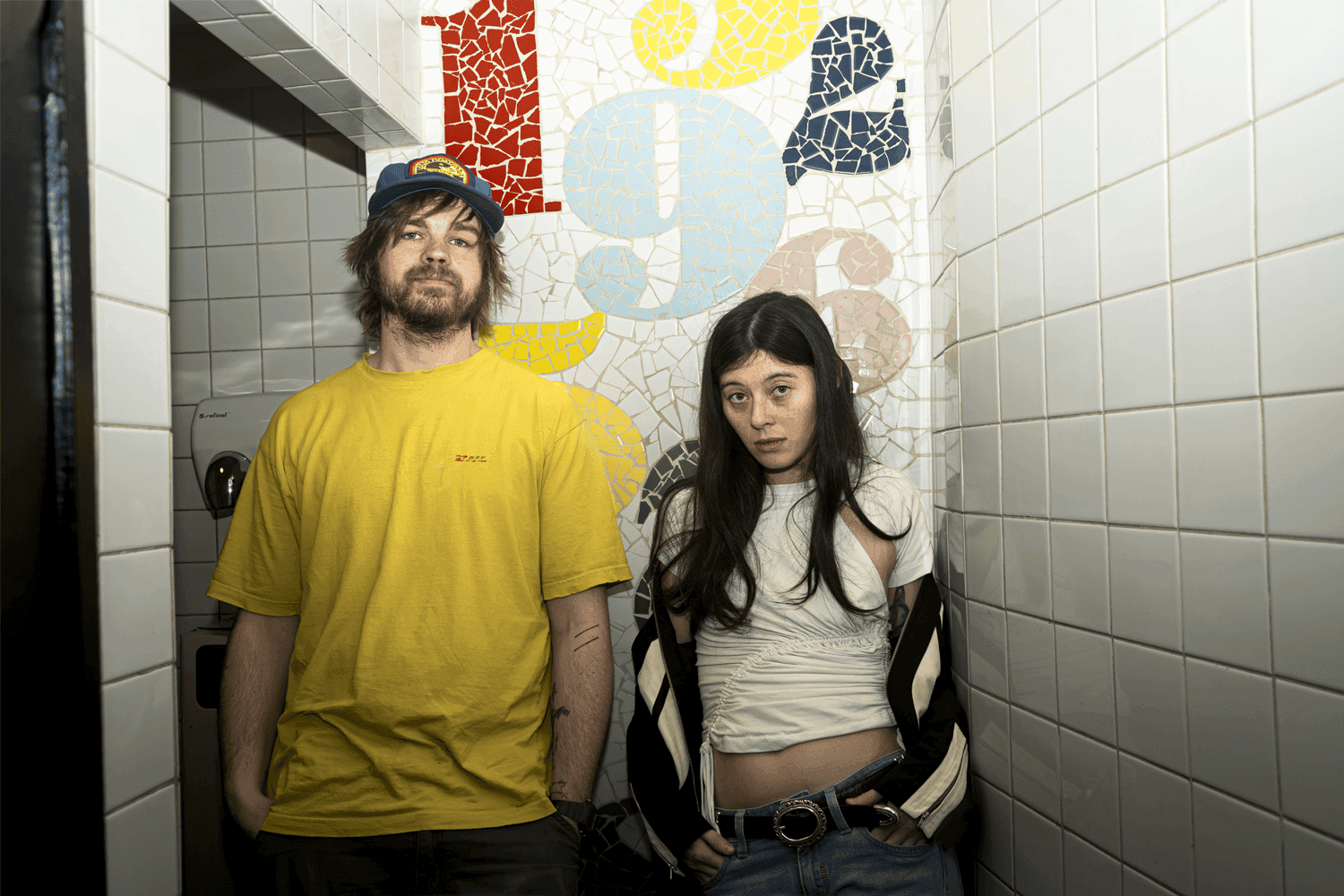
La Face B : Nate, j'ai lu quelque part que t’avais une relation assez compliquée avec les guitares. Je crois que tu ne voulais pas trop en utiliser avec WFYE. Sur ce disque, il y a un solo sur chaque chanson !
Nate Amos : J'adore jouer de la guitare. Les guitares n'ont jamais été une partie essentielle de l'identité de ce groupe. Tout est principalement basé sur des samples. Honnêtement, j'étais intéressé par beaucoup de choses microtonales et par le sérialisme. Des choses qui ne se traduisent pas particulièrement bien à la guitare. Une guitare n'est pas un bon outil pour la composition sérielle ou microtonale. Une grande partie de ce que j'utilisais pour écrire n'étaient que des chiffres et de la manipulation numérique. Et à mesure que nous avons commencé à faire plus de tournées, il fallait trouver comment intégrer la guitare dans ces idées qui ne viennent pas nécessairement de là. Développer des parties de guitare live pour Everyone's Crushed [l’album précédent] m’a aidé à me réconcilier avec cet instrument, à en jouer d’une manière qui m'intéressait. Et puis cet album a fini par avoir plus de guitare. Tu sais, ce n'était pas une décision consciente de se dire qu’il devrait y avoir beaucoup de guitares.
La Face B : J'ai toujours l'impression qu'il y a une tension entre l'utilisation des machines, de l'ordinateur, et les sons plus organiques venant de la guitare.
Nate Amos : Tout à fait. C'est un équilibre très intentionnel, tu sais, je voulais que ça ressemble à une machine organique ou quelque chose comme ça.
La Face B : Quand j'ai écrit la critique de l'album, j'ai évidemment écrit sur « Playing Classics ». Et je ne savais pas vraiment d'où venait ce son étrange de piano. Est-ce que c’est une pédale d'émulation de piano ? Est-ce-que tu l’as programmé sur l'ordinateur ? Parce que ça sonne comme une guitare, mais c'est tellement bizarre.
Nate Amos : C'est une paire de choses différentes, superposées. Donc, il y a un bien un sample de guitare, que tu peux entendre à la fin...
La Face B : Oui, on te voit jouer cet échantillon dans le clip.
Nate Amos : Et puis, il y a d'autres sons superposés avec. Si je me souviens bien, il y a trois voix différentes de programmées qui doublent un piano. L'une d'elles, ce sont des harmoniques de guitare que j'ai enregistrées et échantillonnées, et l'autre, je pense que c’est un échantillon de banjo. Donc, ça donne : une vraie guitare, des harmoniques programmées, un piano programmé, un banjo programmé (rires).
La Face B : Merci. Les geeks ont enfin leur réponse.
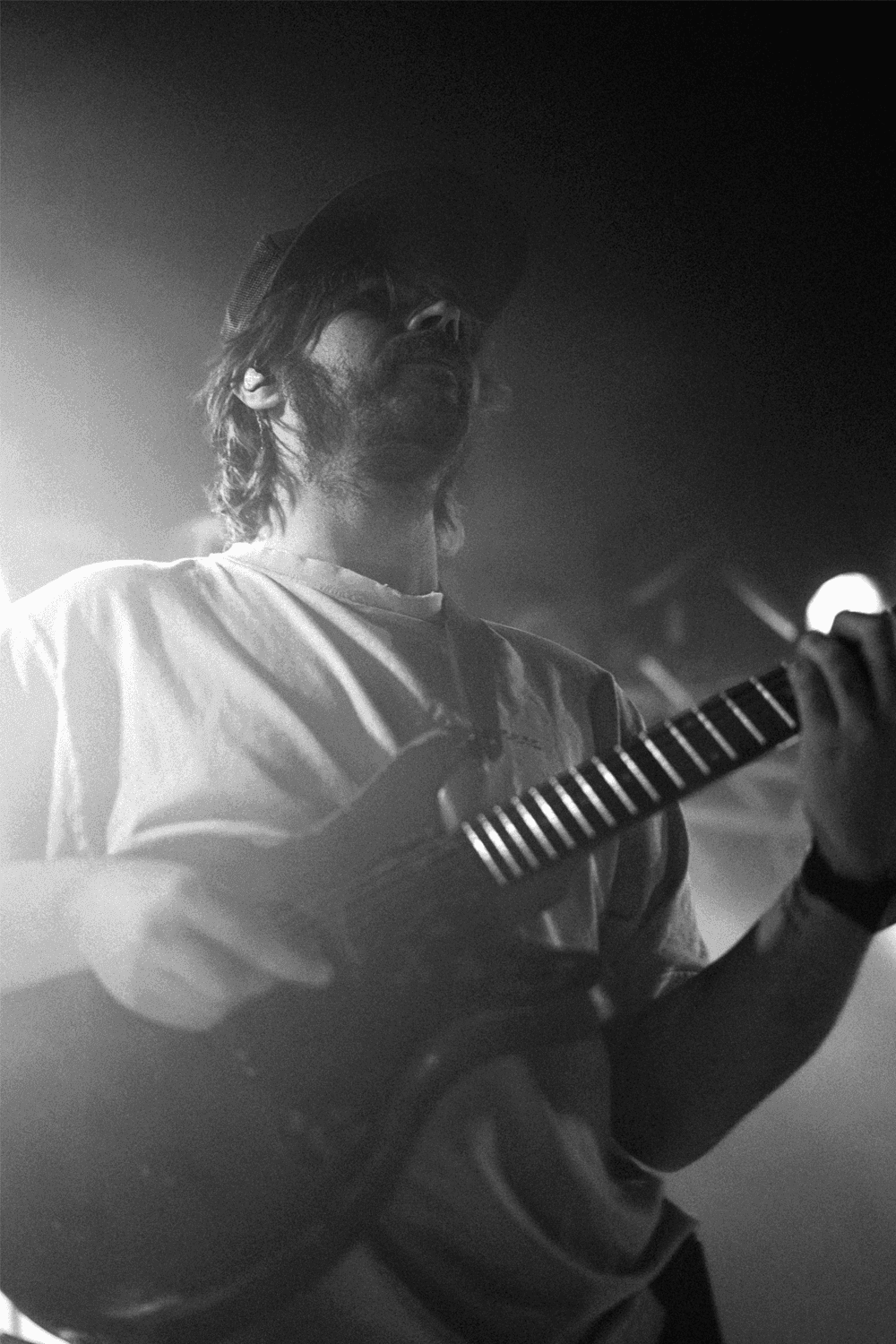
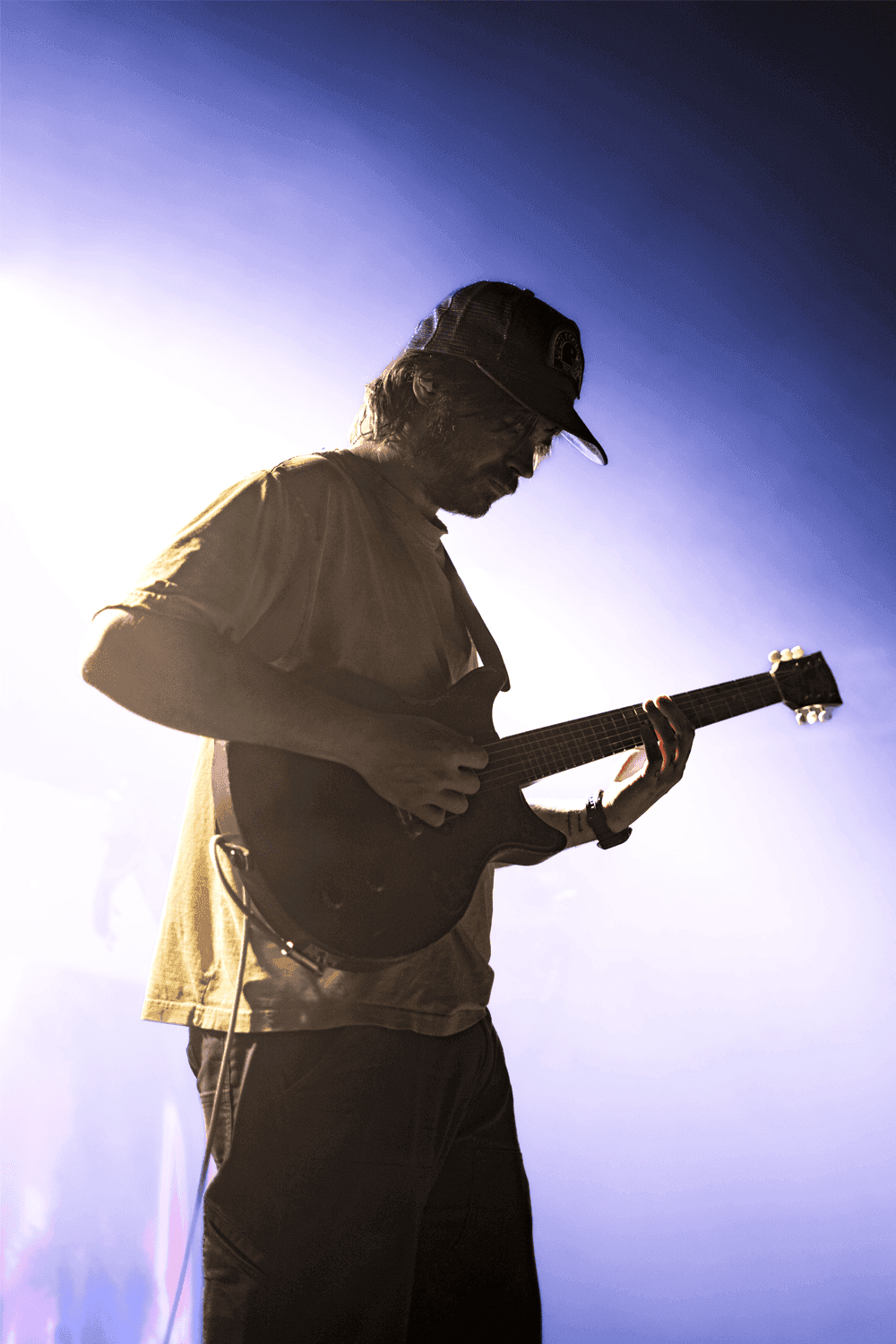
La Face B : Quand j'étais en sciences po, il n'y a pas si longtemps, j'ai lu “Les Dépossédés” d'Ursula K Le Guin [son roman de science-fiction anarcho-utopiste de 1974]. Alors, quand j'ai vu dans le matériel de presse que, Rachel, t’avais été inspiré·e par ce livre, j'ai trouvé ça vraiment intéressant. J'ai trouvé que c'était un livre très complexe mais assez simple à lire finalement. Et c'est exactement ce que j'ai ressenti en écoutant “It's a Beautiful Place”. Tu peux me dire comment ce livre a influencé ta musique, ton écriture ?
Rachel Brown : Eh bien, tu sais ce qui est fou ? Je ne l'ai jamais terminé.
La Face B : Ah oui ?
Rachel Brown : J'ai lu environ la moitié, puis nous avons écrit l'album, et ensuite je n'ai jamais réussi à le terminer. J'ai lu le début environ trois fois. Séparément sur plusieurs mois. Je suis analphabète. C'est par là que je veux commencer. Mais j'ai commencé à le lire parce que je logeais chez mon ami·e à Barcelone il y a quelques années et elle avait un ami qui y logeait aussi et nous parlions beaucoup de politique. Il m’a recommandé ce livre et il en avait un exemplaire, alors j'ai lu le début pour la première fois et j'ai fini par en acheter un exemplaire quelques années plus tard. Finalement, j'ai lu environ la moitié. Tu sais, cet album était la première fois que, il y avait une pensée en forme de pré-planification. C'est la première fois que nous avons eu le temps de faire un mood board imaginaire pour l'album.
La Face B : Donc vous aviez un mood board pour l'album ?
Rachel Brown : Pas vraiment, mais nous avions une ambiance mentale de base. Le dernier album était si sombre, nous ne savions pas qu'il allait sortir sur Matador ou quoi que ce soit. Donc je n'ai pas réalisé à quel point c'était sombre jusqu'à ce que nous fassions des interviews. On me disait : « vous avez l'air si nihiliste ». Je ne crois pas au nihilisme. Je pense que c'est un outil de l'oppresseur. Alors je voulais vraiment faire un album qui ait une perspective plus positive sur l'humanité.
La Face B Mhm.
Rachel Brown : Et quand j'ai lu ce livre la première fois, je l'ai beaucoup aimé. Je pense juste que l'anarchisme est une façon très intéressante de structurer la société. Ce serait bien de le voir dans la vraie vie. Et ce livre explore en quelque sorte à quoi cela ressemblerait. Et... C'est à peu près le maximum d'espoir que je puisse avoir. Juste penser qu'une meilleure société est possible.
La Face B : Peut-être que faire de la musique pourrait être considéré comme une micro-poche d'anarchisme. Je veux dire, je sais que tu t’es investi·e dans la campagne de Zohran Mamdani à New York avec les « Indie rockers for Mamdani ». Ce mec dit des choses sur le fait de rendre New York abordable, etc... Nous avons vu la communauté DIY et musicale se rassembler et soutenir ce gars et j'ai pensé, okay, c'est un bon exemple de la façon dont les gens essaient de défier le capitalisme…
Rachel Brown : Je pense qu'une meilleure société commence dans des communautés plus petites et que les gens se soucient simplement les uns des autres indépendamment de... Juste en vertu du fait de vivre, au même endroit, de vivre dans le même monde, quoi. L'art, je pense, est si vital pour l'empathie et la communauté et pour créer des espaces où les gens peuvent partager leurs mondes intérieurs les uns avec les autres. Aux États-Unis, c'est bizarre parce que tout est commercialisé.
La Face B : Mhm.
Rachel Brown : Beaucoup de gens veulent faire de l'art parce qu'ils veulent être célèbres et tout ça. Je veux dire, évidemment pas tout le monde, mais il y a un sentiment d'utiliser l'art pour obtenir quelque chose plutôt que de faire de l'art parce qu'on aime le faire. Je pense que l'art, dans sa forme la plus pure, est en quelque sorte la seule chose qui puisse unifier les gens et enseigner aux gens d'autres idées et choses qu'ils ne pourraient jamais trouver en eux-mêmes parce que c'est l'expérience de quelqu'un d'autre.
Water From Your Eyes : “We wanted an album that has a more positive outlook on humanity.”
Rachel Brown and Nate Amos are undoubtedly behind one of the best albums of the year, It's a Beautiful Place blending rock, pop, and electronic music in a project that sounds like nothing else out there. La Face B caught up with the duo on the sidelines of their Paris concert at La Boule Noire to talk about all sorts of things, including anarchism. Yes, really.
Photos by Raphaël Baumann - @efferve100ce
La Face B : Um, how's it going? How's tour so far?
Nate Amos : It's good. It's been good.
Rachel Brown : Long.
Nate Amos : It's been long. We're actually near the end of it now, which is crazy.
Rachel Brown : Yeah. Four more shows.
Nate Amos : Yeah. Tonight is the fifth to final show.
La Face B : Um, you know what? Today is my grandma's birthday.
Nate Amos : Oh, happy birthday.
La Face B : Yeah, she's 83. And on the way here, I was wondering how I could describe Water From Your Eyes to my grandmother. So, I'm going to ask you that question. How would you describe your music to an 83 year-old woman?
Nate Amos : Noisy.
Rachel Brown : Yeah. Noisy. Maybe futuristic.
Nate Amos : Yeah.
Rachel Brown : I'm not sure you would like it…
Nate Amos : So there's Yeah, there's, uh, maybe futuristic guitar.
Rachel Brown : Yeah. But not really. I wouldn't say it's necessarily for grandmas... Like I don't think my grandma has ever listened.
Nate Amos : There's a couple songs that are grandma friendly…
Rachel Brown : Yeah.
Nate Amos : But I would say overall, Water From Your Eyes is youth music.
La Face B : Youth music. Yeah. Water From Your Eyes has been around since 2016. So, it's been almost 10 years now.
Nate Amos : Oh, sh*t. Jesus Christ.
La Face B : Um, how do you reflect on that period of time? I mean, the highs, the lows, and maybe we can talk about the pre- Matador era first.
Rachel Brown : The first year it was a long distance project and it wasn't something that we… The goal wasn't to get signed by a record label. I don't really know. We just wanted to play DIY shows, punk shows and stuff. [WFYE] wasn't like a band that people seemed interested in from the get-go.
Nate Amos : Yeah.
Rachel Brown : So, we just kept throwing things at the wall to see where the wall would go. It was different because even though we landed in a kind of DIY scene and there were some people listening to it, it was still a very niche thing I guess. So we didn't really take it… It is weird. In some ways we took it very seriously and in other ways we really did not take it seriously. I remember after we released an EP, somebody in the UK had found it and wrote about it for a small music blog and we were like “whoa”. It was the first time anyone had ever written about anything either of us had ever done and we were like “we should keep doing this”. But it's funny cuz there wasn't like a set goal of getting to a certain point. It was more like “oh we should just keep doing this and play in basements”. Yeah.
Nate Amos : And like, maybe someday we'll get to tour.
Rachel Brown : Yeah.
La Face B : Yeah. How do you see the evolution of it? I mean, your music spread around the globe. I saw the Pitchfork best albums of 2025 list. You're like 14th on that list.
Nate Amos : We're 17th. I just looked at it. We're right behind Rosalía's LUX. It’s kind of crazy that it's not in the top five, but whatever.
Rachel Brown : We got that high on their album list ?
Nate Amos : Yeah, we're in the top 20.
Rachel Brown : That's crazy. I didn't even know that.
Nate Amos : Yeah…
Rachel Brown : (Laughing) It’s like the meme of Cynthia Erivu from Wicked where she's like, “I didn't know that was happening”.
Nate Amos : (Laughing) Yeah !
La Face B : And next year you'll be touring with Hayley Williams [lead vocalist and founding member of pop-punk band Paramore]… Which is a huge thing. How did she reach you ?
Rachel Brown : Um, so Nate and her have been in contact about doing a…
Nate Amos : Yes, I think the first contact we had… She was interested in This is Lorelei, my other project and then Rachel interviewed her.
Rachel Brown : She wanted to be interviewed ! I was at this music festival and I do interviews sometimes for Stereogum and I guess she wanted to be interviewed even though she wasn't even playing. And so then we hung out and it started to storm really badly. So we had to move locations and we just really got along. Like we started talking and it was… I was like “this is my best friend !”. We could talk forever. Then she came to our shows and, yeah, she asked us to open. She's so awesome. I love her. So much. She's so nice.
La Face B : I thought It's A Beautiful Place was a quite optimistic record.
Rachel Brown : Oh, thank God.
La Face B : Compared to the rest of…
Nate Amos : Everyone's Crushed Yeah.
Rachel Brown : That was the goal.
Nate Amos : Yeah, we did it ! (Laughing)
La Face B : But there are some rather cynical moments on the album. I mean, that's life. There's a lot of self-deprecating humor. What about that name, “It's a Beautiful Place” ? The title track on the project is this guitar solo which I really like. When I first listened to it, I laughed. It’s both beautiful and loose…
Nate Amos : That song got named after we named the album. Originally, we had called the ambient piece in the middle “It's A Beautiful Place”.
Rachel Brown : It didn't last long. No, pretty much you had to separate the songs, Nate.
Nate Amos : Oh, that's right ! So, originally, the guitar solo was just the beginning of “Blood on the Dollar”, but then we had to separate it…
Rachel Brown : Yeah.
Nate Amos : …into two different tracks. And that's when it needed a name. Yeah, originally the album was in a 7-track format.
Rachel Brown : Yep.
Nate Amos : The intro and “Life Signs” were the same track, “It's a Beautiful Place”, “Blood on the Dollar” and the outro were all one track, too. But I still think the ambient track had a different name ?
Rachel Brown : Well, like briefly. I mean, it was called that for like 10 minutes while we were figuring out the song.
La Face B : And is it something you theorized being both humoristic and quite serious about the music?
Nate Amos I wake up every day and decide to be funny.
Rachel Brown It's a choice.
La Face B : Nate, I read somewhere that you had a quite complicated relationship with guitars. Like you did not want to use them that much. On this record there's a solo on every song !
Nate Amos : I love playing guitar. Guitars were never a huge part of the identity of this band. It was mostly sample based. Honestly, I was into a lot of microtonal stuff and serialism and things that don't translate particularly easily to guitar. Like a guitar isn't a good tool for serial composition or microtonal composition. A lot of what I was using to write was just numbers and digital manipulation. And as we started touring more, part of that was, you know, figuring out how to work guitar into these ideas that are are not necessarily guitar based. Developing live guitar parts for Everyone's Crushed kind of made a path for how to do that in a way that I was interested in. And then this album just ended up having more guitar on it. You know, it wasn't like a conscious decision to be like this one should have a ton of guitar. guitar.
La Face B : I still feel like there's a tension between, you know, the use of machines, the computer, and the more organic sounds coming from the guitar.
Nate Amos Totally. That I mean, that is a very intentional balance, you know, it should feel like an organic machine or something.
La Face B Yeah. I mean, when I wrote the review for the album, I wrote about “Playing Classics”, obviously. And I did not really know where that weird piano sound came from. Is it a piano emulation pedal? Did you program that on the computer? Because it sounds like a guitar, but it is so weird.
Nate Amos : It's a couple different things layered together. So there's an actual played guitar sample that you can then hear at the end…
La Face B : Yes, we see you playing that sample in the music video.
Nate Amos : And then, there are other sounds layered with it. I think, if I remember correctly, there are three different programmed voices that double what one of them is a piano. One of them is guitar harmonics that I recorded and sampled and the other one I think is a banjo sample. So it's like a real guitar programmed harmonics programmed piano programmed banjo (laughing).
La Face B Thanks. The nerds finally have their answer.
La Face B : When I was studying political science, not so long ago, I actually ended up reading The Dispossessed by Ursula K Le Guin [her 1974 anarcho-utopist science fiction novel]. So when I saw in the press material that, Rachel, you were inspired by that book, I thought that was really interesting. I thought it was a very complex book yet quite simple to read. And it's exactly how I felt when listening to It's a Beautiful Place. Can you tell me how that book influenced your music, your writing?
Rachel Brown : Well, you know what's crazy? I never finished it.
La Face B : Oh, really?
Rachel Brown : I made it about halfway through and then we wrote the album and then I never got to finish it. I've read the beginning like three times. Separately over many months. I am illiterate. It’s what I want to preface this with. But I originally started reading it because I was staying with my friend in Barcelona a few years ago and she had a friend who was also staying and we would talk a lot about politics. He recommended that book and he had a copy, so I read the beginning for the first time and then I ended up buying a copy a couple of years later. Finally I read about halfway through. You know, this album was the first time that, I guess, there was any thought like pre-planning. This is the first time that we actually had time to make an imaginary mood board for the album.
La Face B : So you did have a mood board for the album ?
Rachel Brown : Not actually, but we had a basic mental vibe board. The last album was so dark, we didn't know that it was going to be put out on Matador or anything. So I did not realize how dark it was until we were doing interviews. I was like “you sound so nihilistic”. I don't believe in nihilism. I think that's like a tool of the oppressor. So I really wanted to make an album that has a more positive outlook on humanity.
La Face B Mhm.
Rachel Brown : And when I read that book the first time, I really liked it. I just think anarchism is a very interesting way to structure society. It would be nice to see it in real life. And that book kind of explores what it would look like. And I guess… That's about as hopeful as I can be. Just thinking that a better society is possible.
La Face B : Maybe making music could be seen as one micro-pocket of anarchism. I mean, I know you got invested in Zohran Mamdani’s campaign in New York with the “Indie rockers for Mandani”. He's saying things about making New York affordable etc… We’ve seen the DIY and music community coming together and supporting this man and I thought, well, that's a good example of how people try to defy global capitalism…
Rachel Brown : I think a better society starts in smaller communities and people just caring about each other regardless of… Just by virtue of living, in the same place, living in the same world really. Art, I think, is so vital to empathy and community and making spaces where people can share their inner worlds with each other. In the US, it's weird because everything's commercialized.
La Face B : Mhm.
Rachel Brown : A lot of people want to make art because they want to be famous and whatnot. I mean, obviously not everybody, but there is a sense of using art to get something rather than making art because you love to make it. I think art, in its purest form, is kind of the one thing that can unify people and can teach people about other ideas and things that they would never be able to find within themselves because it's somebody else's experience.