
Interviews
Do Nothing : "Le contraire de nous : être riche, célèbre et avoir du succès !"
Juste une heure avant leur concert au Trianon, en ouverture pour Yard Act, Do Nothing nous a accordé un peu de temps pour se poser et répondre à nos questions. L'excellent groupe anglais, unique par la voix charismatique de Chris Bailey, vient de sortir son deuxième album Friend World, à écouter d'urgence en fin d'interview. On les retrouvera au Bal Chavaux le 18 avril 2027 ! Au programme de cette interview : solitaire, Dr Seuss, LeBron James et Simon and Garfunkel
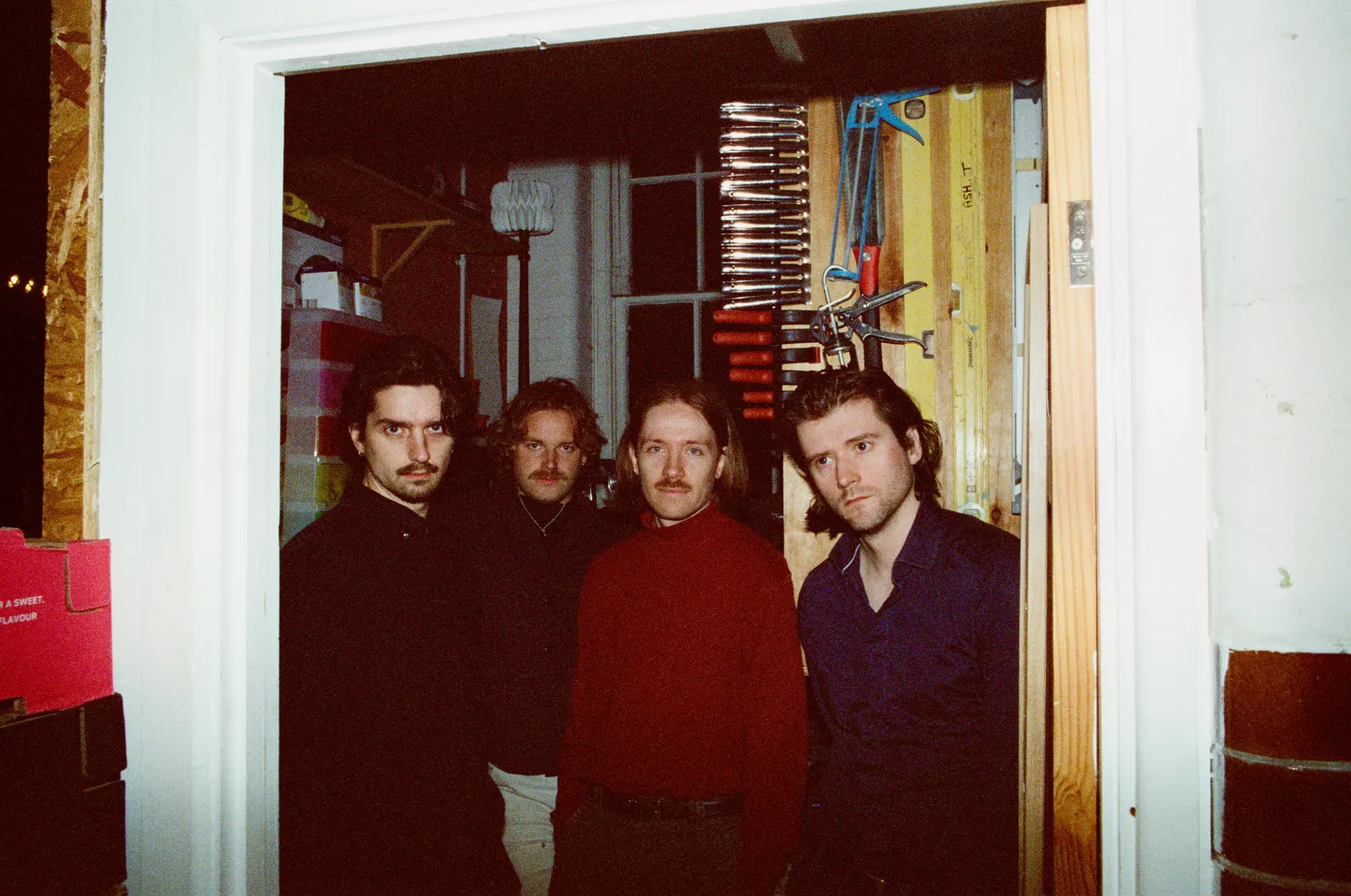
ENGLISH VERSION BELOW
La Face B : Hello ! Merci de prendre le temps de nous parler avant le concert. Tout d'abord, comment allez-vous ?
Kasper Sandstrom : Salut ! Ça va bien, ouais. Un peu fatigué.
Chris Bailey : On vient littéralement de terminer les balances. On travaille avec du nouveau matériel, et certains équipements techniques sont un peu intimidants. Mais pour l'instant, tout fonctionne.
Kasper Sandstrom : Avec un peu de chance, ça améliorera le concert, pour nous comme pour tout le monde.
La Face B : Vous jouez à La Cigale, une salle mythique de Paris qui a accueilli des artistes comme Oasis, Muse ou Bonnie Tyler. Est-ce que ça vous met un peu la pression ?
Kasper Sandstrom : C'est une salle magnifique. Je n'ai pas vraiment encore eu le temps d'avoir peur du concert. Pour l'instant, je me demande plutôt ce qui pourrait mal tourner ! Mais j'ai hâte de jouer ici, et je suis aussi très content d'être là avec Yard Act. On les connaît depuis longtemps. On a déjà joué dans des festivals ensemble, mais on n'avait jamais vraiment fait de concert ensemble.
Chris Bailey : On a déjà partagé la même affiche, mais jamais pour un concert en tête d'affiche.
La Face B : Vous êtes donc amis avec Yard Act ?
Kasper Sandstrom : Ouais.
La Face B : J'ai vu Yard Act il y a quatre ans au Supersonic, et aujourd'hui ils jouent à La Cigale. Vous avez connu une progression similaire. Avez-vous déjà joué dans des salles de ce genre au Royaume-Uni ?
Kasper Sandstrom : On a donné un concert au KOKO, à Camden, à Londres, pendant la tournée de notre premier album. C'est une salle assez similaire, très théâtrale, avec beaucoup de rouge.
Chris Bailey : On a déjà joué avec Yard Act à Bruxelles et à Utrecht, et on a aussi des dates au Royaume-Uni. Je pense que ce seront des salles assez similaires.
Kasper Sandstrom : J'espère, ouais. Ce sera un peu comme jouer dans un théâtre.
La Face B : Quel a été le concert le plus mémorable de votre carrière jusqu'à présent ?
Kasper Sandstrom : De toute notre vie ? Le Green Man Festival, au pays de Galles.
Chris Bailey : Juste après le Covid.
Kasper Sandstrom : En 2021.
Chris Bailey : On s'était constitué un public sans vraiment jouer sur scène. Et puis, tout à coup, tout le monde pouvait à nouveau se retrouver, et tout le monde était vraiment heureux. Tous les groupes qui ont joué dans ce festival cette année-là ont passé un moment incroyable, parce que tout le monde était surexcité.
Kasper Sandstrom : Tout le monde s'aimait !
La Face B : Ce soir, vous allez jouer plusieurs nouveaux morceaux. Lesquels avez-vous choisis, et pourquoi ?
Kasper Sandstrom : On va jouer trois singles qu'on a déjà sortis : Act Natural, Stars et The Nail, évidemment parce qu'ils sont déjà disponibles. Et on va aussi jouer le morceau d'ouverture de l'album, qui ouvrira également notre concert.
Chris Bailey : Donc ce sera principalement des nouveaux morceaux ?
Kasper Sandstrom : Ouais, principalement des nouveaux morceaux. C'est plutôt agréable de pouvoir se permettre ça quand on joue en première partie.
Chris Bailey : Les gens ne savent pas forcément qui tu es.
Kasper Sandstrom : Donc tu peux essayer de les impressionner avec tes morceaux les plus récents, ceux que tu considères comme les meilleurs. Même s'ils ne seront peut-être pas d'accord !
La Face B : La création de votre premier album, Snake Sideways, semblait avoir été difficile, notamment lorsqu'il s'agissait de définir l'identité du groupe. Mais avec Friend World, vous semblez beaucoup plus libres sur le plan créatif. Qu'est-ce qui a changé ?
Chris Bailey : Je pense que c'est parce que j'étais très stressé par le premier album. Une fois qu'il était terminé, je pouvais arrêter de m'en inquiéter. On pouvait simplement passer à autre chose.
Il n'y avait pas cette pression de devoir absolument faire une suite ambitieuse. On pouvait juste continuer. Peut-être que c'était aussi une question de mode de vie. J'avais trouvé mon rythme. Je promenais mon chien tout le temps. C'est difficile d'expliquer exactement pourquoi, mais je pense que cette pression avait disparu.
La Face B : Sur Snake Sideways, vous souhaitiez vous éloigner de vos racines post-punk. Aujourd'hui, votre musique semble à nouveau plus directe et énergique. Cette nouvelle liberté créative vous a-t-elle permis de retrouver des choses que vous aviez laissées derrière vous ?
Chris Bailey : Il n'y a clairement pas eu de décision consciente de revenir à notre son des débuts. Je pense que c'est simplement plus énergique, mais pas nécessairement d'une manière post-punk.
Il y a des morceaux sur cet album qui sont simplement des chansons rock, du rock alternatif.
J'ai décidé de suivre ce qui venait. Et comme j'étais moins tendu, ce qui en est sorti était beaucoup plus relâché. C'était simplement plus facile.
C'est difficile pour moi de l'analyser parce que ce n'était pas une décision consciente. Si, après le premier album, je m'étais dit : « Maintenant, je vais faire un album plus rock, ou un album plus fun, pour retrouver notre son des débuts », alors je pourrais te l'expliquer. Mais c'est arrivé naturellement. C'est peut-être un exemple du fait que j'écrivais depuis un meilleur état d’esprit, de manière générale.
La Face B : Vos paroles explorent souvent la solitude, l'autodestruction et les difficultés à communiquer avec les autres. Pourquoi revenez-vous régulièrement à ces thèmes ?
Chris Bailey : Ce sont simplement les choses que je trouve intéressantes. Et je pense que tout le monde les trouve intéressantes. Quand tu regardes la plupart des livres et des films, ils ne parlent pas de quelqu'un qui passe son temps à courir partout, heureux, sans jamais avoir de problèmes.
Les choses difficiles de la vie sont celles que tu peux explorer le plus profondément. Et elles trouvent un écho chez beaucoup de gens, parce que tout le monde éprouve ce genre de sentiments. Mes livres et mes films préférés parlent de gens qui ont des problèmes.
La Face B : Pourtant, votre musique peut aussi être très lumineuse et positive, notamment dans ses mélodies. Pourquoi ce contraste est-il important pour vous ?
Chris Bailey : Je ne vois pas les choses de manière entièrement négative. Tout n'est pas misérable, difficile et solitaire. Ça n'aurait aucun sens pour moi de faire comme si c'était le cas dans ma musique.
Ma vie va bien. J'ai beaucoup de chance à plein d'égards. Donc si je passais mon temps à me plaindre en disant que tout est horrible, tout le temps, ce ne serait pas sincère.
La Face B : Vous utilisez également beaucoup l'humour dans vos paroles. Est-ce une manière plus facile d'aborder des sujets difficiles ?
Chris Bailey : J'utilise clairement l'écriture comme un outil pour essayer de comprendre certaines choses, même si ce n'est pas d'une manière très évidente. C'est un processus naturel. Le simple fait d'écrire sur certaines choses est utile, ça aide. Par exemple, si tu tiens un journal intime dans lequel tu racontes ce qui t'arrive, il y a une dimension thérapeutique là-dedans. C'est une manière de réfléchir librement à tes expériences.
Certaines personnes sont plus douées que d'autres pour parler de leurs sentiments, et moi, je ne suis pas particulièrement doué pour ça au quotidien. Donc il y a probablement une part de vérité là-dedans. L'écriture est un espace agréable pour explorer des sentiments inconfortables.
Kasper Sandstrom : Tu peux parler de choses sérieuses d'une manière qui ne l'est pas.
Chris Bailey : Ouais, et d'une manière abstraite aussi. Je trouve que ça peut être un processus thérapeutique, simplement le fait d'essayer de comprendre les choses en les exprimant de cette manière.
La Face B : Dans certaines de vos chansons, vous explorez la célébrité et le désir de reconnaissance. Est-ce quelque chose qui reflète votre propre personnalité ou votre rapport personnel à la célébrité ?
Chris Bailey : Dans ces chansons, je m'intéressais à la manière dont les gens essaient de donner un sens à leur vie de différentes façons. L'une de ces façons consiste à essayer de devenir connu ou célèbre. Mais on sait bien que la célébrité ne se traduit pas automatiquement par du bonheur. Elle provoque toutes sortes de sentiments étranges et change ta vie de manières assez bizarres.
C'est l'une de ces grandes choses que les gens désignent en se disant : « Si j'obtiens ça, tout sera génial et je serai heureux. » Mais tu restes toi-même. Tu es toujours là. Et si tu n'es pas heureux avec toi-même, alors…
La Face B : Le titre Friend World a notamment été inspiré par Andy Kaufman. Mais vous êtes aussi amis et jouez ensemble depuis l'adolescence. Peut-on également interpréter ce titre comme une référence à votre amitié ?
Chris Bailey : C'est joli, ça ! Tu ne vas pas trop loin. Ça se tient, et c'est une manière de l'interpréter. Mais ce n'est probablement pas la raison principale pour laquelle on l'a appelé comme ça. Cela dit, je ne rejette aucune interprétation. Ça pourrait être ça.
Kasper Sandstrom : Faites-vous votre propre opinion ! (Rires)
Chris Bailey : Un album signifie des choses différentes pour différentes personnes. C'est pour ça que je trouve un peu dommage de tout expliquer. Quelqu'un va écouter la musique et en avoir sa propre interprétation, et c'est déjà quelque chose de bien en soi. C'est même un peu le but. Et puis, si le créateur arrive en disant : « En fait, non, ça parlait de ça », ça détruit le plaisir de cette interprétation.
Donc j'essaie de ne pas trop expliquer les choses, parce que ça détruit toute la magie.
La Face B : L'album fait également référence à Elizabeth Smart, dont l'histoire est très différente de celle d'Andy Kaufman. Qu'est-ce qui relie ces deux figures à vos yeux ?
Chris Bailey : L'album lui-même parle de solitaires, de personnes seules. Ce sont deux exemples de personnes solitaires, mais pour des raisons différentes. Kaufman avait en quelque sorte choisi cette position, volontairement, comme une partie de son numéro. C'était un outsider, personne ne le comprenait, et il a transformé ça en performance artistique.
Elizabeth Smart, elle, était quelqu'un dont les circonstances de la vie l'avaient conduite à cette situation d'une manière tragique. C'est là que tout se rejoint. Beaucoup de chansons ont leur propre inspiration, tirée de faits ou de personnes réelles, mais ce qui les relie toutes, c'est que ce sont des personnes en marge, je suppose.
La Face B : Y a-t-il d'autres personnalités qui ont inspiré cet album ?
Chris Bailey : Il y a Helen Palmer, qui était la femme de Dr. Seuss. Tu peux trouver toute cette histoire sur Internet. Il a eu une liaison avec quelqu'un d'autre, et ça l'a en quelque sorte détruite. J'ai trouvé ça intéressant parce que, quand les gens pensent à The Cat in the Hat et à Dr. Seuss, ils voient une personnalité très joyeuse, attachante et bienveillante. Mais dans la vraie vie, il y avait une autre facette du personnage.
La Face B : Vous avez enregistré Friend World au studio JT Soar, à Nottingham. Pourriez-vous imaginer enregistrer votre prochain album ailleurs ?
Kasper Sandstrom : Je pense que oui. On ne sait jamais vraiment où on va enregistrer avant d'avoir les chansons prêtes. Mais on a passé un tellement bon moment là-bas. C'est tout près de chez nous, et c'est un endroit familier, ce qui enlève une partie de l'inconfort lié à l'enregistrement d'un album.
Ça peut être une bonne ou une mauvaise chose, mais pour cet album, je pense que c'était une bonne chose. Ça dépend de savoir si on aura besoin de se sentir stressés pendant l'enregistrement du prochain. Si ce n'est pas le cas, j'adorerais y retourner.
La Face B : Donc le fait d'être dans un environnement familier est important pour vous ?
Kasper Sandstrom : Peut-être. Parfois, c'est génial aussi de se retrouver dans un endroit qu'on ne connaît pas.
Chris Bailey : Avec tous ces nouveaux équipements. Ça te met dans un état d'esprit différent.
Kasper Sandstrom : Essayer quelque chose de nouveau, c'est toujours une bonne chose pour un autre album.
Chris Bailey : Pour cet album, c'était d'être chez nous dont on avait besoin. On verra si c'est encore ce dont on aura besoin la prochaine fois.
La Face B : Comment le fait de rester à Nottingham a-t-il influencé votre musique ?
Chris Bailey : Je ne sais pas.
Kasper Sandstrom : On a tous grandi là-bas, donc forcément, ça apporte quelque chose.
Chris Bailey : Toute notre musique des débuts a été écrite à l'époque où on travaillait dans un bar à Nottingham, avec un groupe d'amis bien précis.On a aussi tourné un clip là-bas. Toutes ces premières chansons parlaient de choses qui s'étaient passées à Nottingham, dans cette scène-là. C'est comme ça que la ville a eu un impact sur nous. Elle a façonné toute notre musique des débuts.
La Face B : On va faire un petit jeu. Puisque vous jouez souvent avec les contrastes et les oppositions dans votre musique, je vais vous donner une référence et vous devrez me dire ce qui représente son contraire pour vous. On commence avec LeBron James.
Kasper Sandstrom : Je ne le connais pas assez bien.
Chris Bailey : C'est un sportif, un sportif très célèbre. Donc qui serait la personne la moins sportive possible ? Jon Ronson.
La Face B : Jon Ronson ? Pourquoi pas ! Qui est-ce ?
Chris Bailey : C'est un auteur. Il a écrit The Psychopath Test et So You've Been Publicly Shamed. C'est aussi un documentariste ?
Kasper Sandstrom : C'est une sorte de journaliste d'investigation.
Chris Bailey : Je dis seulement que c'est son contraire parce que c'est un homme très discret, pas du tout sportif.
La Face B : Et quel serait le contraire de votre chanson Handshake, musicalement parlant ?
Chris Bailey : C'est un morceau plutôt doux.
Kasper Sandstrom : C'est un morceau assez mélodieux, presque chantonnant. Je pense que The Nail est probablement ce qui s'en éloigne le plus dans notre propre musique. Ou alors Comedy Gold, en fait.
Chris Bailey : Bien sûr, Comedy Gold. C'est l'une de nos premières chansons. Si tu ne connaissais pas le groupe et que tu écoutais les deux morceaux, tu pourrais être convaincu qu'ils n'ont pas été faits par le même groupe. Ils sont simplement très différents stylistiquement.
La Face B : Intéressant. On peut l'écouter sur Internet.
Chris Bailey : Ouais, il est sur Spotify et partout ailleurs.
La Face B : Quelque chose d'un peu plus musical : jouer Smells Like Teen Spirit.
Chris Bailey : Ne pas jouer Smells Like Teen Spirit ? (rires) Jouer Keep the Customer Satisfied, de Simon & Garfunkel.
La Face B : Et pour finir, quel serait le contraire de Do Nothing ?
Chris Bailey : Avoir de l'argent et…
Kasper Sandstrom : Être riche, célèbre et avoir du succès ! (rires)
Chris Bailey : Ouais, avoir du succès ! (rires)
La Face B : C'est une bonne réponse ! Merci beaucoup pour cette interview et passez un excellent concert.
Chris Bailey : Merci ! C'est vraiment gentil.
ENGLISH VERSION
La Face B: Hello ! Thank you for taking the time before the show. First of all, how are you guys doing?
Kasper Sandstrom: Hello ! Feeling good, yeah. A little tired.
Chris Bailey: We've literally just finished the soundcheck. We're working with some new tech, and some of the equipment is a bit scary. But it's working at the moment.
Kasper Sandstrom: Hopefully it'll make the show better for us and everyone else.
La Face B: You're playing at La Cigale, a legendary venue in Paris that has hosted artists like Oasis, Muse and Bonnie Tyler. Does that put a little pressure on you?
Kasper Sandstrom: It's a beautiful venue. I haven't really had time to be scared of the show yet. It's more a question of what could go wrong! But I'm excited to play here, and excited to be here with Yard Act as well. We've known them for a long time. We've played festivals together, but we've never really done a proper show together.
Chris Bailey: We've been on the same bill before, but not for a headline show.
La Face B: So you're friends with Yard Act?
Kasper Sandstrom: Yeah.
La Face B: I saw Yard Act four years ago at Supersonic, and now they're playing La Cigale. You've experienced a similar progression. Have you already played venues like this in the UK?
Kasper Sandstrom: We did a headline show at KOKO, in Camden, London, during our first album tour. It's a similarly theatrical venue, with lots of red.
Chris Bailey: We've already done shows with Yard Act in Brussels and Utrecht, and we've got some UK dates as well. They'll all be in similar venues, I think.
Kasper Sandstrom: I hope so. It'll be like playing in a theatre.
La Face B: What has been the most memorable show of your career so far?
Kasper Sandstrom: Green Man Festival, in Wales.
Chris Bailey: Just after Covid.
Kasper Sandstrom: In 2021.
Chris Bailey: We'd built up a following without really playing live. Then suddenly everyone was back, and everyone was really happy. Every band that played that festival that year had an amazing time because everyone was just buzzing.
Kasper Sandstrom: Everyone was loving each other.
La Face B: Tonight you're playing several new songs. Which ones have you chosen, and why?
Kasper Sandstrom: We're playing three singles we've already released: Act Natural, Stars and The Nail, obviously because they're out. And we're playing the opening track from the album as well, which is going to start our set.
Chris Bailey: So it's mostly new material?
Kasper Sandstrom: Yeah, mostly new material. It's nice that you can get away with that when you're playing a support set.
Chris Bailey: People don't necessarily know who you are.
Kasper Sandstrom: So you can impress them with your newest stuff, which you think is your best. They might not agree!
La Face B: Making your first album, Snake Sideways, seemed difficult, particularly when it came to defining the band's identity. But with The Joy of Living, you seem much freer creatively. What changed?
Chris Bailey: I think it's because I was very stressed about the first one. Once it was done, it was done, and I could stop worrying about it. We could just move on to something else. There wasn't this pressure to follow it up in any big way. We could just carry on. Maybe it was also a lifestyle thing. I'd settled into a groove. I was walking my dog all the time. It's hard to describe exactly why, but I think the pressure had gone.
La Face B: On Snake Sideways, you wanted to move away from your post-punk roots. Now your music sounds more direct and energetic again. Did this new creative freedom allow you to revisit things you'd previously left behind?
Chris Bailey: There definitely wasn't a conscious decision to return to our early sound. I think it's just more energetic, but not necessarily in a post-punk way. There are some songs on the record that are just rock songs, alternative rock songs. Whatever came out, I decided to run with it. And because I was less tense, what came out was a lot looser. It was just easier.
It's hard for me to analyse because it wasn't a conscious decision. If I'd finished the first album and thought, "Now I'm going to make a rocky album, or a fun album, and get back to our early sound," then I'd be able to explain it. But it just happened naturally. It is what it is. Maybe it's an example of me writing from a better place, generally.
La Face B: Your lyrics often explore loneliness, self-destruction and difficulties communicating with others. Why do you keep returning to these themes?
Chris Bailey: That's just the stuff I find interesting. I think everyone finds it interesting. Think about most books and films. Most of them aren't about someone running around being happy and having no problems all the time.
The difficult stuff in life is what you can dig into the most. And it resonates with a lot of people because everyone experiences those feelings. My favourite books and films are about people in trouble.
La Face B: Yet your music can sound very bright and positive, especially the melodies. Why is that contrast important to you?
Chris Bailey: I don't see things as entirely negative. Not everything is miserable, difficult and lonely. It wouldn't make sense for me to pretend that's the case in my music. My life is fine. I'm very lucky in lots of ways. So if I were constantly complaining and saying everything is terrible all the time, that would be disingenuous.
La Face B: You also use a lot of humour in your lyrics. Is humour an easier way to talk about difficult things?
Chris Bailey: I definitely use writing as a tool for figuring things out, although not in a really obvious way. It's a natural process. Just writing about things is useful and helpful. For instance, if you write in a diary about things that happen to you, there's a therapeutic element to that. It's a way of brainstorming about your experiences.
Some people are better at talking about their feelings than others, and I'm not particularly good at it on a day-to-day basis. So there's probably some truth to that. Writing is a nice place to delve into uncomfortable feelings.
Kasper Sandstrom: You can talk about serious stuff in an unserious way.
Chris Bailey: Yeah, and in an abstract way. I find it can be a therapeutic process, just sounding things out like that.
La Face B: In some of your songs, you explore celebrity and the desire for fame. Is that something that reflects your own personality or your personal relationship with fame?
Chris Bailey: In that song, I was looking at how people try to find meaning in different ways. One of the ways they do that is by trying to become known or famous. But it's well known that fame doesn't automatically equate to happiness. It brings a lot of strange feelings and changes your life in weird ways.
It's one of those big things people point to and think, "If I get that, everything will be great and I'll be happy." But you're still you. You're still there. And if you're not happy with yourself, then...
La Face B: The title The Joy of Living was partly inspired by Andy Kaufman. But you've also been friends and played together since you were teenagers. Could the title also be interpreted as a reflection of your friendship?
Chris Bailey: That's nice! You're not going too far. It makes sense, and that's one way of reading it. But it's probably not the main reason we called it that. I'm not saying no to anything, though. That could be it.
Kasper Sandstrom: Make your own decisions! (Laughs)
Chris Bailey: An album means different things to different people. That's why I think it's kind of a bummer to explain everything. Someone will listen to the music and have their own interpretation, and that's good in itself. That's kind of the point.
Then, if the creator comes along and says, "Actually, no, it was about this," it kills the joy of that interpretation. So I try not to over-explain things, because it kills all the magic.
La Face B: The album also references Elizabeth Smart, whose story is very different from Andy Kaufman's. What connects these two figures in your mind?
Chris Bailey: The album itself is about loners, lonely people. Those are two examples of lonely people, but for different reasons.
Kaufman did it on purpose, in a way, as part of his act. He was an outsider, nobody understood him, and he turned that into a performance piece. Elizabeth Smart was someone whose life circumstances led her to that position in a tragic way. That's where the whole thing comes together.
A lot of the songs have their own inspiration from real events or people, but what connects them is that they're all outsiders, I guess.
La Face B: Are there any other figures who inspired the album?
Chris Bailey: There's Helen Palmer, who was the wife of Dr. Seuss. Do you know Dr. Seuss, The Cat in the Hat. Helen Palmer was his wife. You can look all this up. He had an affair with someone else, and it sort of destroyed her.
I found that interesting because when people think of The Cat in the Hat and Dr. Seuss, they see this very happy, lovable, caring persona. But in real life, there was another side to the guy.
La Face B: You recorded Friend World at JT Soar, in Nottingham. Could you imagine recording your next album somewhere else?
Kasper Sandstrom: I reckon so. You never really know where you're going to record until you've got the songs ready. But we had such a great time there. It's very local to us and familiar, which takes some of the discomfort out of making an album.
That can be a good or a bad thing, but for this album I think it was a good thing. It depends on whether we need to feel stressed while recording the next one. If not, I'd love to do it there again.
La Face B: So having a familiar environment is important to you?
Kasper Sandstrom: Maybe. Sometimes it's great to be somewhere unfamiliar too.
Chris Bailey: With all these new pieces of equipment. It puts you in a different headspace.
Kasper Sandstrom: Trying something new is always good for another album.
Chris Bailey: Being at home was what we needed for this album. We'll see if it's what we need next time.
La Face B: How has staying in Nottingham influenced your music?
Chris Bailey: I don't know.
Kasper Sandstrom: We all grew up there, so obviously it brings something.
Chris Bailey: All our early music was written while we were working in a bar in Nottingham, with a specific group of friends. We filmed a video there too.
All those early songs were about things that happened in Nottingham, in that particular scene. That's how the city made an impact. It shaped all our early music.
La Face B: Let's play a little game. Since you often play with contrasts and opposites in your music, I'll give you a reference and you tell me what you consider its opposite. Let's start with LeBron James.
Kasper Sandstrom: I don't know enough about him.
Chris Bailey: He's a sportsman, a very famous sportsman. So who's the least sporty person? Jon Ronson.
La Face B: Jon Ronson? Why not! Who is he?
Chris Bailey: He's an author. He wrote The Psychopath Test and So You've Been Publicly Shamed. Is he also a documentarian?
Kasper Sandstrom: He's kind of an investigative journalist.
Chris Bailey: I only say he's the opposite because he's a very quiet, non-sporty man.
La Face B: What about the opposite of your song Handshake, musically speaking?
Chris Bailey: It's quite a mellow tune.
Kasper Sandstrom: It's quite a sing-songy one. I think The Nail is probably the furthest we can get from it in our own music. Or Comedy Gold, actually.
Chris Bailey: Sure, Comedy Gold. It's one of our first songs. If you didn't know the band and listened to both tracks, you could be convinced they weren't made by the same band. They're just very different in style.
La Face B: Interesting. People can listen to it online.
Chris Bailey: Yeah, it's on Spotify and everywhere else.
La Face B: Something more fun: Paris.
Chris Bailey: The Pole?
Kasper Sandstrom: No, we've got to go with somewhere like the Cotswolds, because it's the countryside. Or the middle of the Pacific Ocean. Right in the middle of the Pacific Ocean!
La Face B: Something more musical: playing Smells Like Teen Spirit.
Chris Bailey: Not playing Smells Like Teen Spirit? (laughs) Playing Keep the Customer Satisfied, by Simon & Garfunkel.
La Face B: And finally, what's the opposite of Do Nothing?
Chris Bailey: Having money and...
Kasper Sandstrom: Being rich and famous and successful! (laughs)
Chris Bailey: Yeah, being successful! (laughs)
La Face B: That's a good answer! Thank you very much for the interview, and have a great show.
Chris Bailey: Oh, thanks, guys! That's very nice.