
Interviews
LA Priest : "J’ai l’impression d’avoir davantage révélé mes pensées et mes sentiments intérieurs avec cet album"
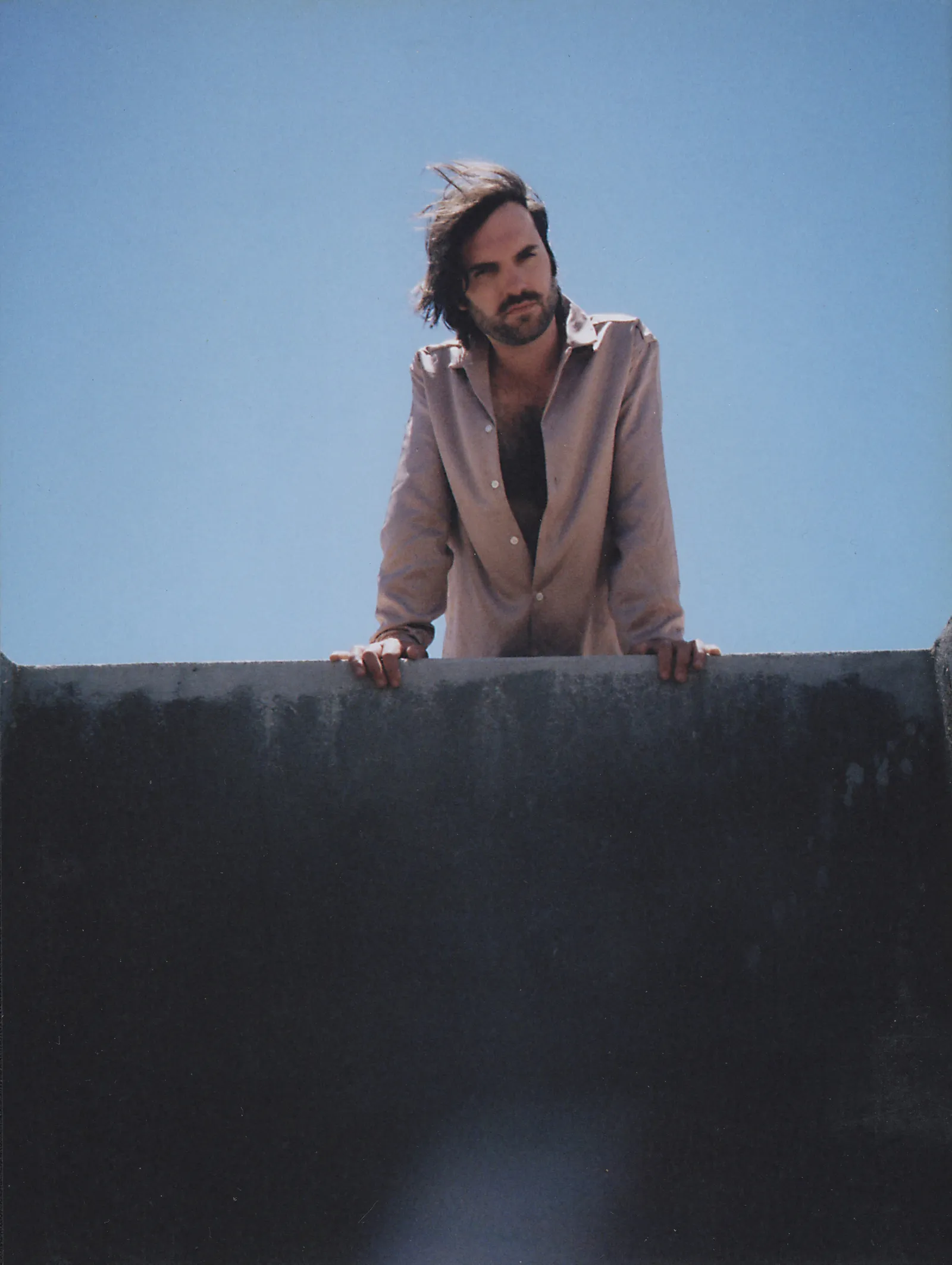
La Priest dévoile aujourd'hui Into The Sky, un album réjouissant et dansant dans lequel l'artiste anglais se dévoile plus que jamais. On a eu le plaisir d'échanger longuement avec lui autour de la conception de cet album, de ses premiers jets à son écriture en passant par sa collaboration avec Boys Noize.
Version anglaise plus bas / English Version Below
La Face B : Salut Sam, Comment vas-tu aujourd’hui ?
LA Priest : Plutôt bien, en fait. Hier, j’ai entièrement nettoyé mon espace de studio. Au début de la journée, je me disais : « Est-ce que je suis en train de perdre mon temps ? C’est une journée de perdue. Je ne vais pas travailler. Je vais juste nettoyer mon studio. Ça va être vraiment improductif. »
Et à la fin de la journée, j’avais l’impression d’avoir fait un million de choses. Ça en valait vraiment la peine, je peux te le dire. J’ai l’impression d’avoir fait mille choses aujourd’hui, alors qu’en réalité je suis simplement dans une pièce plus propre.
La Face B : C’est comme une sensation de paix quand on est dans une pièce propre.
LA Priest : Oui. Et maintenant, c’est un bon espace pour faire du désordre.
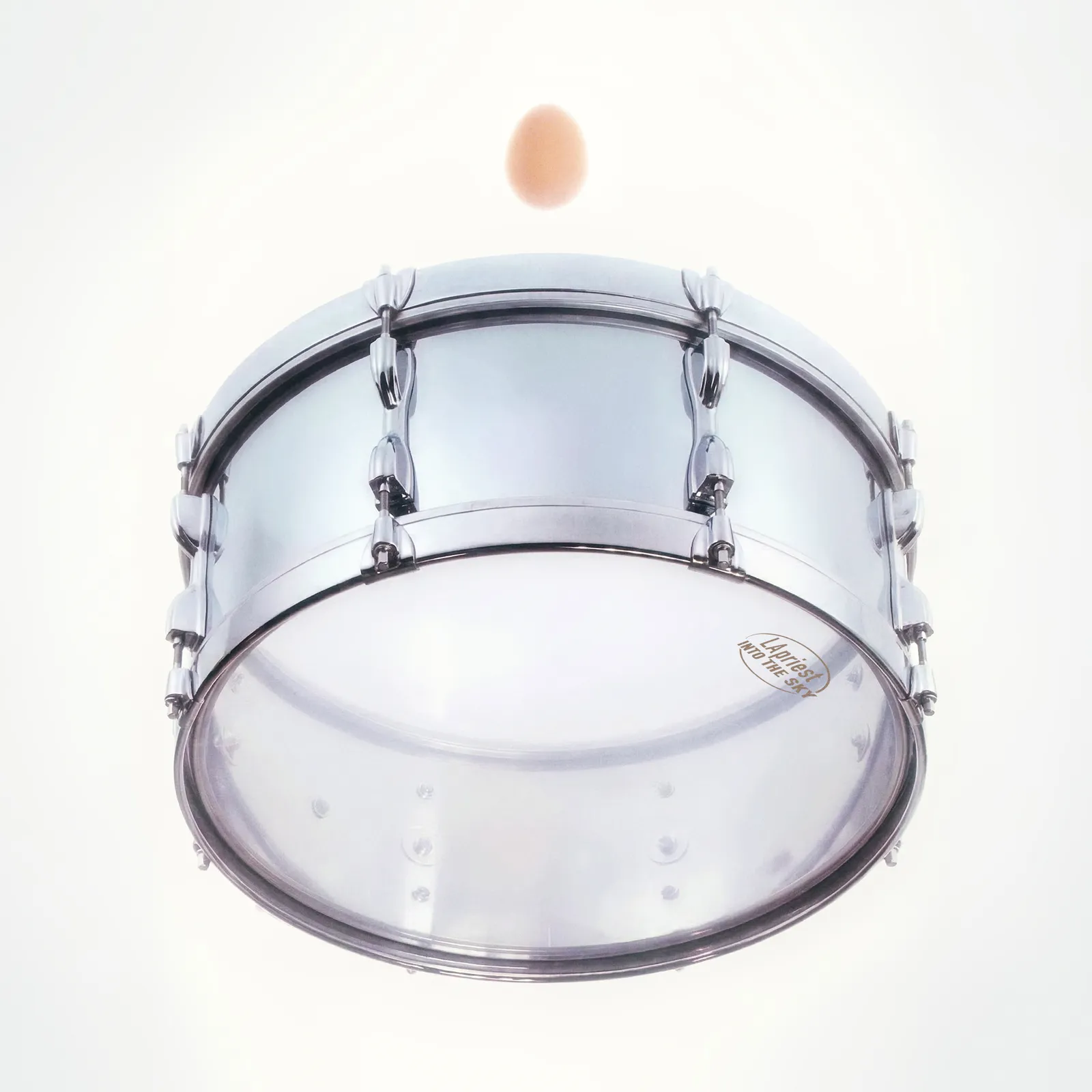
La Face B : Tout d’abord, avant de parler de musique, peux-tu me parler du mystère de l’œuf et de la batterie qui apparaissent sur la pochette de Into the Sky?
LA Priest :Oui, je crois que c’est un peu un mystère pour moi aussi, donc je ne peux pas en révéler autant que je le voudrais.
L’image de l’œuf et de la batterie date en fait d’il y a presque vingt ans. C’était à l’époque où je commençais vraiment à créer des visuels pour mes tout premiers projets. À ce moment-là, je faisais Late of the Pier, mon groupe de l’époque, et j’avais créé cette image. Je crois que, dans ce que j’ai conservé et classé — c’était il y a tellement longtemps — il est indiqué que c’était un premier concept visuel pour l’album de Late of the Pier.
L’œuf, je sais que c’était quelque chose que nous avions à cette époque. C’était un œuf en caoutchouc que tu fais rebondir et qui part dans toutes les directions. Tu ne peux pas prédire où il va aller. Mais nous l’avions appelé « l’œuf de la stabilité » parce que, partout où nous allions en tournée, il finissait toujours par réapparaître.
Je ne pense pas que qui que ce soit faisait particulièrement attention à ramener cet œuf. Et tu sais, quand tu es en tournée avec un groupe, tu perds tout. Mais, d’une manière ou d’une autre, cet œuf réapparaissait toujours, pendant des années. Et je crois qu’un des membres du groupe l’a encore. Donc l’œuf de la stabilité est symbolique.
Et ce qui m’a vraiment convaincu, c’est que j’aimais cette image et qu’elle correspondait très bien à Into the Sky. Mais ce qui m’a vraiment décidé, c’est que lorsque j’ai retrouvé cette image, je me suis demandé : « Je me demande vraiment ce que signifie cet œuf flottant ? »
J’ai fait une recherche rapide et j’ai découvert que l’idée d’un œuf flottant existe dans toutes les grandes religions, dans presque toutes les histoires originelles de l’univers. Il y a toujours une référence à un œuf flottant. Ça s’appelle, je crois, l’œuf cosmique.
Donc c’est vraiment quelque chose d’ancré dans la psyché humaine, d’une certaine manière. C’est assez dingue qu’on soit universellement obsédés par cette image, je trouve. Mais apparemment, c’est quelque chose d’universel.
La Face B : C’est très mystique, d’une certaine manière. Mais je pense que la musique et le sentiment — surtout en sachant que c’est une image de Late of the Pier— m’ont donné l’impression que cet album était comme un retour dans le passé, comme si tu essayais de retrouver une certaine sensation adolescente liée à la musique. En écoutant l’album, je pensais à ça : retourner dans le passé et retrouver cette fraîcheur de tes premières années de musicien.
LA Priest : Je pense que ça fait partie du contexte, si tu veux parler d’un parcours musical. Je pense que même si c’est un peu cliché, tu as effectivement un parcours en tant que musicien. Tu traverses en quelque sorte différentes zones.
Et pour moi, je sais que ça a clairement un contexte. Si je regarde en arrière, je peux dire que lorsque j’ai commencé le projet LA Priest, j’ai très rapidement changé de direction pour créer une atmosphère plus apaisante.
Et je suis allé assez loin dans cette direction parce que j’avais commencé dans un groupe tellement énergique, presque chaotique. Je voulais me mettre au défi. Je pense qu’une grande partie de ce que je fais consiste à me mettre au défi pour voir si je suis réellement capable d’accomplir certaines choses musicalement.
Donc, si tu regardes les premiers disques de LA Priest, beaucoup d’entre eux étaient basés sur les surprises et l’énergie, mais fondamentalement, j’essayais surtout d’adopter une approche presque zen des tempos plus lents et d’une musique plus rêveuse.
Je pense que « rêveuse » est peut-être le terme principal que je cherchais. Et il a fallu attendre cet album pour que je me donne enfin le feu vert pour devenir plus excité, plus hyperactif, je suppose, et plus chaotique par endroits.
Même si, dans beaucoup de passages, ça reste très posé.
La Face B : On peut dire que c’est ton album le plus physique avec LA Priest, d’une certaine manière. Il possède une énergie vraiment unique. Quel a été le point de départ de sa création ?
LA Priest : Il y a plusieurs points de départ, comme c’est souvent le cas avec les albums qui arrivent plus tard dans une carrière. Le premier album d’un artiste a généralement un seul point de départ, mais celui-ci en a plusieurs parce que j’écrivais certaines de ces chansons depuis l’époque de mon premier album.
Je pense que la plus ancienne chanson est Voices, et elle remonte juste après 2016. C’est donc assez normal qu’il y ait quelques chansons qui n’aient jamais trouvé leur forme définitive et qui soient simplement restées là à attendre.
Mais la majorité des chansons, je les ai écrites à l’époque où j’essayais réellement de terminer le troisième album, Fase Luna.
À ce moment-là, je devais trouver une chanson supplémentaire. Il y avait une chanson qui ne fonctionnait absolument pas pour Fase Luna et que j’ai dû abandonner. Et tout à coup, il y avait ce vide évident.
Je me suis donc retrouvé à écrire environ vingt chansons par jour. Et ce n’est pas une exagération. J’écrivais vraiment vingt chansons par jour parce que j’essayais de respecter une échéance pour ce disque. J’ai probablement écrit environ deux cents chansons en quelques semaines.
Donc, forcément, une grande partie de ce matériel... J’ai finalement trouvé la chanson qui convenait à cet album, et il me restait énormément de choses.
C’est aussi la première fois que je me suis vraiment forcé à écrire des chansons. Et ça m’a beaucoup surpris parce que je pensais que se forcer à écrire des chansons ne pouvait donner que quelque chose de très forcé, de très artificiel. Si c’est forcé, c’est un peu comme si tu jouais un rôle.
Et à ma grande surprise, j’ai en fait l’impression d’avoir peut-être davantage révélé mes pensées et mes sentiments intérieurs en me forçant à écrire des chansons. Je ne m’y attendais vraiment pas. Donc ça a été une belle surprise.
La Face B : Je pense qu’il y a beaucoup de ça dans les paroles : une forme d’intimité, quelque chose de très direct et vraiment intime dans l’écriture de cet album.
LA Priest : Oh, merci. C’est bien. Oui, je pense que je suis aussi allé dans cette direction, alors qu’avant je pouvais me contenter de paroles inhabituelles et étranges.
Pour celui-ci, je voulais qu’il y ait une véritable... Mon processus de sélection consistait vraiment à chercher des choses qui avaient une signification. Ce n’était pas simplement étrange ou sans véritable fondement ni substance.
La Face B : J’adore la manière dont les paroles utilisent la répétition — la répétition des mots dans les chansons, et les mots qui font écho d’une chanson à l’autre. Pour moi, ça crée une sensation de transe que l’on retrouve aussi dans la musique, mais également dans les paroles. C’est une sorte d’élévation spirituelle.
LA Priest : C’est aussi quelque chose que j’ai essayé de développer davantage. Lorsque je trouvais quelque chose qui me donnait cette sensation... Je pense que « uplifting » est peut-être un terme trop simple, mais quelque chose de transcendant.
Comment le décrire ? Je dirais probablement presque hypnotique, oui. Mais tu sais, tous ces mots sont utilisés dans la musique de manière assez liée aux genres : hypnotique, trance et tout ça.
J’ai fait quelques démos simplement avec un synthé et une boîte à rythmes, pour voir si je pouvais faire les choses de manière plus simple.
Je voulais vraiment faire un album qui ne soit pas saturé par trop de sources sonores différentes. Je ne voulais pas qu’un instrument arrive sur une chanson, puis qu’un autre apparaisse ailleurs. J’étais plutôt content de ça sur mes albums précédents, mais j’avais l’impression de ne jamais avoir vraiment réussi à faire un album dans lequel tu as l’impression de traverser un seul environnement pendant tout le disque.
Donc lorsque j’ai obtenu un bon résultat avec simplement un synthé et une boîte à rythmes, j’ai essayé de poursuivre cette sensation pour toutes les autres chansons.
Je dirais que l’un des premiers enregistrements qui semblait fonctionner de cette manière était peut-être Ever.
Je voulais simplement que ça t’emmène très loin sans avoir besoin d’être trop explicite ou d’utiliser des sons fantastiques. Je ne voulais pas que ça donne l’impression de te forcer à entrer dans un autre monde.
Et en réduisant le nombre de sons à quelques synthés, ça donnait peut-être un meilleur effet lorsque tu avais la sensation d’être transporté simplement par la mélodie ou par la chanson elle-même.
La Face B : Oui, c’est drôle parce que c’est justement ma prochaine question, donc je vais quand même la poser. Tu as limité la palette d’instruments pour cet album. Est-ce que le défi consistait à obtenir un maximum d’émotions et de variations avec un minimum de sons et d’instruments ?
LA Priest : Exactement. Je pense que parfois, le défi n’est pas vraiment de faire sortir ces émotions de sons très limités. Mais lorsque tu commences à enregistrer de cette manière, tu peux parfois entendre des choses que le public n’entend pas.
Donc, pendant le processus de production, tu dois ajouter certaines choses que les autres personnes ne ressentent ou ne voient peut-être pas.
Sur une grande partie de ce disque, comme tu peux probablement l’entendre, il n’y avait qu’une ligne de basse et une voix. En fait, à un moment, je voulais simplement que ce soit un disque duophonique, avec seulement deux choses qui jouent : la basse et la voix.
Le seul problème, c’est que ça dépend énormément des enceintes. Sur une enceinte, si tu n’as qu’une basse et une voix, tu peux entendre cette relation harmonique. Et sur une autre enceinte, tu ne l’entends pas du tout.
Je m’en suis rapidement rendu compte en faisant écouter des démos à des gens et en me disant : « Oh mon Dieu, ça ne ressemble à rien. On dirait juste que je chante au-dessus d’un grondement. »
Et ce n’est pas seulement une question de ne pas entendre la basse. Parfois, avec une grosse enceinte, tu obtiens simplement la mauvaise relation harmonique.
Mais ça m’a fait comprendre que je devais simplement ajouter quelques éléments. Et beaucoup des notes de synthé et des accords qui se trouvent entre la voix et la basse servent simplement à accentuer les harmoniques et à réintroduire certaines de ces interactions que tu n’obtiens pas toujours sans eux.
La Face B : C’est intéressant parce que, pour moi, Into the Sky donne la sensation d’un voyage. Il y a un véritable sentiment de transe, comme je le disais plus tôt, comme si tu voyageais à travers un univers, avec un morceau unique qui s’étire et évolue sur quarante minutes.
LA Priest :Ah, c’est vraiment cool !
Une partie du processus consistait à enregistrer ces chansons... Je laissais simplement l’enregistrement tourner pendant environ vingt minutes et je faisais différentes choses. Je faisais probablement quatre ou cinq couplets et différentes manières de passer d’un couplet à un refrain. Et, quelque part dans cet enregistrement de vingt minutes, j’essayais toujours de faire au moins une section complètement improvisée.
Donc tu peux ressentir ces allers-retours. Il y a ces sections improvisées qui, tu sais, n’ont pas été prises d’une démo puis réenregistrées. Elles ont été enregistrées complètement à neuf pour l’enregistrement final, ce que je trouve toujours assez génial quand tu arrives à capturer ça.
Mais aussi, avec les timings des différentes choses, le fait que je jouais littéralement du synthé et chantais en même temps signifiait que tu pouvais faire une pause de cinq temps, sept ou huit temps, peu importe, entre chaque couplet ou refrain, et tu obtiens tout ça.
J’ai pris ces enregistrements de vingt minutes et je suis parti avec ma famille au Mexique pendant quelques mois, là où vit la famille de ma femme. Nous avons vécu dans un immeuble dont le dernier étage était encore inachevé, donc il n’y avait pas de toit.
Et je m’asseyais simplement là-haut parce que le climat est plutôt agréable. Tu pouvais rester là toute la journée.
Quand je faisais ça, en éditant ces longs enregistrements, j’avais une sensation très étrange, très trippante, comme si les nuages bougeaient.
Je ne peux pas dire si je les voyais réellement faire ça ou si, simplement, à la fin de la journée, j’avais l’impression de regarder un time-lapse, comme dans un documentaire animalier, avec les nuages qui défilent très vite et le soleil qui se déplace rapidement.
Quelque chose dans le son des chansons, ainsi que dans la longueur de ces enregistrements, me donnait l’impression d’assister au mouvement de la Terre à une vitesse supérieure.
Et je trouvais vraiment que ça correspondait bien à l’atmosphère du disque. Donc je ne sais pas si j’ai intégré un peu cette sensation de voyager à travers l’univers ou quelque chose de plus grand alors que j’étais assis sur ce toit.
La Face B : Est-ce que tu penses que les lieux — parce que tu as cet endroit au Mexique, mais aussi le studio de Boys Noize — ont influencé la sensation de l’album, son intensité ou la production de la musique que tu as créée pour ce disque ?
LA Priest : Oui. C’est toujours un peu difficile à dire parce que tu fais aussi énormément de choix avec les chansons lorsque tu les réduis à quatre ou cinq minutes.
Donc c’est vraiment difficile à déterminer. Je ne peux pas vraiment dire exactement quel effet ces environnements ont eu, ni dans quelle mesure.
Je pense que, si quelque chose, ils ont simplement aidé parce que parfois, lorsque tu réfléchis trop à la musique — ou tout le temps, en fait, lorsque tu réfléchis trop à la musique — tu finis par essayer de lui faire faire trop de choses et par prendre trop de précautions.
Une grande partie du travail excessif consiste à prendre des précautions. Tu te dis : « Et si les gens avaient besoin d’un break ici ? Et s’ils voulaient ça à cet endroit ? » Et tu finis par penser que la forme basique de la chanson ne suffit pas.
Et l’une des choses que le fait d’être dans ces endroits incroyables du monde — où j’ai eu la chance de voyager et de faire de la musique — m’a appris, c’est qu’ils complètent les idées simples.
Ils les rendent plus fortes. Quand tu as cet environnement un peu fou autour de toi, il amplifie vraiment certains aspects de la musique que tu es en train de faire.
Et je pense que c’est aussi une meilleure manière pour les gens de l’écouter, parce qu’ils auront leurs propres environnements.
C’est donc encore une chose que j’ai apprise : si tu forces trop l’atmosphère, elle risque de ne pas correspondre aux différents univers dans lesquels les gens se trouvent lorsqu’ils écoutent la musique.
La Face B : Tu as travaillé avec Boys Noize sur cet album. Est-ce que tu le qualifierais d’album collaboratif ? Et as-tu envisagé à un moment de l’appeler LA Priest et Boys Noize?
LA Priest : C’est devenu une collaboration, presque. Je veux dire, ça a presque basculé vers son projet, mais cela s’est produit assez tard dans le processus.
J’avais enregistré une grande partie des choses d’une certaine manière. Et ce qui était fascinant, c’est qu’il est presque arrivé pour reproduire certaines choses.
Il prenait des sections entières de synthé et disait simplement : « Je vais remplacer ça par ce son. » La première fois qu’il a fait ça, j’étais un peu anxieux parce que, évidemment, tu as cette idée d’un album basé sur des sons très simples, puis une nouvelle source sonore arrive.
Mais il était assez évident qu’il était sur la même longueur d’onde.
Quand tu es sur la même longueur d’onde, je pense que tu peux prendre n’importe quel instrument et raconter la même histoire, évidemment d’une manière légèrement différente.
Pour simplifier énormément ce qu’il faisait, il prenait certaines lignes de basse qui se contentaient de tenir les notes tout au long du rythme.
Beaucoup des sons de basse que tu entends sont ces longues notes qui bourdonnent presque à travers la production. Mais sur certains morceaux, il a évidemment compris qu’il fallait qu’un élément rythmique vienne de la basse.
Et il remplaçait ça par quelque chose de plus découpé, qui poussait et tirait beaucoup plus énergiquement.
Il faisait aussi d’autres choses : il accentuait de petits éléments mélodiques, ajoutait de petites choses — parfois simplement une ou deux notes ici ou là — et tout à coup tu avais l’impression que « cette mélodie est maintenant en trois dimensions ».
Ajouter cette profondeur et cette dimension... Je pense que c’est ce que font beaucoup de bons ingénieurs du mix.
Mais je pense qu’il avait compris qu’il n’allait pas simplement faire ça en utilisant des effets. Il allait utiliser tous les outils dont il disposait.
Donc, à ce moment-là, c’est vraiment devenu son projet. Et pendant un certain temps, nous discutions de tout toute la journée, tous les jours. Mais sur certaines choses, j’étais simplement heureux d’être spectateur à ce stade.
La Face B : C’est comme si, si on pense en termes de cinéma, tu étais le scénariste et le réalisateur, et lui serait le directeur de la photographie.
LA Priest : Oui. Oui, je pense que c’est une bonne analogie.
Je pense que c’est une bonne manière de voir son intervention parce que, pour prolonger l’analogie, il prend l’idée de ce qui se trouve dans l’image, puis il la positionne et prend réellement la photo.
Et concernant l’idée d’un projet collaboratif, ça m’a traversé l’esprit.
Je pense que la décision de l’appeler un album de LA Priest était simplement liée au fait que je peux imaginer collaborer avec lui dès le premier jour. Et je peux très bien imaginer que ça fonctionne.
Je pense qu’il y a de fortes chances que cela arrive dans le futur. Et si c’est quelque chose que tu peux envisager avec quelqu’un, alors je pense que c’est la meilleure manière de le faire, tu vois, avec un nouveau projet.
J’aime que chacun de mes projets individuels donne l’impression d’être une entité complètement nouvelle, avec un nouveau point de départ et tout ce que cela implique, tu vois ?
La Face B : Une chose que j’aime beaucoup dans la production, c’est qu’elle laisse énormément d’espace à la voix. Je trouve qu’il y a un véritable équilibre entre l’aspect mécanique et l’aspect humain de la musique.
Je me demandais si c’était important pour toi. La voix et le chant ont une place importante dans les chansons, et il y a cet équilibre entre la production, les instruments très peu humains, et l’humanité de la voix et de l’interprétation.
LA Priest : Je pense qu’une partie de ça vient du fait que j’avais en réalité toutes ces idées de vidéos, sans vraiment avoir la musique qui allait avec.
J’ai donc écrit toutes ces idées de clips autour de la période de l’EP. C’était vers 2024, et l’IA évoluait très rapidement.
Et je pense qu’encore en 2024, personne ne parlait vraiment de la direction que les choses étaient en train de prendre et de là où elles pourraient aller.
Et comme les idées de vidéos arrivent parfois beaucoup plus vite que les chansons, tu peux devoir trouver un concept de vidéo deux semaines avant de la tourner, alors que la chanson existe parfois depuis plusieurs années à ce moment-là.
J’essayais donc de réfléchir à ce que pourrait être une bonne vidéo pour certaines de ces chansons de l’EP.
Et oui, j’avais toutes ces images de ce à quoi ressembleraient l’humanité et l’IA si elles étaient deux personnes dans la même pièce. Comment est-ce qu’on pourrait personnifier l’IA ?
Pour une raison quelconque — et j’ai toujours envie d’explorer davantage cette idée, même si je l’ai déjà un peu fait dans mes vidéos en ligne — j’imaginais l’IA comme ces étranges enfants jumeaux.
Parce que la manière dont elle se présente est très innocente, et donne vraiment l’impression de simplement vouloir t’aider.
Et je trouvais que cette juxtaposition — des enfants qui seraient en quelque sorte les maîtres des adultes — correspondait à ce que j’ai dans la tête. Une sorte d’idée dystopique, en tout cas.
Et puis il y a évidemment ce grand cliché de la science-fiction : le futur comme un paysage très mécanique, dépourvu de nature, et tout ce qui va avec, et la manière dont les émotions semblent presque plus fortes, ou plus intenses, sur ce genre de toile de fond.
Pendant des années, tout ce que j’avais fait dans mes vidéos, c’était aller les tourner dans des forêts et dans des endroits que j’aimais vraiment.
Il s’agissait donc simplement de sortir de ma zone de confort et de me dire : « OK, cette fois, je ne vais pas faire de forêt. »
Et finalement, les vidéos de l’EP se sont encore retrouvées dans une forêt.Rires.
Donc j’ai repoussé cette idée, puis je l’ai finalement réalisée sur ce disque.
Et je pense que c’est exactement ce que tu décris. Il s’agit simplement de voir à quoi ressemblent ces idées de chansons humaines, cette voix humaine, dans ce paysage stérile et presque extraterrestre.
Et je pense que ça a été fait mille fois, tu sais. C’est une idée très connue.Kraftwerkle faisait déjà dans les années 70, et les gens le faisaient même avant ça.
Mais pour moi, c’est toujours très intéressant de comprendre, d’expérimenter et de voir : comment est-ce qu’on fait entrer des émotions dans un environnement sans émotion ?
Je pense que c’est toujours au cœur de la direction que nous prenons technologiquement et socialement.
La Face B : J’ai encore deux questions. Le mot que tu utilises le plus dans Into the Sky, c’est « love ». Est-ce que tu avais prévu de faire un album sur l’amour, ou est-ce que tu t’en es rendu compte au cours du processus créatif et de la réalisation de l’album ?
LA Priest : Encore une fois, je pense que c’est en grande partie lié au processus d’écriture que je t’ai décrit, où j’écrivais simplement vingt chansons par jour.
Pour cet espace qui existait sur l’album précédent, je savais qu’il fallait une sorte de chanson d’amour. Et donc presque toutes les chansons — évidemment pas toutes, mais une énorme majorité d’entre elles — ont fini par être différentes manières d’écrire des chansons d’amour.
Et donc, avant cet album, je ne pense pas avoir vraiment eu de chansons d’amour qui contenaient le mot « love ».
Sur les deux premiers albums, il y a toutes ces choses qui sonnent de manière romantique. Mais à l’époque, c’était un défi pour moi d’écrire quelque chose qui soit réellement une chanson d’amour.
Et l’une des choses qui m’a poussé à me lancer ce défi, c’est que j’entendais régulièrement cette citation selon laquelle Frank Sinatra disait que Something était la plus belle chanson d’amour jamais écrite. Et c’était sa chanson préférée de Lennon-McCartney, ce qui est assez drôle parce qu’elle est évidemment de George Harrison.
Et chaque fois que j’entendais ça, tout en riant du pauvre George Harrison, je me disais toujours : « Un jour, j’écrirai une meilleure chanson d’amour que celle-là. »
Tu vois, simplement cette idée, parce que je pense qu’il faut parfois avoir une forme de compétition.
La Face B : Tu as maintenant dix chansons sur l’amour.
LA Priest :Maintenant, oui. Exactement.
Donc mon défi pour le prochain disque sera peut-être d’écrire sur autre chose. C’est bien. Je pense que je me suis maintenant prouvé que j’étais capable de le faire.
La Face B : J’ai une dernière question, et je pense que c’est davantage une question pour moi.
J’étais — et je suis toujours — un grande fan de Late of the Pier. Votre seul album a presque vingt ans maintenant, et je me demandais si tu pouvais voir l’influence de cet album sur toi, sur la musique en général et sur les gens aujourd’hui. Quelle est, selon toi, l’influence de cet album aujourd’hui ?
LA Priest : Tu sais, c’est difficile à dire.
Je sais qu’il y a quelques chansons qui sont incroyablement proches, par pure coïncidence. Les gens me disent : « Ils t’ont clairement volé ça. »
J’ai toujours eu une vision différente de la chose. Tu sais, j’ai écrit beaucoup de musique en espérant qu’elle soit samplée, réutilisée, régurgitée en quelque sorte, et qu’elle finisse simplement par faire partie de la musique.
Donc lorsque les gens te « volent », pour ainsi dire, c’est évidemment aussi un compliment.
Mais moi-même, je n’écoute pas beaucoup de choses en me disant : « Oh, ils ont forcément entendu ça. »
Ce sont plutôt les gens que je connais qui me disent : « Oh, ça, c’est clairement... » Je pense que c’est l’une de ces choses que l’on perçoit probablement mieux depuis l’extérieur.
Surtout parce que, pour moi, cette musique était un mélange de toutes mes obsessions — un immense mélange de différentes obsessions musicales.
Donc je ne sais pas vraiment ce qui pourrait déclencher chez moi cette réaction : « Oh, ça, c’est clairement une référence à Late of the Pier», ou quelque chose comme ça.
Tu sais, les gens pourraient prendre tout ce que j’ai fait et le transformer en une chanson, et pour moi, ça sonnerait simplement comme toutes les choses que j’écoutais en grandissant, pas comme ma propre musique.
La Face B : J’ai interviewé Soulwaxet je leur ai dit que leur remix de Best in the Class par Soulwax était mon remix de Soulwax préféré.
LA Priest :Tu sais... Oh oui ! C’est tellement dingue. C’est toujours vraiment...
La Face B : Oui, c’est un morceau incroyable. Et je pense que j’écoute Late of the Pier presque tous les mois, et que ça a vraiment eu une influence sur moi.
Je voulais donc simplement te dire merci encore une fois pour cet album, et merci pour ta musique.
LA Priest : Merci. Non, ça me fait vraiment plaisir.
La Face B : De mon point de vue, il y a un véritable héritage autour des chansons que tu as créées avec cet album, avec ce seul album, et il est encore dans l’air aujourd’hui pour moi.
LA Priest : Par exemple, mes propres enfants réagissent beaucoup plus enthousiastement à ce disque qu’à probablement tout ce que j’ai fait d’autre.
Et je ne pense pas que je ne leur ai fait écouter qu’une ou deux fois, simplement pour voir leur réaction.
Et c’est juste... Je ne sais pas, je trouve ça agréable de penser que la musique n’est pas vraiment quelque chose qui ne se transmet pas d’une génération à l’autre.
C’est agréable de penser qu’elle a simplement un effet.
Je pense que c’est le cas lorsque tu n’as pas beaucoup de contexte culturel, surtout quand tu es enfant. Les enfants n’ont pas encore cette programmation qui leur dit vraiment à quoi la musique est censée ressembler, tant que ça ne sonne pas trop vieux et craquelé.
Tu sais, les enfants — c’est probablement la seule chose à laquelle ils ont encore parfois du mal à passer outre.
J’aime l’idée qu’à un moment donné — et peu importe vraiment quand — ce serait bien de penser que, dans vingt ans, ou même plus tard, cet album puisse devenir une sorte de redécouverte.
Comme les choses que j’ai moi-même découvertes.
Pour prendre quelque chose au hasard, juste comme ça, Gang of Four est un groupe que j’ai découvert presque de nulle part quand j’étais adolescent, et aucun de mes amis ne connaissait cette musique.
J’aime l’idée qu’un de mes disques puisse devenir ça, et qu’il puisse alors produire à nouveau cet effet étrange où, je suppose, Late of the Pier faisait référence à Gang of Fouret où d’autres groupes se diraient : « J’aime ça. Comment est-ce qu’on peut faire ça ? »
Et tu avais tous ces petits réseaux étranges d’excitation.
Donc oui, quand ça arrivera... Honnêtement, aucune pression, les gars. Rires.
La Face B : C’était un vrai plaisir de parler avec toi aujourd’hui.
LA Priest : Pareillement. Merci.
La Face B : J’espère te voir bientôt sur scène en France plus tard cette année..
LA Priest :Oui. Rien n’a été annoncé, mais je vais sans aucun doute passer un peu de bon temps en France à nouveau. Et oui, j’ai hâte de t’y retrouver.
English Version
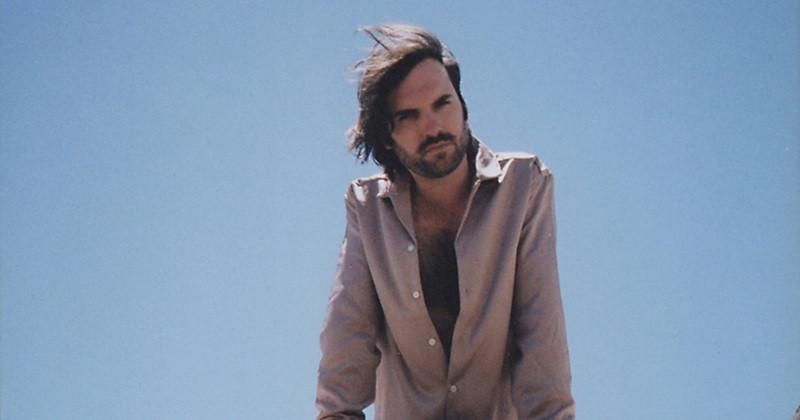
Today, La Priest unveils Into The Sky, a joyful, danceable album in which the English artist reveals more of himself than ever before. We had the pleasure of speaking with him at length about the creation of this album—from its initial drafts to the songwriting process, including his collaboration with Boys Noize.
La Face B: How are you today?
LA Priest: I'm pretty good, actually. I just cleaned out my studio space yesterday. At the start of the day, I was feeling kind of like, “Is this a waste of time? It's a day wasted. I'm not going to get any work done. I'm just going to clean my studio. This is going to be really unproductive.”
And at the end of the day, I felt like I'd done a million things. It's definitely worthwhile, I can say that for sure. I feel like I've done a thousand things today, but I'm just in a cleaner room.
La Face B: It's like a feeling of peace when you're in a clean room.
LA Priest: Yes. And it's a good space to make a mess in now.
La Face B: First of all, before speaking about the music, can you tell me about the mystery of the egg and the drum kit featured on the cover of Into the Sky?
LA Priest: Yeah, I think it's a bit of a mystery to myself as well, so I can't reveal as much as I'd like.
The image of the egg and the drum actually dates back about maybe nearly 20 years. It's from when I was really starting out doing artwork for very early projects. At that time, I was doing Late of the Pier, my band at the time, and I made that image. I believe what I've got it categorised as — it was so long ago — but it says that it was an early art concept for the Late of the Pier album.
The egg, I know, was a thing that we had at that time. It was this rubber egg that you bounce and it goes in all different directions. You can't predict it. But we called this the “egg of stability” because wherever we went on tour, it just turned up everywhere.
I don't think anybody was very careful about bringing the egg. And, you know, when you're touring as a band, you lose everything. But somehow this egg always showed up for years. And I believe one of the band members still has it. So the egg of stability is symbolic.
And what sold it for me was that I liked the image and it fits Into the Sky very well. But really what sold it for me was that, when I brought this image back up, I was wondering, “I wonder what this floating egg really means?”
I did a quick search and found that the idea of a floating egg is inside every major religion, inside almost every kind of origin story of the universe. There's some reference to a floating egg. It's known as the cosmic egg, I think.
So it's really ingrained in the human psyche somehow, which is a mad thing for us to be so universally obsessed with, I think. But it's just a universal thing, apparently.
La Face B: It's very mystical in some way. But I think the music and the feeling — especially knowing that it's an image from Late of the Pier— made me think that this album is like you going back into the past and trying to find some adolescent feeling about music. When I listened to the album, I was thinking about that: going back into the past and finding some freshness in your early years as a musician.
LA Priest: I think it's part of the context, if you want to call it a musical journey. I think that even though that's a bit of a cliché, you do have a journey as a musician. You do kind of go through these different zones.
And for me, I do know that it definitely has a context where, if I look back, I can say that when I started the LA Priest project, I changed direction very quickly in order to produce a kind of atmosphere that was more calming.
And I went quite far into that world because I'd started out in such an energetic, almost chaotic band. I wanted to challenge myself. I think a lot of what I do is about trying to challenge myself to see if I can actually achieve things musically.
So I think that if you look back at the early LA Priest records, a lot of that was about surprises and energy, but really, overwhelmingly, I was trying to have almost like a Zen approach to slower tempos and more kind of dreamlike music.
I think “dreamlike” might be the main thing that I was sort of getting at. And it took all the way up until this album for me to kind of give myself the green light to get hyped, hyperactive, I suppose, and more chaotic, I think, in some places.
I mean, it's still very kind of chilled out in a lot of bits.
La Face B: We can say it's your most physical album with LA Priest, in a sense. It has a unique energy of its own. What was the starting point for you in its creation?
LA Priest: There's a couple of starting points, as you always find with later albums. I mean, the first album of any artist has one starting point, but this one has a few because I was writing some of these songs as far back as my first album.
I think the oldest song on there is Voices, and that goes back to straight after 2016. So it's a normal thing for there to be a few songs that just never found their final form and were just sort of waiting around.
But then the majority of the songs I wrote around the time that I was trying to actually finish the third album, Fase Luna.
What I had to do at that time was find one more song. There was a song that just didn't work at all for Fase Luna and I had to throw it away. And then there was this really obvious gap.
So I ended up writing about 20 songs a day. And that's no exaggeration. I really was writing 20 songs a day because I was trying to sort of meet a deadline for this record. I probably wrote about 200 songs over a couple of weeks.
So inevitably, a lot of that material eventually... I found the one song that fitted that album, and I had a lot of leftover stuff.
That's also the first time that I ever forced myself to write songs. And I was really surprised by that because I thought forcing yourself to write songs would only end up in very kind of forced, very kind of fake-sounding stuff. If it's forced, it's kind of like put on.
And to my surprise, I was actually, I think, perhaps revealing more of my inner thoughts and feelings by forcing myself to write songs. I never really expected that. So that was a nice surprise.
La Face B: I think there is a lot of that in the lyrics: a sort of intimacy, something very direct and really intimate in the way the writing works on this album.
LA Priest: Oh, thank you. Good. Yes, I think I also went with that kind of stuff, where before I might have been content with sort of unusual and strange-sounding lyrics.
I think with this one, I wanted there to be a real... So my selection process really was looking for stuff that actually meant something. It wasn't just all kind of without real foundation or substance.
La Face B: I love the way the lyrics use repetition — the repetition of words in songs, and words echoing from one song to another. For me, it creates a feeling of trance that you also find in the music, but also in the lyrics. It's sort of a spiritual elevation.
LA Priest: That's another thing that I tried to give more of, or when I found that I could make something that felt... I think “uplifting” is maybe too simple a word, but transcendental.
How would I describe it? I'd probably say almost hypnotic, yes. But, you know, all of these words are kind of used in music in quite genre-based ways — hypnotic, trance and things like that.
I did a few demos just with a synth and a drum machine to see if I could do it more simply.
I definitely wanted to do an album that wasn't oversaturated with too many different sound sources. I didn't want instruments coming in for one song and then there's a different thing. I've been quite happy with that on previous albums, but I felt like I hadn't really managed to do an album where you feel like you're moving through one environment through the whole record.
So when I got a good effect with just one synth and a drum machine, I tried to chase that kind of feeling for all of the other songs, really.
I'd say one of the first recordings that I think seemed to work in that way might have beenEver.
I just wanted it to take you a long way away without having to be too on the nose about it and have fantastical sounds. I didn't want it to feel like it was forcing you into another world.
And by reducing the amount of sounds down to a couple of synths, that maybe gave a better effect when you are feeling transported just by the melody of it or the song itself.
La Face B: Yeah, it's funny because that's actually my next question, so I'm going to ask it anyway. You've limited the range of instruments for this album. Was there a sort of challenge in getting the maximum amount of emotion and variation out of the minimum number of sounds and instruments?
LA Priest: Exactly. Well, I think sometimes the challenge isn't really getting those emotions out of very limited sounds. But I think when you start to record like that, you can sometimes hear things that the audience can't hear.
So in the production process, you have to paint a few of the things in there that other people might not be feeling or seeing.
For a lot of this record, as you can probably tell, it was just a bassline and a voice. In fact, at one point I just wanted it to be a duophonic record, in that it just had two things playing: the bass and the voice.
So the only challenge with that is that on different speakers — like, on one speaker, if you've just got a bass and a voice, you can hear this harmonic relationship. And on another speaker, you can't hear the harmonic relationship at all.
I quickly found that out just by playing people demos and going, “Oh my God, that doesn't sound like anything. That just sounds like me singing to a rumbling.”
And it's not just if they couldn't hear the bass. Sometimes, on a big speaker, you just get the wrong harmonic thing.
But that's sort of made me realise, okay, so I just need to paint in some of it. And a lot of the synth notes and chords that are in between the voice and the bass are just there to emphasise the kind of harmonics and bring back a few of those interplay things that you sometimes don't get without them.
La Face B: It's interesting because for me,Into the Sky gives the sensation of a journey. There is a real sense of trance, like I said earlier, as if you were travelling through a universe, and a single track that stretches out and evolves over 40 minutes.
LA Priest: Aww, that's really cool!
Part of the process was that I recorded these songs... I would just leave the song recording for about 20 minutes and I would do different things. I'd probably do about four or five verses and ways to kind of go from a verse to a chorus. I'd always, somewhere in that 20-minute recording, try just a completely improvised section at least once.
So you can feel that kind of coming and going. There are these improvised sections which, you know, they weren't taken from a demo and re-recorded. They've been recorded completely fresh to the final recording, which I always think is a really neat thing if you can capture that.
But also, with the timings of different things, it just made it so that because I was literally playing the synth and singing at the same time, you can take a break of five beats or seven or eight beats, whatever you like, between each verse or chorus, and you get all of that stuff.
I took these 20-minute-long recordings and I went out with my family to Mexico for a few months, where my wife's family lives. So we went out and we lived in this building where the top floor was unfinished, so it didn't have a roof.
And I would just sit up there because the weather's pretty agreeable. You could just sit up there all day.
When I was doing that, when I was editing these long recordings, I had this very trippy sort of sensation where it felt like the clouds were moving.
I can't describe whether I saw them doing this or whether it was just at the end of the day, it felt like there was a time-lapse, like in a nature documentary, where you get the clouds kind of rushing over and the sun moving really fast.
Something about the sound of the songs, as well as the length of these recordings, made it feel like I was witnessing the Earth moving at a higher speed.
And I really thought that went well with the kind of feeling of the record. So I don't know if I kind of worked a bit of that feeling of travelling through the universe or something bigger in while I was sitting on this roof.
La Face B: Do you think places — because you have this place in Mexico, and also the studio of Boys Noize — do you think the places where you recorded and created the songs had an influence on the feeling of the album, and the intensity or the production of the music you made for this album?
LA Priest: Yeah. I mean, it's always kind of tricky to tell because you make so many choices as well with songs when I'm editing them down to four or five minutes.
Yeah, it's really hard to tell. I guess I can't really say exactly what those environments had, how much of an effect they had.
I think, if anything, they just helped because sometimes, if you overthink music — or all the time, basically, if you overthink the music — I think you end up trying to do too many jobs and make too many safety measures with your music.
A lot of the overworking is safety measures. You go, “Okay, well, what if people need there to be a breakdown here? What if people are going to want this here?” And you think that it's not enough in its basic form.
And one thing about being in these kind of amazing places in the world that I've been kind of lucky enough to travel around and make music in is that they complement simple ideas.
They make it feel... If you've got this kind of mad environment around you, it really exaggerates things about the music that you're doing.
And I think that's a better way for people to listen to it as well, because they're going to have their own environments.
So again, this is something that I've kind of learned: if you force the atmosphere too much, it might not fit into different people's kind of worlds that they're in when they're listening to it.
La Face B: You worked with Boys Noize on this album. Would you call it a collaborative album? And did you ever think about calling itLA Priest and Boys Noizeat some point?
LA Priest: It became a collaboration almost. I mean, it almost tipped towards being his project, but it tipped later on in the process.
A lot of the stuff I'd recorded it one way, basically. And then the fascinating thing was that he almost came in and reproduced things.
So he was taking whole synth sections and just going, “I'm going to replace that with this sound instead.” The first time he did that, I was just a bit anxious about it because you've got this, obviously, idea of this album being based on these very simple sounds, and then you've got this new sound source coming in.
But it was pretty obvious that he was on the same page.
If you're on the same page, you can pick up any instrument, I think, and tell the same sort of story in an obviously slightly better way.
What he was doing, just to massively simplify it, was taking things that were a few basslines that were kind of just painting the notes right across the rhythm.
A lot of the bass sounds that you hear are these long notes that almost drone through the production. But on certain songs, he obviously realised we need some kind of rhythmic element coming from the bass.
And he would replace that with something that's chopping and kind of just pushing and pulling in a much more energetic way.
Then other things he was doing was emphasising little bits of melody, bringing in new little things — sometimes just one or two notes here or there — and you would suddenly feel, “This melody is three-dimensional now.”
Adding that kind of depth and that dimension... I think that's what a lot of good mix engineers will do.
But I think that he understood that he wasn't just going to do it by using effects and things. He was going to use any tool that he had available.
So it really became like his project at that point. And we were discussing things all day, every day for a while. But some things I was just happy to be a spectator at that stage.
La Face B: It's like, if you think in terms of movies, you're the writer and director, and he's like the director of photography.
LA Priest: Yes. Yeah, I think that's a good analogy.
I think that's a good way of seeing the effect because he's like — taking the analogy further — taking the idea of what's in the image and he's actually positioning it and taking the photo.
And as far as the idea of it being a collaborative project, I think the thought did cross my mind.
I think that the decision to call it an LA Priest album was really just down to the fact that I can imagine collaborating with him from day one. And I can imagine that working really well.
I think there's a high possibility of that happening in the future. And if it's a possibility to do that with somebody, then I think that's the way to do it, you know, with a new project.
I'd like to keep all of my individual projects feeling like they're these completely new entities, where there's a whole new starting point and everything, you know?
La Face B: One thing I love about the production is that it gives the vocals plenty of space. I think there is a real balance between the mechanical effect and the human aspects of the music.
I was wondering if that was important for you. The vocals and the singing have an important place in the songs, and there is this balance between the production, the very non-human instruments, and the humanity in the voice and the interpretation.
LA Priest: I think some of that was because I had these ideas actually for videos, and I didn't really have the music to go with the videos.
So I wrote all of these ideas for music videos around the EP sort of time. It was about 2024, and it was a very kind of... AI was advancing really fast.
And I think still around 2024, it felt like nobody was really talking about the way that things were kind of heading and where things might be going.
And so, because video ideas are a lot quicker than songs sometimes, you might have to come up with a video concept two weeks before shooting it, whereas the song's been around for sometimes up to a few years by that time.
So I was trying to think what would be a good video for some of these songs from the EP.
And yeah, I was just getting all these images of what humanity and AI would look like if they were people in the same room. How would AI be personified?
For some reason — and I still kind of want to do this more, but I've done it a bit on my video clips online — I just imagine that AI was like these weird twin children.
Because the way that it presents itself is very innocent and very kind of just wanting to help you.
And I thought that kind of juxtaposition of having kids sort of being the masters over adults is basically what it looks like in my brain. This sort of dystopian idea, anyway.
And the idea that, obviously, like the classic sci-fi trope of the future just being a very kind of mechanical landscape devoid of any nature and all that stuff, and how emotions kind of almost look stronger or they're almost more vivid on that backdrop.
Because for years, all I'd done in my videos is go and film them in forests and places that I really liked.
So it was just about putting myself out of my comfort zone and saying, “Okay, I'm not going to do forests this time.”
And as it ended up, the EP videos ended up being in a forest again.Laughs.
So I've put that idea off and then finally did it on this record.
And I think that's exactly what you say. It's just seeing what these human song ideas, this human voice, sounds like in this kind of sterile, alien sort of landscape.
And I think it's been done a thousand times, you know. It's a very well-known idea. Kraftwerk were doing it in the '70s and people were doing it even before that.
But for me, it's still very interesting to understand, to kind of experiment and see: what is our... How do we kind of get emotions in an emotionless environment?
I think it's still at the core of where we're going technologically and socially.
La Face B: I have two more questions. The word you use the most in Into the Sky is “love”. Did you plan to make an album about love, or did you realise it during the creative process and the making of the album?
LA Priest: Well, again, this actually, I think, is a lot to do with the writing process that I described, where I was just writing 20 songs a day.
That gap on that previous album, I knew it was supposed to be some kind of love song. And so nearly all of the songs — obviously not all of them, but a huge majority of those songs — just ended up being different ways of writing love songs.
And so I went from basically, before that album, I don't think I had any real love songs that had the word “love” in them.
Like the first two albums, there's all these kind of romantic-sounding things. But at that time, it was a challenge for me to write something that was like a love song.
And one of the things, actually, that made me challenge myself to do that is that I kept hearing that quote every now and again about Frank Sinatra saying thatSomethingwas the best love song ever written. And it was his favourite Lennon-McCartney song, which is funny because it's obviously George Harrison.
And whenever I heard that, along with laughing at poor George Harrison, I always thought, “Yeah, I'll make a better love song than that one day.”
You know, just that idea, because you have to have competition, I think, sometimes.
La Face B: You have ten songs about love.
LA Priest: Now I have. Exactly.
So my challenge for the next record might be to write about something else. It's good. I think I've shown myself that I can do that now, anyway.
La Face B: I have a final question, and I think it's more a question for me.
I was — and I still am — a huge fan of Late of the Pier. Your only album is nearly 20 years old now, and what I was thinking is: can you see the influence of that album on you, on music generally, and on people today? What do you think the influence of that album is now?
LA Priest: You know, it's just hard to say.
I know there are a couple of songs that are insanely close, just by pure coincidence. People tell me, “Oh, they definitely ripped you off here.”
I've always had a different view on it. You know, I wrote a lot of music hoping that it would be sampled and kind of regurgitated and end up just being part of music.
So whenever people kind of rip you off, so to speak, it's a compliment, obviously, as well.
But I don't really listen to a lot of stuff myself and say, “Oh, they must have heard this.”
It's more people that I know who say, “Oh, this is definitely...” I think it's one of those things that probably comes better from somebody who's looking from the outside.
Especially because, for me, that music was such a mix of my own obsessions — a complete mash of different musical obsessions.
So I don't know what would really trigger that idea for me to say, “Oh, that's definitely aLate of the Pier reference,” or something.
You know, people might take all of the stuff that I've done and turn that into a song, and it would, to me, just sound like all of the things that I grew up listening to, not my own music.
La Face B:I did an interview with Soulwa xand I said to them that the remix of Best in the Class by Soulwax is my favourite Soulwax remix ever.
LA Priest: You know... Oh yes! It's so wild. It's still really...
La Face B: Yeah, it's an amazing song. And I think I listen toLate of the Pieralmost every month, and it has had a real influence on me.
So I just want to say thank you for this album once again, and thank you for your music.
LA Priest: Thank you. No, that's a real pleasure.
La Face B: In my perspective, there is a real legacy about the songs you created with this album, with this one album, and it's still in the air today for me.
LA Priest: For instance, my own kids react much more enthusiastically to that record than probably anything else I've done.
And I don't think I've only played it to them once or twice, just to see their reaction.
And it's just like... I don't know, it's nice to think that music isn't really a thing that doesn't translate to different generations.
It's like to think that it just has an effect.
I think it does when you don't have a lot of cultural context, especially when you're a kid. I think kids don't have this programming of really what music is going to sound like, as long as it doesn't sound too old and crackly.
You know, kids — that's the only thing they still kind of get past sometimes.
I like the idea that, at one point — and it doesn't really matter when it is — but it'd be nice to think that at some point, in 20 years from now even, or whenever, it becomes like a rediscovery thing.
Just like the stuff that I discovered.
Just to name something off the top of my head, it's a random thing to pick, but Gang of Four is a band that I discovered almost from nowhere when I was a teenager, and none of my friends had heard that music.
I like the idea of one of my records being that, and then having this weird effect again where I suppose Late of the Pier were referencing Gang of Four and other bands were kind of going, “Hey, I like that. How do we do that?”
And you had all of these kind of weird little networks of excitement.
So yeah, whenever. Honestly, no pressure, guys.Laughs.
La Face B: It was a real pleasure to talk with you today, and I hope to see you soon.
LA Priest: Likewise. Thank you.
La Face B: I hope to see you live in France later this year, I think.
LA Priest: Yeah. Nothing's been announced, but I'll undoubtedly be having a bit of a fun time in France again. And yeah, I look forward to seeing you there.