
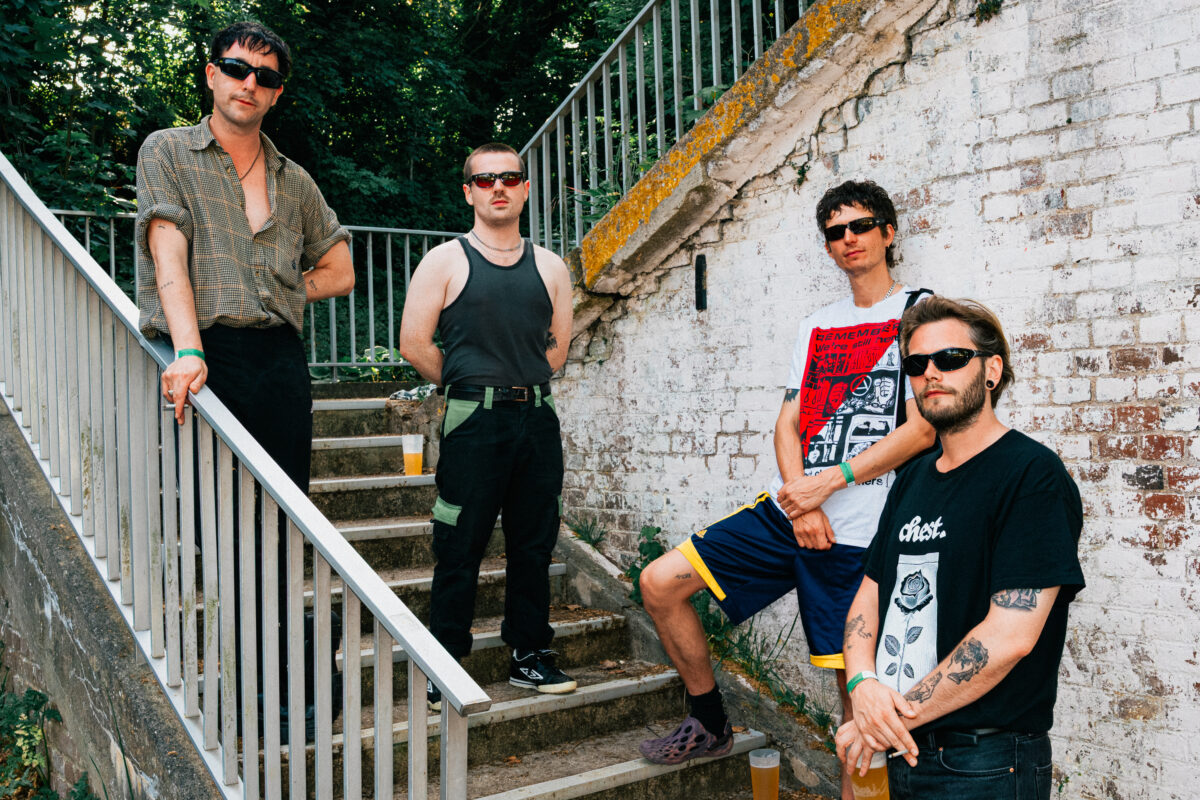
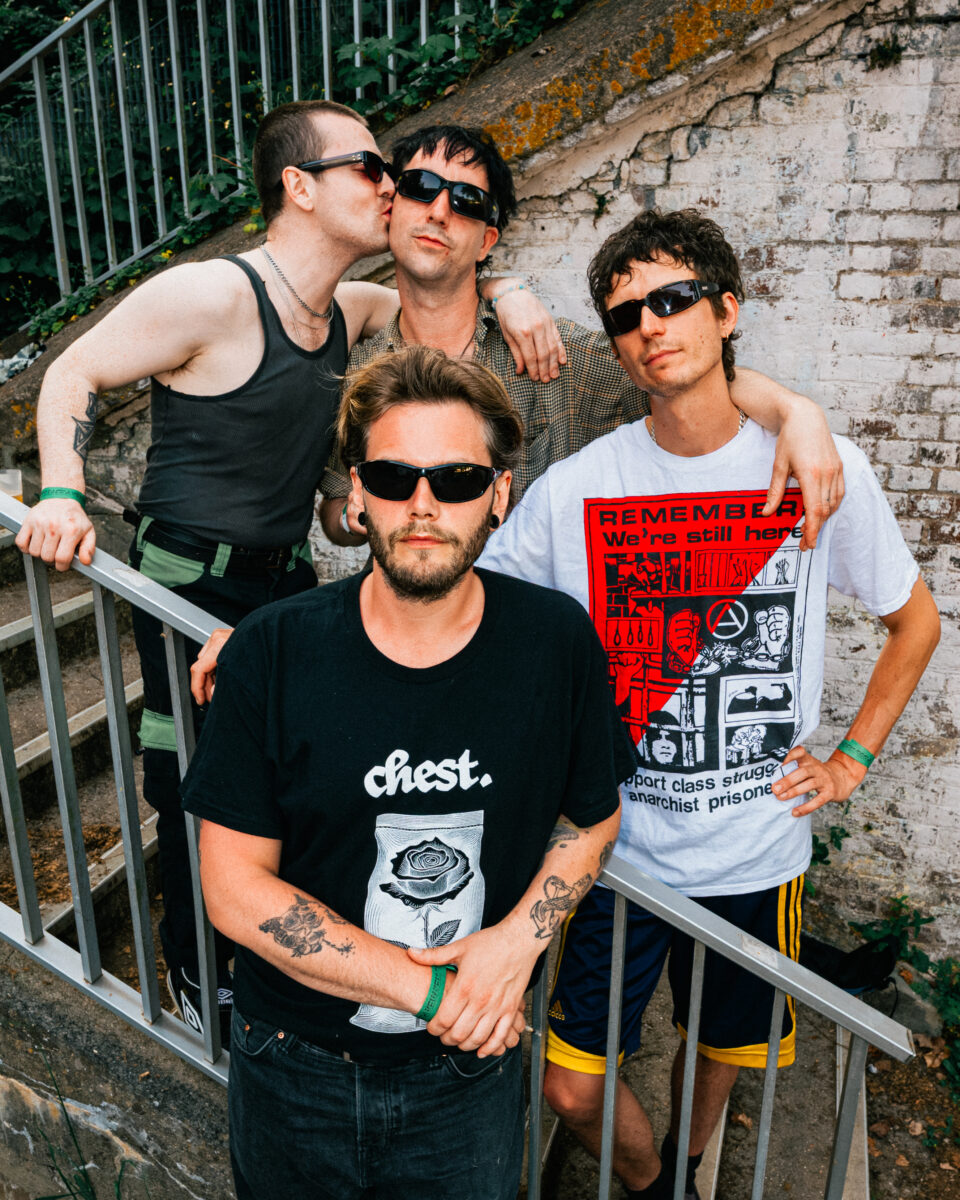
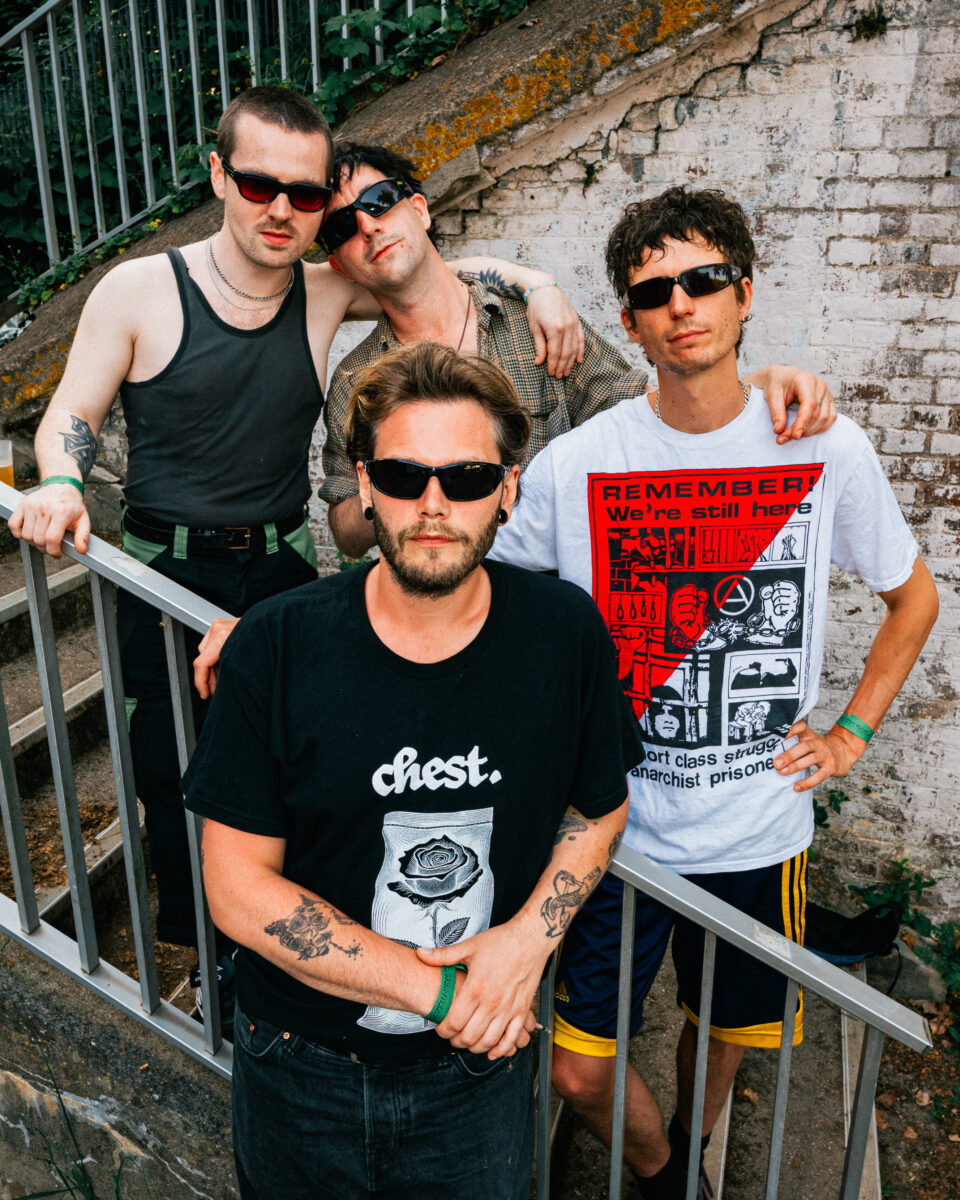
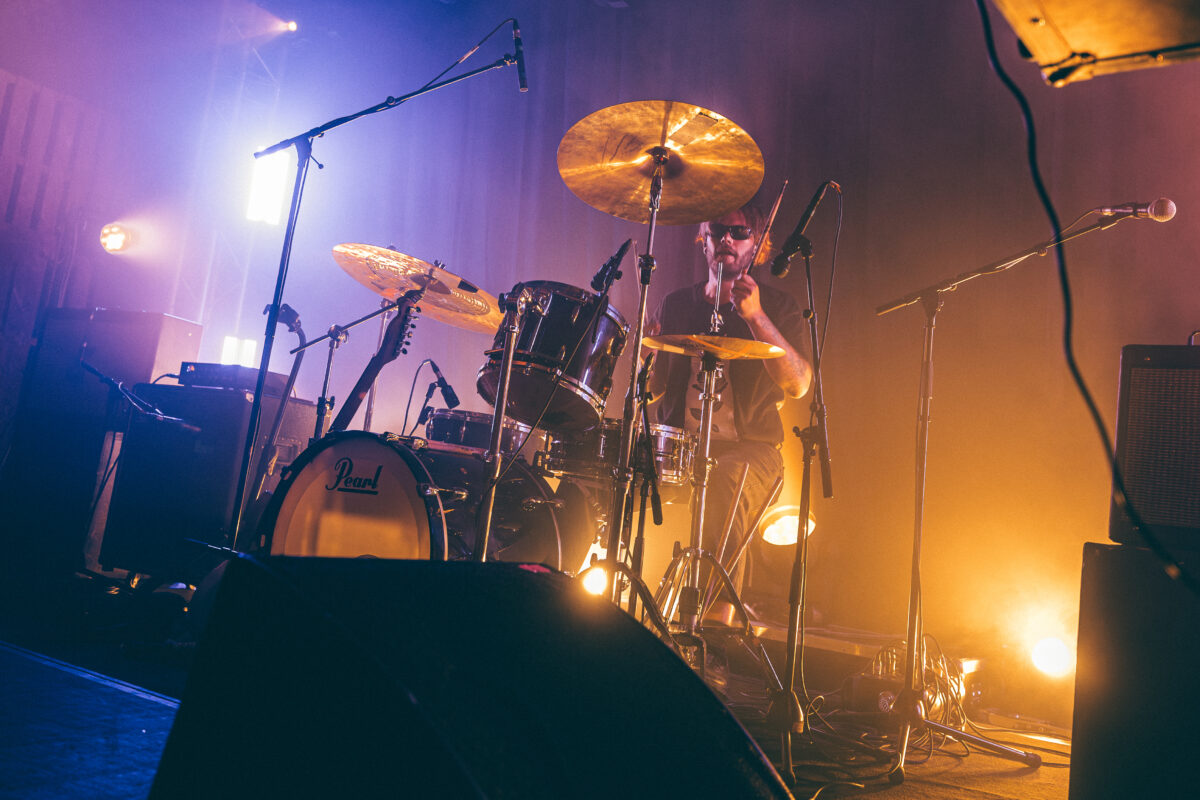
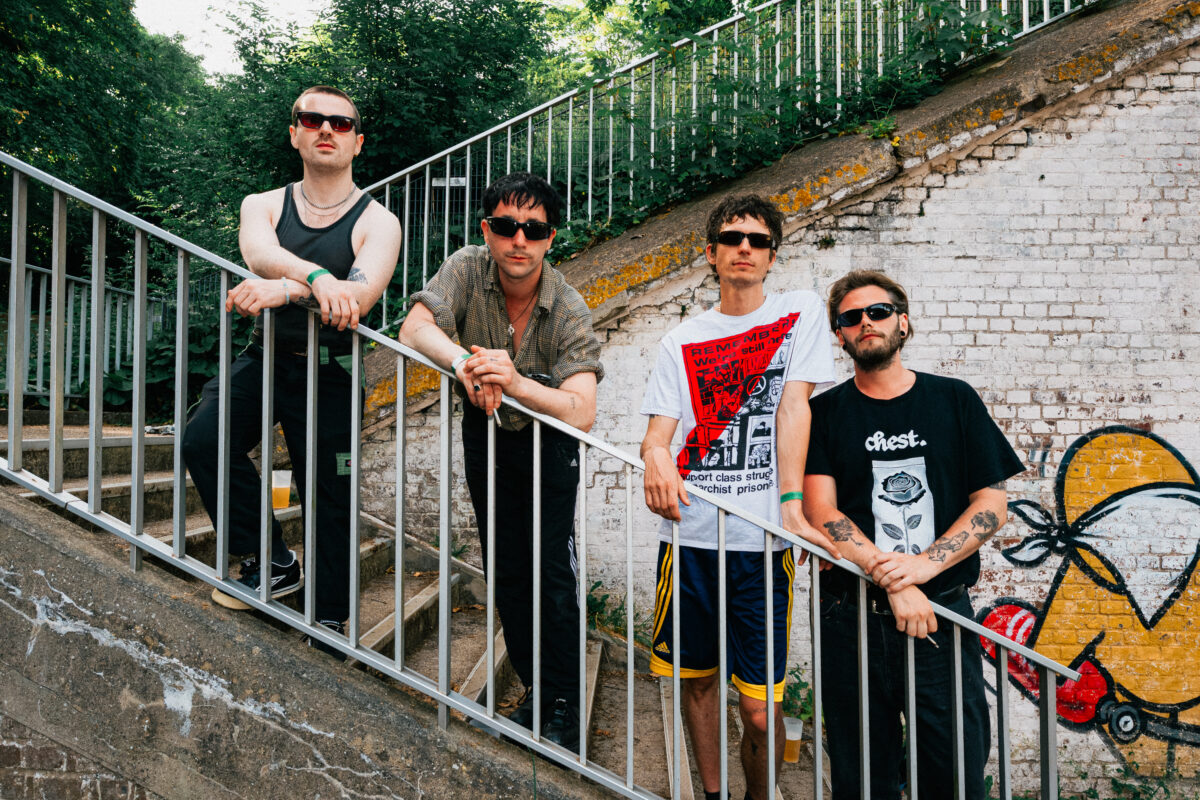
Profitant de leur venue au Foul Weather, on a retrouvé Gethyn, Michael, Bart et Daniel de Body Horror. Encore discret en ligne, le quatuor s’est surtout imposé sur scène, là où sa musique tendue et viscérale prend toute son ampleur. Entre l’esthétique de Body Horror, chaos maîtrisé et recherche d’intensité, le groupe revient sur son rapport au live, au public et à cette envie de faire danser autant que de le chahuter.
La Face B : Salut les gars, comment ça va ?
Body Horror
Tout le monde va bien.
LFB : Commençons par la question la plus basique : comment avez-vous construit votre identité musicale autour de votre nom ? Est-ce que le nom existait avant même que vous commenciez à faire de la musique ?
Body Horror
Gethyn Thomas : Je crois que le nom est arrivé avant même qu’on sache vraiment à quoi allait ressembler notre son. Mais en termes d’inspirations lyriques et d’esthétique générale, le nom a toujours été lié à notre musique, aux textes, et à l’idée globale du projet. Le “body horror”, à la base, c’est un sous-genre du cinéma qui tourne autour du corps et de tout ce qu’il peut avoir d’effrayant.
LFB : Le body horror a toujours quelque chose de profond et de dérangeant.
Body Horror
Gethyn Thomas : Oui, je pense qu’il y a énormément de choses qu’on peut en tirer métaphoriquement. C’est un terrain génial pour écrire des paroles parce qu’on peut aller très loin dans le visuel. C’est un univers très viscéral à explorer, autant dans les textes que dans l’imagerie. Et puis c’est une bonne base d’avoir ça comme nom, parce que ça ouvre énormément de possibilités dans ce qu’on peut explorer.
LFB : Quelle place occupe le corps dans votre musique ?
Body Horror
Gethyn Thomas : Les tripes, je dirais. Les tripes et le cerveau. C’est assez cérébral, mais aussi un peu mis à nu.
LFB : Chacun de vous représente une partie d’un seul et même corps ?
Body Horror
Michael Hanley : Où ça ? Un bras. Une jambe.
Gethyn Thomas : Lui, c’est l’aisselle.
Michael Hanley : Le cerveau. L’autre jambe.
Bart William : Ensemble, on forme une personne entière.
LFB : Vous êtes censés oui…
Body Horror
Bart William : On fonctionne un peu comme des Transformers, tu vois. On s’active quand on est réunis. As-tu déjà vu The Thing ? Corps contre corps, corps sur corps.
Michael Hanley : Ou comme Flubber.
Bart William : Flubber, c’est probablement le plus “tout public” des body horrors.
LFB : On parle bien du petit truc vert ?
Body Horror
Bart William :Oui. Quand Flubber est dispersé dans une pièce, les morceaux finissent toujours par se retrouver, et nous c’est pareil. Même quand on ne veut pas se retrouver, la puanteur finit toujours par arriver devant ta porte.
LFB : Quel rôle joue le corps dans votre manière de travailler ?
Body Horror
Gethyn Thomas : On considère vraiment notre musique comme une musique de danse. Certains sons et certains rythmes font bouger le corps d’une façon précise. Par exemple, une caisse claire décalée peut presque pousser le haut du corps vers l’avant quand tu danses. On pense à tout ça. La danse fait partie intégrante du projet.
LFB : Vous faites partie de ces groupes mystérieux qu’on découvre surtout en concert. Quand j’ai tapé votre nom pour la première fois, avant même de vous voir sur scène, je n’ai trouvé qu’une dizaine de morceaux sur Deezer et deux vidéos sur YouTube. Vous pouvez m’expliquer cette stratégie ?
Body Horror
Bart William : Ce n’est pas une stratégie. C’est un problème. (rires) On est lents, on est stupides, et malheureusement il y a plein d’obstacles quand il s’agit de mettre de la musique sur Internet. Ce n’est pas un choix. Mais peut-être que c’est bien pour les gens, parce qu’ils ont l’impression de découvrir quelque chose d’introuvable en ligne. Pour nous, c’est parfois frustrant. Mais d’une certaine manière, ça peut être positif.
Gethyn Thomas : Au départ, c’était surtout un problème d’argent. Maintenant, on a plein d’argent. Enfin… non, toujours pas. (rires) Mais on a enregistré un EP. Il nous manque juste un endroit pour le sortir. Ça arrivera bientôt.
LFB : Votre musique semble pensée pour le live. J’imagine que ça doit être compliqué à enregistrer en studio : vouloir tout maîtriser parfaitement tout en laissant une place à l’erreur…
Body Horror
Dan Ahlstedt : Pour nous, il est inévitable qu’il y ait une part de chaos. Mais ça fait partie intégrante de l’incarnation de cette musique. Si on regarde ce que Bart apporte au groupe, sa section à lui… c’est un élément compliqué à gérer. Et ça crée cette sensation que certaines personnes décrivent comme un son anxieux, nerveux. Et c’est génial d’avoir ça dans notre musique. Les erreurs arrivent, mais on continue d’avancer malgré tout.
Gethyn Thomas : Tu deviens sexy quand tu es profond.
Dan Ahlstedt : Même s’il y a des erreurs ou des imprévus, ça nourrit l’esthétique sonore et la performance. Peut-être que personne ne le remarque réellement, mais pour nous ça rend le concert plus excitant aussi, parce qu’on doit constamment gérer ce qui nous tombe dessus.
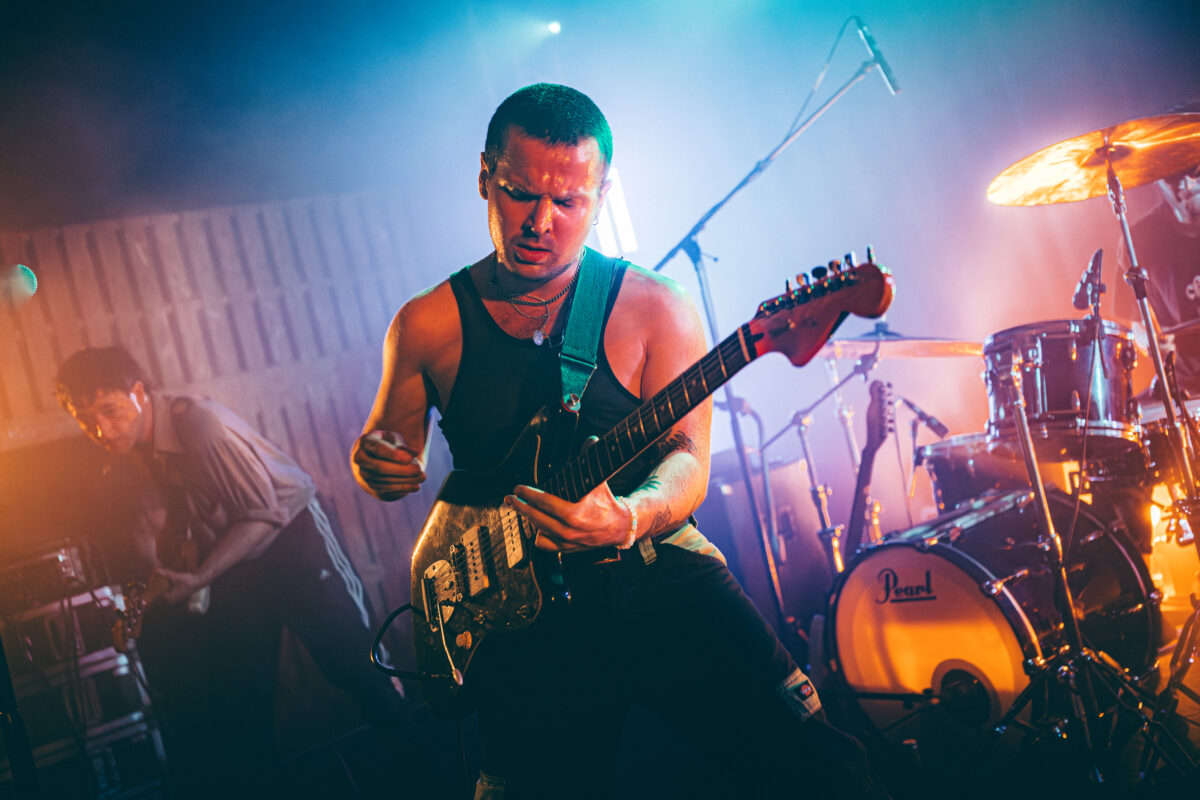
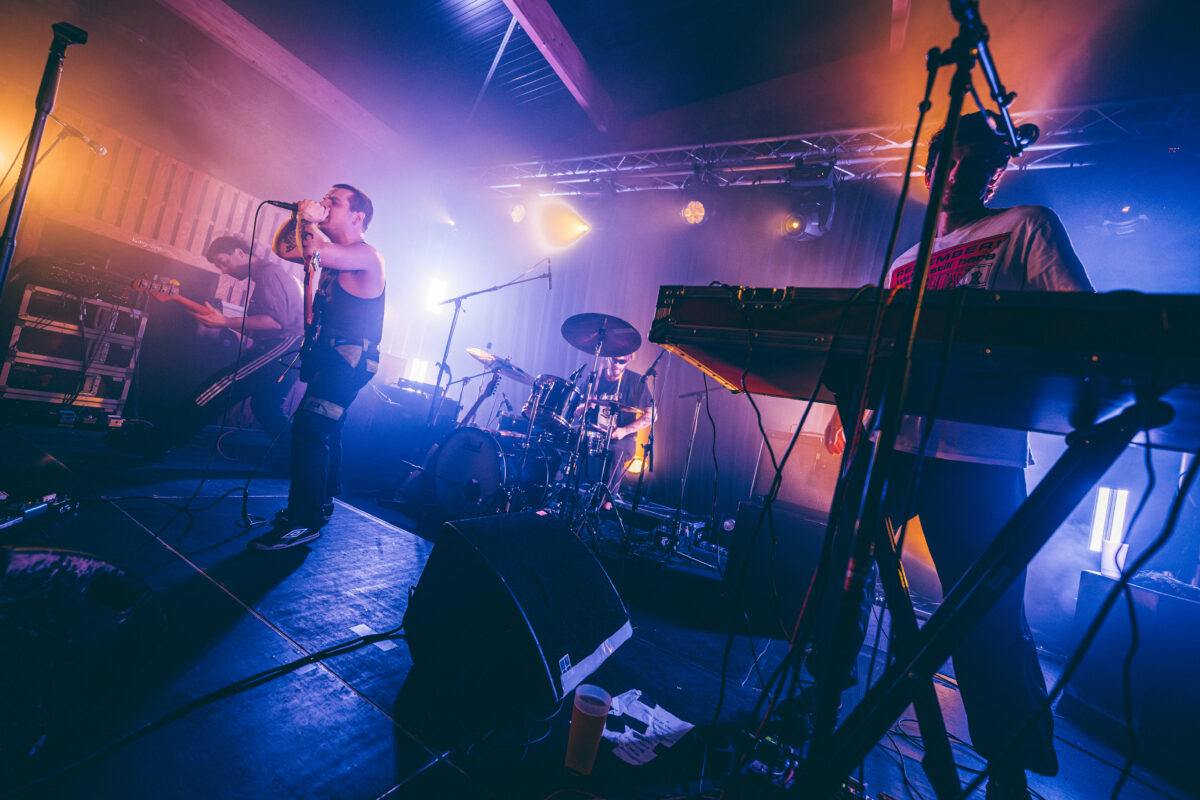
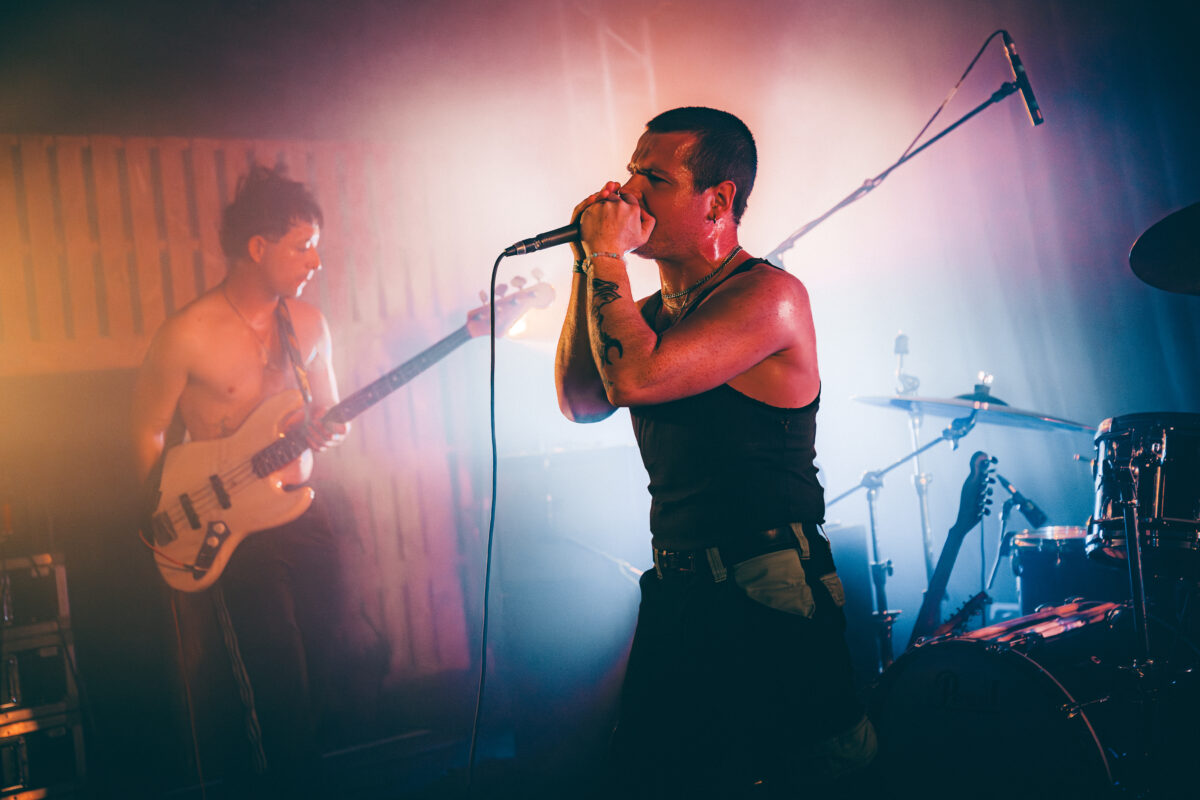
LFB : C’était justement la suite de ma question : cherchez-vous à reproduire fidèlement vos morceaux sur scène ? Ou plus généralement, qu’est-ce que vous recherchez dans le live ?
© Cédric Oberlin (@unsoundcolors)
Body Horror
Dan Ahlstedt :On travaille constamment à perfectionner le tout. Mais comme c’est très technique et très basé sur de l’analogique, il y aura toujours des erreurs. Et ce n’est pas grave. Je pense que ça donne une autre forme d’énergie. Ça nous rend plus humains qu’une simple performance parfaitement exécutée. Et quoi qu’il arrive, nos concerts restent très intenses, très énergiques. C’est ce qu’on veut transmettre.
LFB : Comme on le disait, votre musique est très physique sur scène. Est-ce que ce sont davantage des émotions ou des sensations physiques que vous cherchez à provoquer ?
Body Horror
Gethyn Thomas :Au départ, cette musique n’était pas forcément pensée d’abord pour le live. Mais on réfléchit énormément au public, au fait de se mettre à sa place. Ce n’est pas juste “on fait de la musique et on espère que ça plaira”.
Il y a une vraie réflexion sur l’expérience qu’on veut faire vivre aux gens. On construit les morceaux autour de ça : les hauts, les bas, les montées, les relâchements.
Donc oui, c’est une musique très expérientielle. Mais tout tourne autour de l’intensité. L’intensité, c’est vraiment le mot-clé de notre son. Qu’est-ce qui est intense ? Qu’est-ce qui relâche la tension ? Qu’est-ce qui la construit ?
LFB : Est-ce qu’il vous est déjà arrivé de penser qu’un morceau était “trop intense” ?
Body Horror
Gethyn Thomas : Non. C’est impossible. Jamais. Au contraire, c’est le Graal. Si un morceau est trop intense pour qu’on puisse le gérer, alors là on touche à l’or.
LFB : Comment gérez-vous cette intensité ?
Body Horror
Bart William : La thérapie. (rires) Il n’y a pas vraiment de gestion de l’intensité dans ce groupe.
LFB : On joue juste notre musique…
Body Horror
Bart William : Je ne parle pas de la musique ! (rires) Une fois que le morceau est terminé, tout retombe. Et ce relâchement est agréable.
Dan Ahlstedt : On va dormir. Mais c’est important de réfléchir à ce qu’on enlève autant qu’à ce qu’on ajoute. Retirer des éléments du son pour rendre un passage moins intense, moins émotionnel… c’est tout aussi important qu’ajouter des couches.
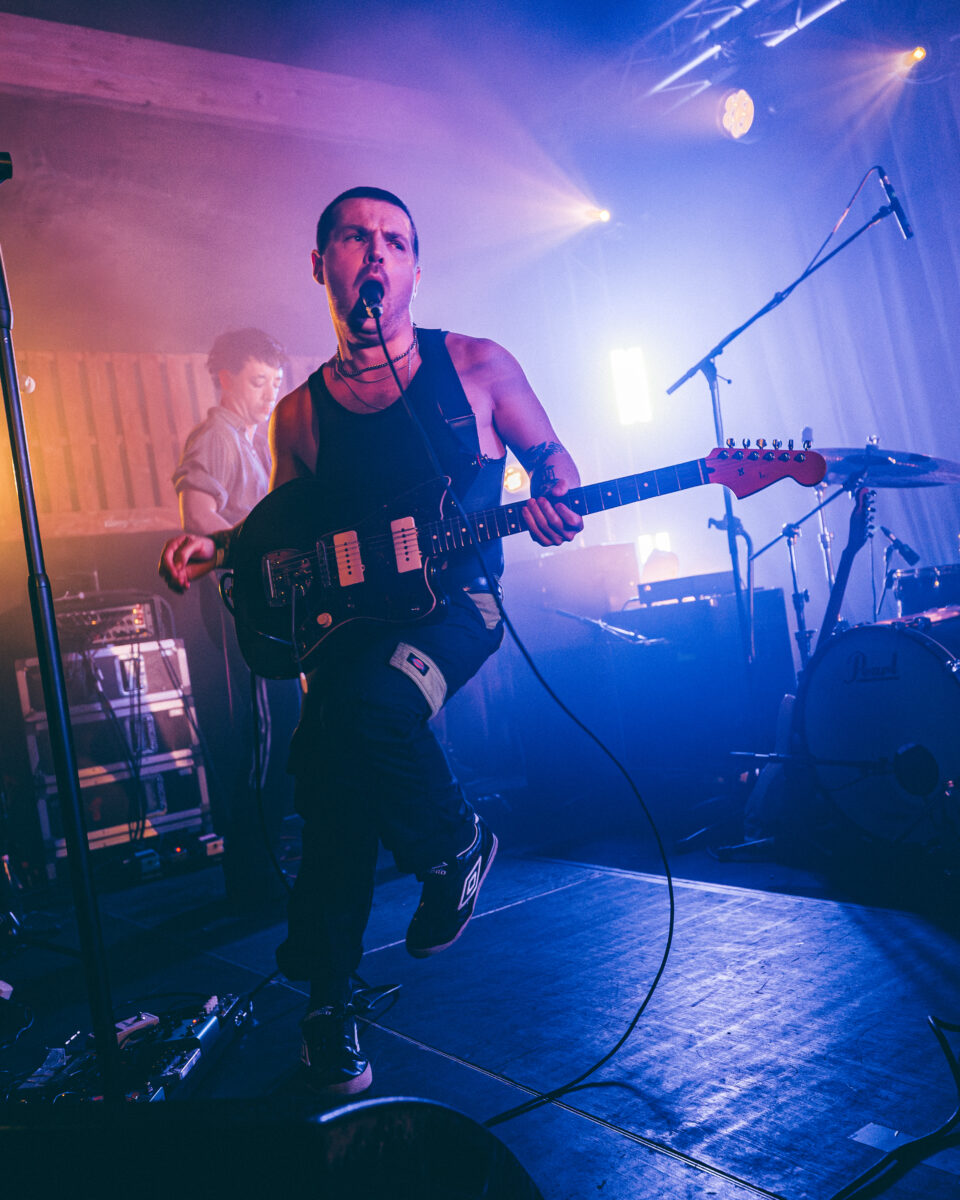
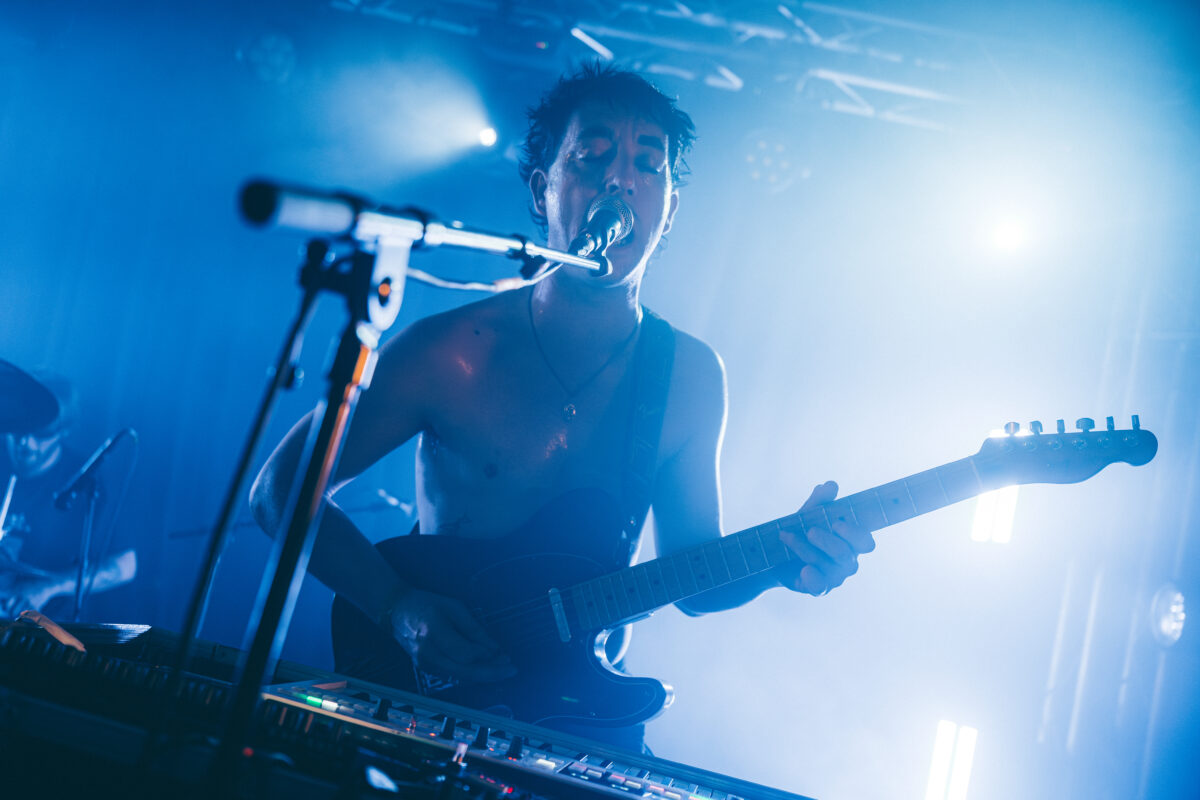
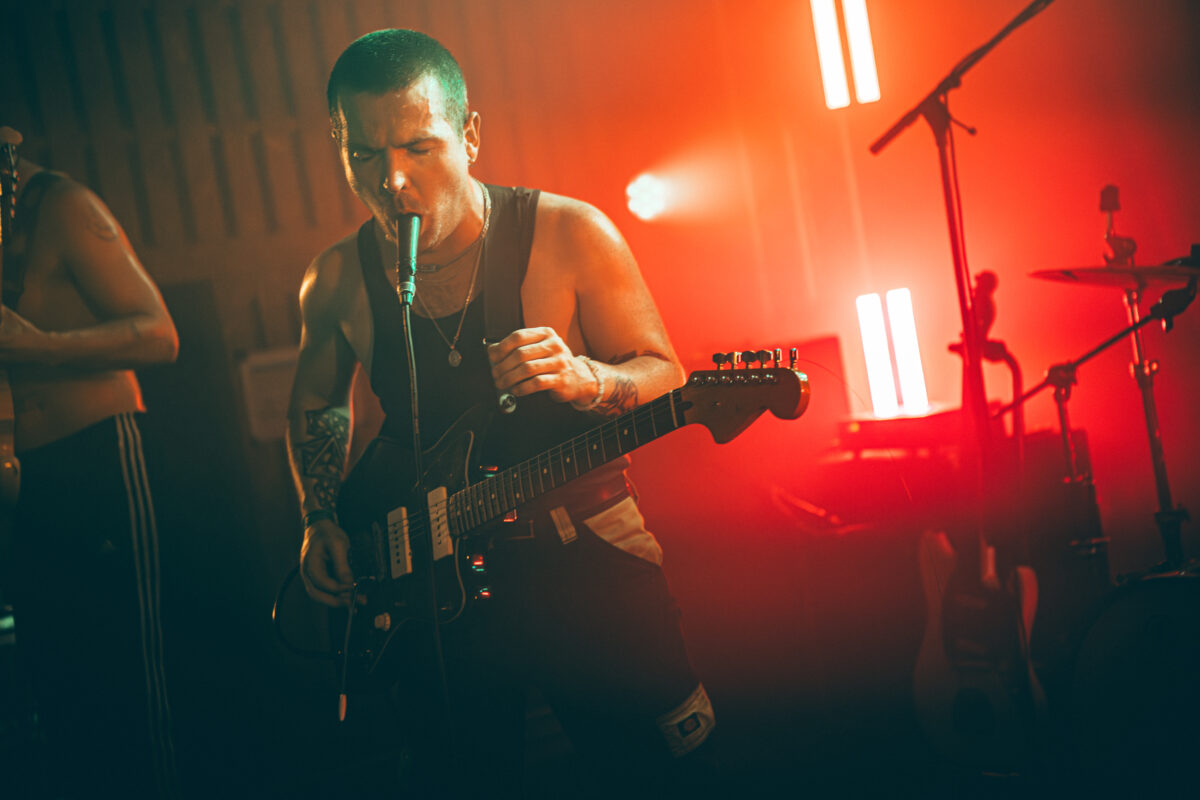
LFB : Votre musique me paraît aussi très émotionnelle. Comment vous sentez-vous après un concert ?
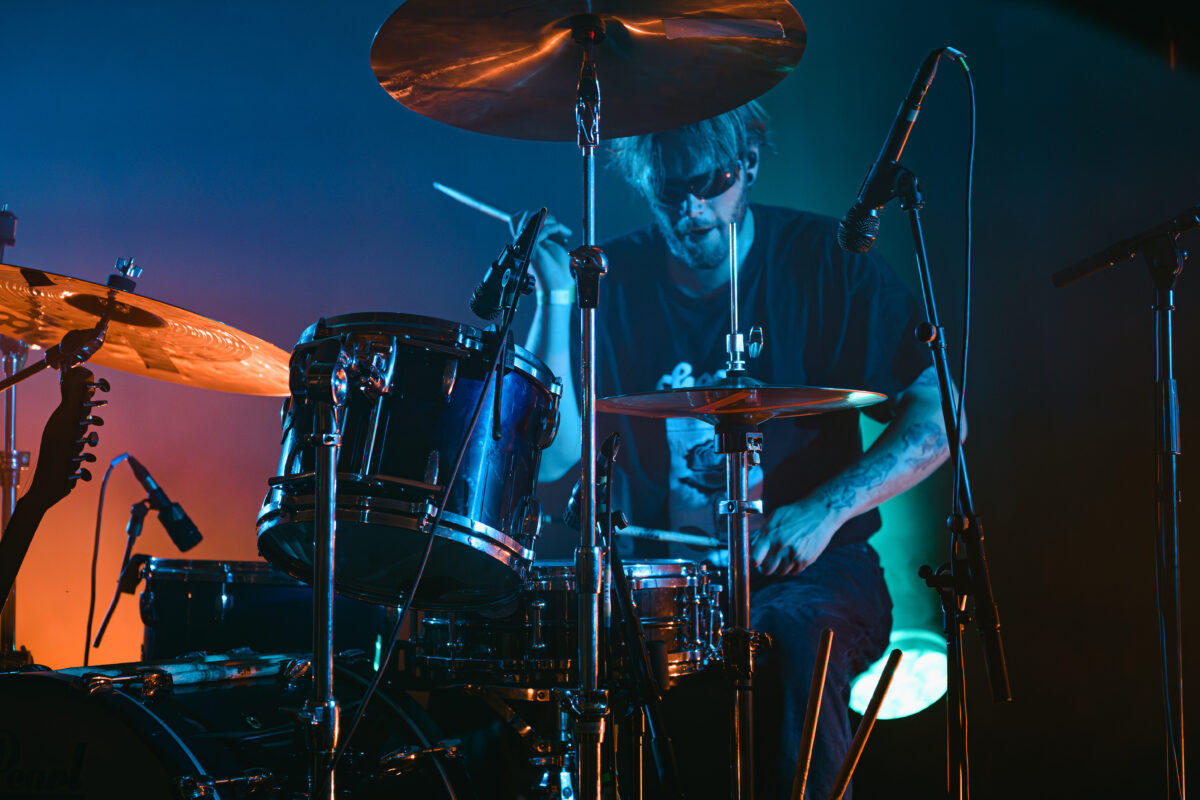
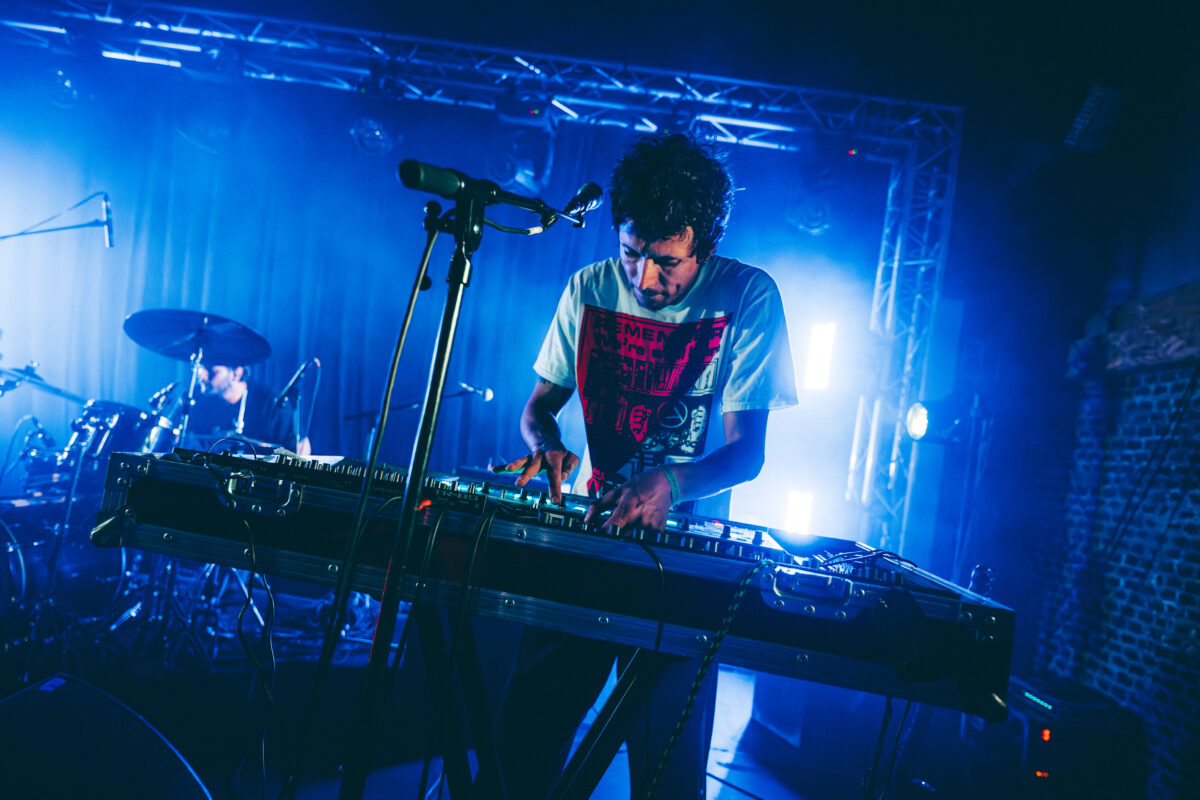
Body Horror
Gethyn Thomas : Vidé. Épuisé. Ça dépend.
Bart William : Mais généralement exalté. Excité.
Dan Ahlstedt : Oui, complètement.
Gethyn Thomas : Ton corps est un peu détruit.
Michael Hanley : Tu es à bout à la fin du concert. Enfin, ça dépend des concerts. Mais quand c’est un bon concert…
Bart William : Moi, je descends de scène de bonne humeur.
Michael Hanley : L’état dans lequel tu sors de scène reflète simplement ce que tu es à ce moment-là. Ça change tout le temps.
Bart William : C’est un peu comme après une séance de sport. Tu as les bonnes endorphines, mais tu es complètement vidé. Et c’est agréable.
LFB : Quel type de réaction du public vous surprend le plus ? Personnellement, je peux vivre votre musique de façon très mentale. Quand je vous ai vus au Supersonic, je n’ai presque pas bougé pendant tout le concert avant de finir par sauter. Dans ma tête, c’était complètement fou.
Body Horror
Gethyn Thomas : Oui, c’est génial. Franchement, c’est une façon très pure de vivre la musique. Tu es complètement absorbé. Donc ça fait plaisir à entendre.
LFB : Certaines personnes pourraient croire que si tu ne bouges pas, c’est que tu n’aimes pas.
Gethyn Thomas : Ça, c’est leur problème. C’est l’effet “body horror”. (rires) Non, je pense que tu l’absorbes exactement comme il faut.
LFB : Y a-t-il des endroits où vous préférez jouer ? Les lieux oppressants semblent parfaitement correspondre à votre univers. En extérieur, j’imagine qu’il y a moins d’intensité. Il y a plus d’espace pour respirer… alors que votre musique ne laisse pas vraiment de place à la respiration.
Body Horror
Gethyn Thomas : Pas vraiment, non. Enfin… très peu. D’une certaine manière, les endroits sombres, humides, confinés, c’est mieux.
Bart William : Du moment qu’il y a le matériel adéquat, je préfère les endroits très…
Michael Hanley : Je suis d’accord.
Bart William : Je veux que le public soit serré. Qu’il n’y ait pas trop d’espace. Je veux qu’il souffre un peu, pour qu’on puisse réussir.
Gethyn Thomas : Et de façon très pragmatique, on cherche surtout les salles avec le plus de basses et le plus de volume possible. La première chose qu’on regarde quand on arrive quelque part, c’est la taille de la sono.
LFB : Ça va trembler !
Body Horror
Gethyn Thomas : J’espère bien. Vraiment.
LFB : J’aimerais savoir, après dix ans d’existence du groupe…
Body Horror
Gethyn Thomas : Encore une fois, ce n’est pas vrai. (rires)
Bart William : On s’est rencontrés il y a dix ans, mais le groupe n’existe pas depuis dix ans. Tu n’es pas le premier à faire l’erreur. Quelqu’un nous l’a déjà dit en interview. Donc ce n’est sans doute pas clair dans notre présentation. Il faut qu’on change ça.
Gethyn Thomas : Oui, clairement.
Bart William : Mais bon, ça fait quand même environ sept ans qu’on joue ensemble. Donc ça fait déjà un moment. Les journalistes détestent ça ! (rires)
LFB : Je ne suis pas prête à assumer ce que j’ai fait…
Body Horror
Gethyn Thomas : Non, tu t’en es très bien sorti.
LFB : Vous sentez-vous toujours appartenir à la famille underground ?
Body Horror
Bart William : Oui, totalement. Et je pense qu’on le restera toujours d’une certaine manière. Il y a un certain niveau de popularité qu’un groupe peut atteindre tout en restant fidèle à ce son-là. Mais notre musique est probablement trop étrange pour ne pas rester underground.
LFB : Je pense par exemple à Fat Dog, avec qui vous pourriez partager une scène. J’ai l’impression qu’ils ne sont plus vraiment underground aujourd’hui.
Body Horror
Dan Ahlstedt : C’est drôle comme question. Parce qu’au fond, devenir plus mainstream n’est pas forcément notre objectif.
Bart William : Peu importe ce qui arrive, tant qu’on garde notre intégrité.
Dan Ahlstedt : Et puis même pour Fat Dog, je ne pense pas qu’ils soient vraiment mainstream. Le son et l’idée derrière leur musique — comme chez nous — ne sont pas des choses mainstream à la base. Mais est-ce que gagner en popularité suffit à devenir mainstream ? Ça, c’est aux autres d’en décider.
LFB : Quand tu demandes aux gens s’ils connaissent Fat Dog, beaucoup répondront non. Mais pour les gens qui vivent dans la musique au quotidien, c’est un groupe très connu. Donc “underground” reste une étiquette mouvante, un peu comme le post-punk qui devient de plus en plus populaire.
Body Horror
Dan Ahlstedt : Oui, complètement.
LFB : Pour finir, pouvez-vous partager quelque chose que vous avez aimé récemment ? Livres, films, séries, musique…
Body Horror
Gethyn Thomas : Je re-regarde Les Soprano. En permanence. Je crois que je n’ai jamais arrêté de regarder Les Soprano.
Michael Hanley : Je lis Crash de J.G. Ballard. C’est un très bon livre.
Gethyn Thomas : Très viscéral.
Michael Hanley : C’est un classique absolu du body horror. Et puis il y a aussi le Crash de Cronenberg. Un film culte.
Gethyn Thomas : Sinon, j’ai vu récemment un film franco-belge qui s’appelle Close. C’était magnifique. Ça parle de deux jeunes garçons à l’école.
Michael Hanley :J’ai vu Beetlejuice 2. C’était incroyable. (rires) Franchement, c’est la seule suite que j’ai vue qui soit aussi bonne que l’original. J’ai super envie d’aller aux toilettes donc je suis très calme là, mais je m’accroche à la vie. C’est vraiment la meilleure suite que j’ai vue.
Gethyn Thomas : Oui, c’est génial. J’adore le premier Beetlejuice.
Michael Hanley : Ça m’a replongé dans un endroit réconfortant. J’adorais Beetlejuice quand j’étais gosse. Il y a plein de trucs comme ça. Santa Sangre, c’est un super film aussi. Il y a tellement de bonnes choses en ce moment, c’est difficile de tout citer.
ENGLISH VERSION BELOW
La Face B : Hello guys, how are you?
Body Horror (all together)
Everyone’s good.
LFB : Let’s begin with the most basic question. How did you develop your musical identity around your name ? Did your name was right here before you even started music ?
Body Horror
Gethyn : I guess the name sort of came first before we really knew what the identity of the sound was. But in terms of like lyrical inspiration and just sort of an aesthetic overall, the name does sort of, has always sort of been connected to the sound and the lyrical content and just sort of the idea of what it is. It’s just a sub-genre of film that’s to do with the body really and that being scary.
LFB : Body horror always sounded like deep and disturbing.
Body Horror
Gethyn Thomas : Yeah, there’s a lot to sort of metaphorically get from it, I think. So, I think it’s a great sort of like ground for the lyrics because you can get really visual with it. So, it’s a very sort of visceral world to sort of delve into lyrically and visually. But like, yeah, it’s a fun sort of basis to just have that as the name because then it kind of, it’s like a really broad term for what you can explore, I guess.
LFB : What is the place of the body in the music you are playing ?
Body Horror
Gethyn Thomas : The guts, I guess. The guts and the brain. It’s quite cerebral, but it’s also a little bit naked.
LFB : Each one of you is like a part of one body ?
Body Horror
Michael Hanley : Where ? Arm. Leg.
Gethyn Thomas : He’s the armpit.
Michael Hanley : Brain. Other leg.
Bart William : We make one full person together.
LFB : You’re supposed to…
Body Horror
Bart William : We form like transformers, you know. We activate when together. You ever seen The Thing ? Body to body, on body, on body.
Michael Hanley : Or like Flubber.
Bart William : Flubber’s actually the most PG of all body horrors, really.
LFB : Are we talking about the little green thing ?
Body Horror
Bart William : Yeah, when Flubber is in different parts of the room, they always find each other and that’s us. Even when we don’t want to find each other, the stink arrives on your doorstep.
LFB : What role does the body play in your working process ?
Body Horror
Gethyn Thomas : We do think of our music as dance music, so certain sounds and rhythms do move the body in different ways, like how a pushed, off snare can almost push your upper body forward when you dance, we think about all that stuff, dance is part of it
LFB : You’re one of those mysterious bands which we are pleased to discover through live music. Even when I typed your name at first, before even seeing you, I saw like 10 songs on Deezer and then 2 songs on YouTube. Can you explain me your strategy with that ?
Body Horror
Bart William : It’s not a decision. It’s a problem. (laughs) We are slow, we are stupid and there are barriers in the way of music being on the internet, unfortunately. It’s not a decision. But maybe it’s nice for people because they think we’ve discovered something that you cannot discover online. For us, sometimes it is annoying. But it could be good, in a way.
Gethyn Thomas : Originally, it was a money problem. But now we’ve got loads of money. We don’t have money still, but we have recorded an EP. We just need a home for it. It will be soon.
LFB : Your music is made for live. I imagine how difficult it is to record in a studio, surely want to master perfectly and in the meantime, you want to allow mistakes…
Body Horror
Dan Ahlstedt : It’s unevitable for us to have a little bit of chaos happening. But it’s a part of the embodiment of the music. Because it’s built in a way that… If we look at what Bart has, his whole section… That he provides within the whole group. It’s a tricky element. And it kind of provides a bit of the… What I’ve heard from other people. Being a little bit of an anxious, driven sound. Which is amazing to be able to have that as an aspect of it. Mistakes happen. But we just kind of plough through it. I think that it makes a great…
Gethyn Thomas : You’re sexy when you’re deep.
Dan Ahlstedt : No, I think… Even though there might be mistakes or anything like that.
It kind of provides all aesthetic sound and performance within it. Not necessarily anything that anyone’s going to catch on to. But it makes it fun for us to perform as well. Because we always have to manoeuvre something being thrown at us. If that makes sense.
LFB : This was the continuation of my question. Are you looking for a faithful reproduction on stage ? Or more generally what are you looking for on stage ?
Body Horror
Dan Ahlstedt : We’re working on perfecting it all the time. But because it’s so technical and analogue driven. There’s always bound for mistakes to happen anyway. It’s kind of following up on the question. Like the answer before. But I think that’s okay. I think that it just kind of makes it all a little bit more… It gives it energy in a different way. It sort of shows us more human. Rather than just this perfected piece being delivered. And I think that regardless it’s always an intense energetic show. Which is what we kind of want people to feel.
LFB : As we say it’s quite physical for stage.
Do the feelings lead to stage or more physical sensations that you want to feel on stage ?

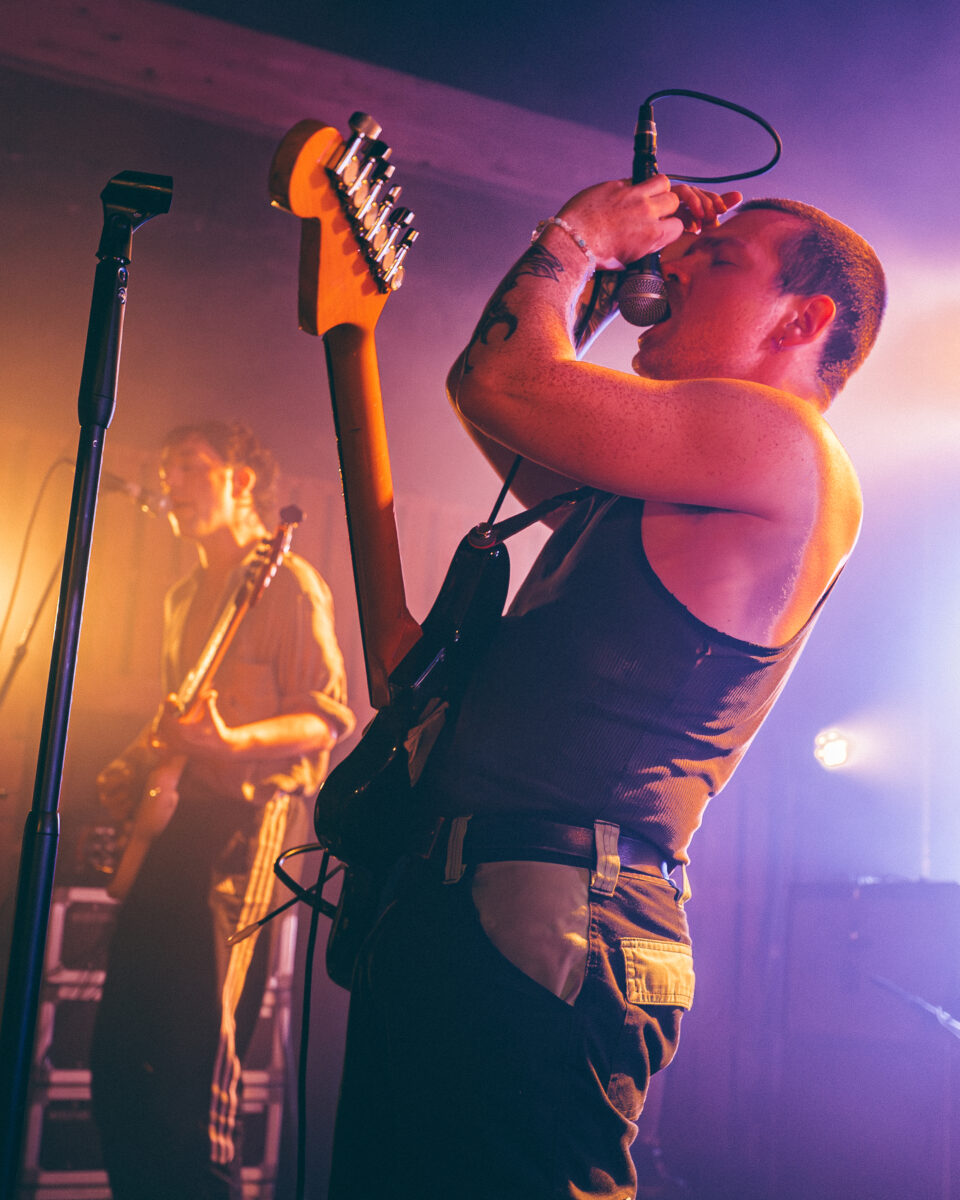
Body Horror
Gethyn Thomas : You think about it… I guess in a way it wasn’t originally intended to be music. That was live first. But there’s a lot of thinking about the audience. And putting yourself in the audience. It’s not just us doing the music. And hoping people will like it. There is a bit of that obviously. But it’s like what’s the experience we want to give people here. And so you kind of plan songs around that. And the highs and the lows of everything.
So it is very experiential in that way. But it’s very much based around intensity. Intensity is kind of the key word to the sound. What is intense? What is releasing intensity? What is building intensity?
LFB : And did you ever feel that a track would be too intense ?
Body Horror
Gethyn Thomas : No. It’s not possible. Never. It’s the gold if anything. If a tune is too intense for us to fucking deal with. Then we pick gold.
LFB : How do you manage the intensity of something ?
Body Horror
Bart William : Therapy. There’s not much intensity management in this band.
LFB : We just play our music…
Body Horror
Bart William : I’m not talking about the music (laughs). Once the tune is over the song is over isn’t it. So it will be a nice release then.
Dan Ahlstedt : We go to bed.
But it’s important to think about what you take away and what you add at points. Like taking away stuff in the sound. To make it less of anything. Less intense. Less emotional. Less anything. It’s as important as adding things.
LFB : I can see your music is emotional, that makes me asking how do you feel after a show ?
Body Horror
Gethyn Thomas : Drained. Exhausted. It depends.
Bart William : Usually buzzing. Usually excited.
Dan Ahlstedt : Buzzing for sure.
Gethyn Thomas : Your body is a little bit spent.
Michael Hanley : Pretty on the edge. Pretty on the edge. On the end of the show. It depends on the show. It’s a good show.
Bart : I come off in a good mood.
Michael Hanley : Whatever natural feeling you are when you’re coming off is what you are. It changes.
Bart William : It’s a bit like doing a workout. It’s good endorphins. But you’re a little bit spent. But it’s nice. It’s a good feeling.
LFB : What kind of reactions surprise you most in the audience? I personally can be living your music mentally. When I was in the Supersonic, I was living it without any move and started to jump at the end. In my head it was crazy. But just in my head.
Body Horror
Gethyn Thomas : Yeah, that’s wicked. That’s really cool. That’s like a really pure way of experiencing it I guess. You’re just really locked in. So that’s nice to hear.
LFB : People can be afraid of that as if not moving meant you don’t like it.
Gethyn Thomas : Maybe that’s their problem. That’s the body horror effect. Yeah, maybe that’s their problem. I think you’re sucking it in in the right way. It’s good.
LFB : Are there any places you prefer to play your music ? Most oppressive can be a perfect fusion for your spirit and attitude. But I guess outdoor is like less intensity. And then it’s bigger so you can breathe. That’s the point of your music. Well, you’re supposed to breathe with music. Your music is no place for breathing.
Body Horror
Gethyn Thomas : Not really. Not very much. In a way, dark, sweaty, enclosed is better.
Bart William : As long as there’s the appropriate equipment, I would prefer for somewhere to be very…
Michael Hanley : I feel the same.
Bart William : I want the audience to be quite tightly packed. Not too much space. I want them to suffer in a way. So we can succeed.
Gethyn Thomas : Yeah, in a quite utilitarian way, it’s like any place with the most sub and the most volume. That’s the first thing we check out when we go anywhere, is how big the PA is.
LFB : It’s gonna shake.
Body Horror
Gethyn Thomas : I really hope so. I hope so, yeah.
LFB : I’d like to know, after ten years of existence of the band…
Body Horror
Gethyn Thomas : This is, again, it’s not true.
Bart William : We met ten years ago. We didn’t start ten years ago. Yeah. You’re not the only person. We were interviewed before and they thought so as well. So maybe it’s not clear from our description. We need to change it.
Gethyn Thomas : Yeah, we need to change it, yeah.
Bart William : But to be fair, we’ve been in a band for like seven years. It’s been seven years, so it’s okay. It’s still a long time. Yeah. But journalists hate this, don’t they ?
LFB : I’m not ready for what I did…
Body Horror
Gethyn Thomas : No, you did great.
LFB : Do you still feel belonging to the underground family ?
Body Horror
Bart William : I still feel like we’re underground. Yeah. For sure. I think we probably always will be, to some extent. There’s a level of popularity that can be garnered by a band that’s still the sound and everything. It’s a bit too weird to fucking not be underground, surely. I guess so.
LFB : I mean, for bands like Fat Dog who could share the same stage, I don’t think they’re still considered as underground now. They’re sort of mainstream, I guess.
Dan Ahlstedt : I think it’s a funny thing where it’s like, you don’t necessarily want to be, I mean, by not being underground and becoming more mainstream or something of that sort. I don’t think that that’s our goal, in a way.
Bart William : Whatever happens as long as we stick to our integrity.
Dan Ahlstedt : But if you say that with Fat Dog, for instance, I don’t think that they’re necessarily like a mainstream band or anything. The sound and the idea of it, very similar to what we’re doing as well, is not a mainstream idea. But by gaining popularity, do you become mainstream ? That’s the question for other people to ask.
LFB : When you ask people, do you know Fat Dog, they will probably say, I don’t know that band. But for some people who are dealing with music everyday they know many, many bands. So I think underground is still a label, like post-punk is getting more mainstream now. Then underground can be a label that can change.
Body Horror
Dan Ahlstedt : For sure.
LFB : Could you share with me some recent thing you liked ? Books, movies, TV shows, music…
Body Horror
Gethyn Thomas : I’m re-watching Sopranos. I’m constantly re-watching Sopranos. I’ve never not been re-watching Sopranos.
Michael Hanley : I’m reading J.G. Ballard, Crash. That’s a very good book.
Gethyn Thomas : Very visceral.
Michael Hanley : That’s very body horror classic, really. Also, Cronenberg‘s Crash. Absolutely classic film.
Gethyn Thomas : I don’t know. I watched a French-Belgian film called Close recently, which was very good. That was great. It’s about two young boys in school. It was great.
Michael Hanley : I saw Beetlejuice 2. That was amazing. (laughs) Actually, it’s the only follow-up to a film that I’ve seen that was this good. I really need the toilet, so I’m being really quiet. I want to be here. I’m gripping on to life. It’s the best follow-up to a film, part 2 sequel, that I’ve seen that’s been compared to the original exactly just as good.
Gethyn Thomas : Yeah, I think it’s fucking great, man. I love the OG Beetlejuice. Michael Hanley : Took me back to a warm place. I love Beetlejuice as a kid. There’s a lot of stuff. Santa’s Angry is a great film. I love that one. Yeah, there’s a lot of good stuff, though.